All bites
The whole library, newest first. Filter by what you are here for, or pick a topic if you already know.
4247 bites
Page 42

Service Mesh Authorization: A Bouncer for Your Microservices
A service mesh authorization policy is a bouncer for your microservices. It moves access control from your app to the mesh, checking service identity and request details like HTTP method and path. Use it for fine-grained, Zero Trust security.
Retry and Timeout Policies: Handling Network Flakes
Retries and timeouts are automated patience for network requests. Instead of failing on a glitch, a service waits (timeout) and tries again (retry). This is key for microservice resilience, but beware of "retry storms" that can amplify failures.
Traffic Mirroring: Test in Production, Safely
Traffic mirroring copies live production requests to a new service without affecting the user's response. It's used to test new code with real traffic before a full rollout. The main footgun is accidentally duplicating writes or other stateful actions.
Egress Gateway: Control Your Mesh's Outbound Traffic
An Egress Gateway is a monitored exit door for all outbound traffic from your service mesh. Use it to enforce security on external calls, like restricting domains or originating mTLS.
Private Container Registry: Own Your Image Pipeline
A private container registry is your own personal Docker Hub, giving you full control over image storage and access. It's crucial for secure, in-house CI/CD pipelines.
Kubernetes' Declarative Model: Desired vs. Actual State
The declarative model is like telling Kubernetes your destination, not giving it turn-by-turn directions. You define the desired state in a file, and Kubernetes works to make it a reality. This enables self-healing and GitOps.
kube-apiserver: The Front Door to Your Kubernetes Cluster
The kube-apiserver is the front door to your Kubernetes control plane. All requests to query or modify the cluster's state must pass through it, from kubectl commands to automated controller actions. The footgun is bypassing it to modify etcd directly.
Kubernetes Gateway API: The Successor to Ingress
The Gateway API replaces Kubernetes Ingress with a role-oriented model, separating infrastructure from application routing. Use it when different teams need to manage their own traffic rules.
Kubernetes Secrets: Encrypting Data at Rest
By default, Kubernetes Secrets are only base64-encoded, not encrypted. Encryption at rest makes the API server encrypt Secret data before saving to etcd, protecting against compromised backups.
CSI Volume Cloning: `cp` for Kubernetes Volumes
Think of volume cloning as cp for your Kubernetes data. It creates a new, independent volume pre-populated with data from an existing one, offloading the copy operation to your storage provider.
Pod Topology Spread: Spreading Pods for High Availability
Pod Topology Spread Constraints prevent putting all your pods in one basket. They instruct the scheduler to distribute a service's pods evenly across nodes or zones, improving availability. The main footgun is that it's a soft preference by default.
OPA Gatekeeper: Enforce Kubernetes Policies as Code
OPA Gatekeeper is a Kubernetes admission controller using OPA to enforce policies on resources. Use it to mandate labels or block insecure images. The footgun is thinking it's just OPA; Gatekeeper adds K8s-native CRDs, auditing, and mutation capabilities.
Kubebuilder: Build Kubernetes APIs the Canonical Way
Kubebuilder is a framework for scaffolding custom Kubernetes APIs, letting you define your own resources like MyWebApp. Use it to extend Kubernetes with declarative APIs, making your app a first-class citizen.
Container Images Are Stacked Deltas
Images stack read-only layers like transparent sheets, one per Dockerfile step, topped by a thin writable layer. This enables cache reuse and fast pulls. The footgun: removing a file in a later layer hides but does not delete it; those bytes still ship.
Docker Content Trust: Signed Image Verification
Docker Content Trust is a cryptographic tamper-evident seal for image tags. It lets you verify who published an image before pulling from any registry. The footgun is that without DOCKER_CONTENT_TRUST=1, unsigned tags pull silently with no warning.
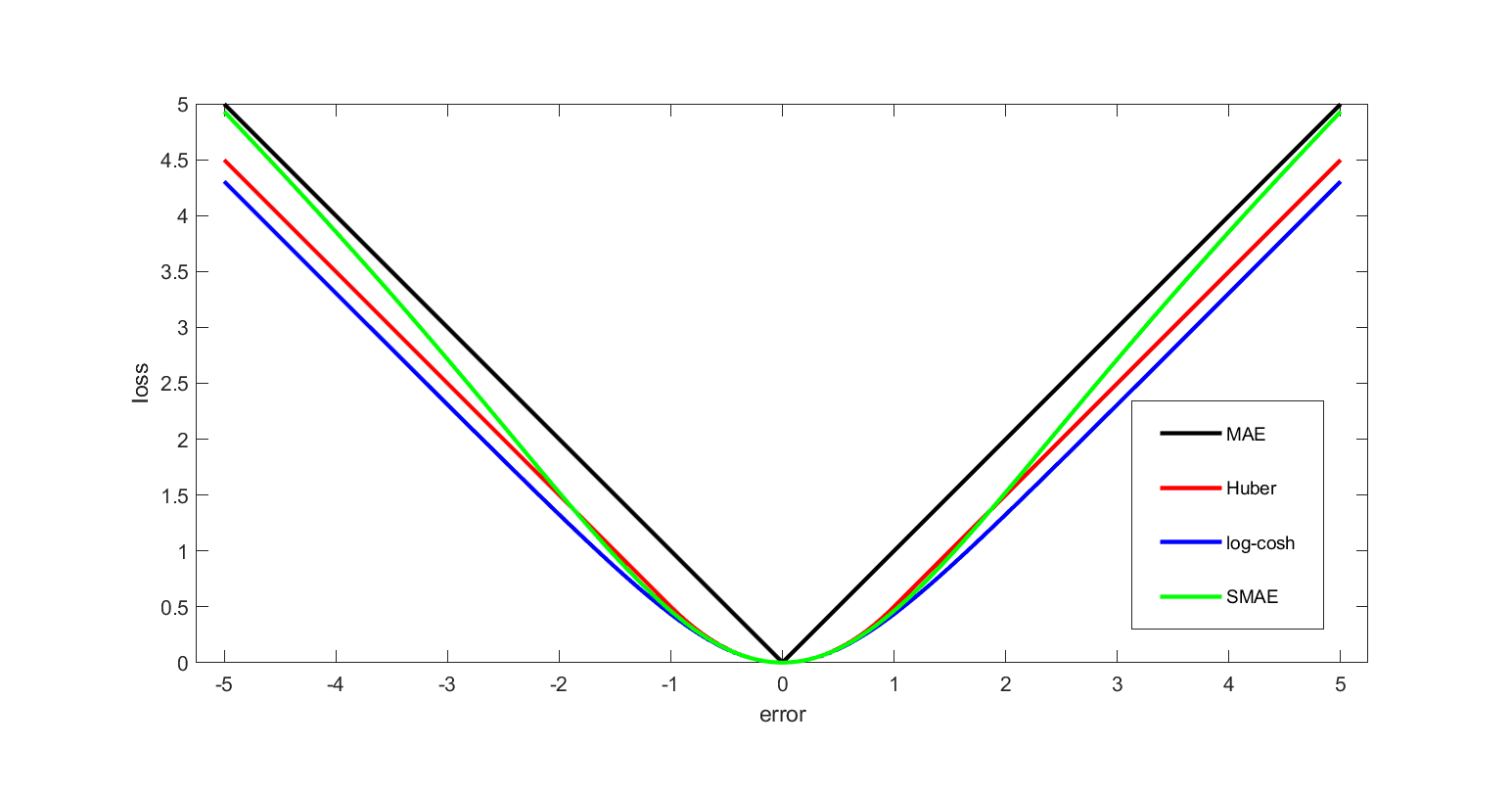
Loss Function: Quantifying 'How Wrong' a Model Is
A loss function is a score that tells a machine learning model how wrong its predictions are. The lower the score, the better. It's the engine of training, guiding the model to adjust its parameters to get closer to the correct answers.

Activation Functions: Making Neural Networks Nonlinear
An activation function acts as a gatekeeper for a neuron, deciding what signal to pass on. It introduces non-linearity, allowing networks to learn complex patterns. A network with only linear activations collapses into a simple, less powerful model.

Regularization: Penalizing Complexity to Prevent Overfitting
Regularization penalizes model complexity to prevent overfitting. It's used in training to help models generalize to new data, rather than just memorizing training examples. The footgun is applying too much, causing the model to become too simple and underfit.
Word2Vec: Word Meaning as a Point in Space
Word2Vec turns words into numerical vectors, where semantic similarity becomes spatial proximity. It powers synonym detection and analogy tasks by learning from a word's context in a large text corpus.
The Vanishing Gradient Problem
Training a deep network is like a game of telephone; the error signal (gradient) gets weaker as it's passed back through layers. This happens in deep networks using sigmoid or tanh activations.