All bites
The whole library, newest first. Filter by what you are here for, or pick a topic if you already know.
4330 bites
Page 26
Walk me through your technical design document process and sections
Tests turning ambiguity into a structured engineering plan. A strong answer sequences discovery, then covers goals, architecture, data model, APIs, rollout, and metrics. Red flag: jumping to implementation before clarifying requirements with stakeholders.

How do you communicate technical complexity and propose alternatives to a PM?
Tests translation of technical complexity into product tradeoffs. Strong answers lead with the business goal, quantify timeline and risk, then offer 2-3 simpler options with clear tradeoffs. Red flag: jargon-heavy pushback or a hard no without alternatives.
Quantify tech debt and pitch it to a PM
Quantify probability times impact, tie debt to velocity or incident cost, and propose scoped phased work.
Describe artifacts and forums to align teams on API contracts and timelines
Tests API governance across teams. Propose: versioned OpenAPI specs in a shared catalog, weekly syncs, contract tests and mocks in CI, plus a joint staging environment. Red flag: Slack and meetings alone without versioned artifacts or automated validation.
How do you re-evaluate roadmap and communicate an enterprise-to-SMB pivot?
Tests strategic alignment during a business model shift. A strong answer contrasts enterprise versus SMB needs, triages in-flight work by impact, and explains trade-offs with data. Red flag: cutting everything without weighing sunk cost against pivot value.
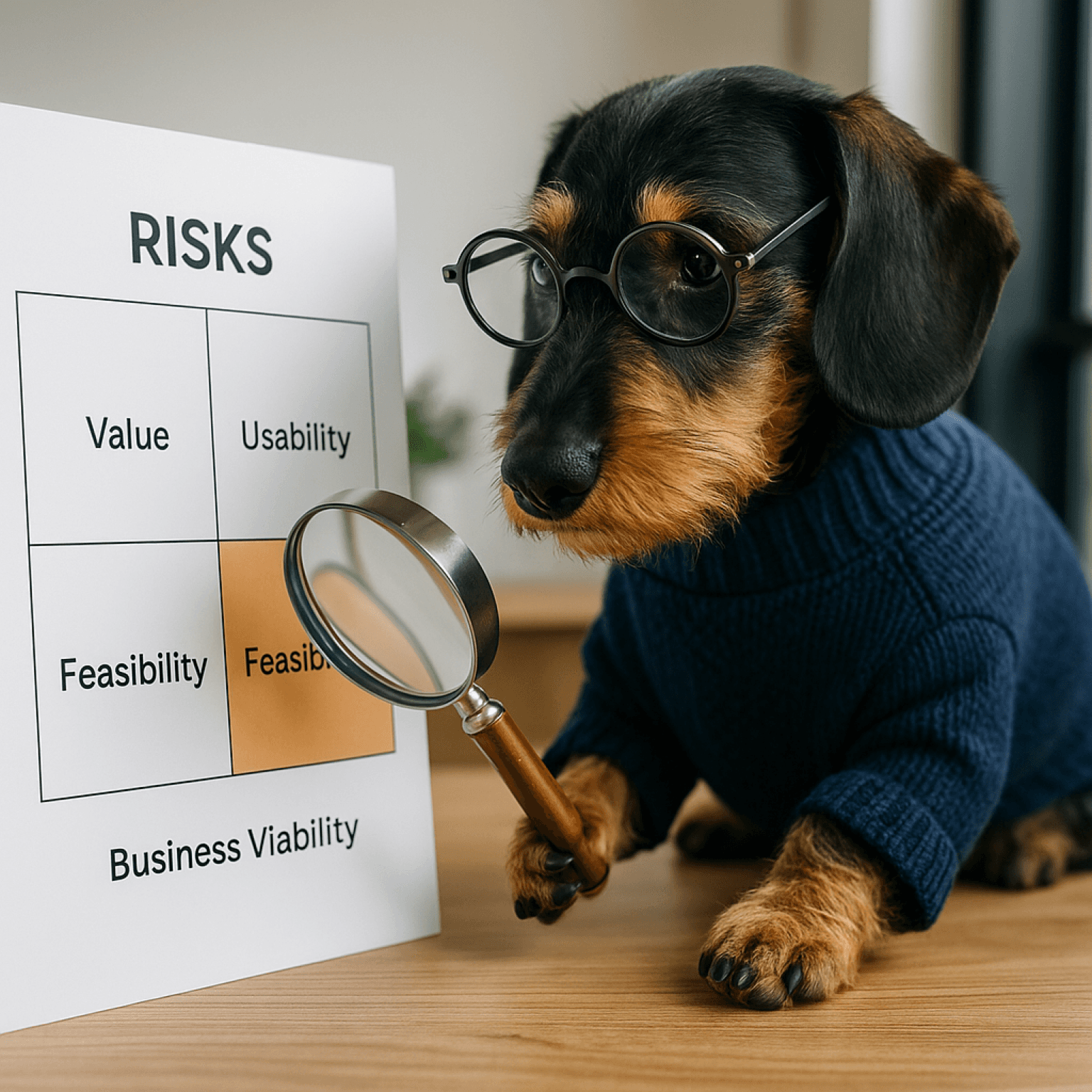
Describe a time you influenced the roadmap via a technical opportunity
This tests converting technical insights into business cases that shift roadmaps. A strong answer names the SVPG risk, quantifies value for leadership, identifies who was persuaded, and cites discovery artifacts.
Resolve a low-code versus custom-build conflict
Build a spike testing real constraints, surface lock-in and exit cost, propose a hybrid scoped by differentiation.

How do you build a 3-year vision supporting roadmap and future options?
This tests strategic planning and executive communication. Map the 1-year roadmap to gaps, invest in extensible primitives, and frame enabling work as optionality with metrics. Red flag: an engineering wishlist disconnected from business outcomes.
How would you evaluate investing in a complex, high-engagement feature?
This tests prioritization over gut feel. A strong answer maps the feature on a Value versus Complexity matrix, weighing business and user value against effort and risk versus alternatives. A red flag is deciding purely on feasibility or user excitement.
How does product strategy influence architectural decisions? Provide a specific example.
This tests if you tie architecture to product outcomes like iteration speed. A strong answer picks patterns by company stage, cites a concrete tradeoff, and treats reliability as a product feature.
Product strategy versus go-to-market strategy
Product strategy defines the product and roadmap; GTM defines launch, pricing, channels, and audience; they overlap at positioning.
Architect today for a loosely defined future
Isolate volatility behind stable interfaces, use ports and adapters, keep changes reversible and deferred.
How would you technically evaluate a major product pivot?
Structured feasibility under uncertainty. Strong answers: define requirements and SLOs, timebox spikes to de-risk unknowns, audit architecture, data, infra, security, and team skills against thresholds.
Add a Pro plan and gate features
Model plans and entitlements as data, enforce server-side via a central check, decouple the gate from feature code.

Explain the difference between Objectives and Key Results in OKRs
Objectives inspire direction; Key Results are measurable proof; cite an engineering example on technical quality like uptime.
Design a measurement framework and experimentation plan for a risky feature rollout
This tests balancing upside against operational risk. A strong answer defines guardrail metrics for stability and cost, sequences canary before A/B tests, and sets rollback thresholds. A red flag is ignoring latency or cost to chase engagement lift.
Estimate and de-risk an ambiguous initiative
Decompose into phases that front-load learning, run spikes to retire risk, communicate estimates as ranges tied to milestones.
Build the case to deprecate a legacy feature
Quantify cost versus value and who the 2% are, propose migration paths and a phased sunset, weigh velocity against trust.
Evaluate a high-risk full rewrite
Surface rewrite risk with POCs, propose incremental displacement like Strangler Fig, quantify the cost of stalled features.
Instrument an onboarding flow for analytics
Track each onboarding step plus the activation milestone, define a clean event schema with stable IDs, send reliably via batching or server-side.