All bites
The whole library, newest first. Filter by what you are here for, or pick a topic if you already know.
4330 bites
Page 44
Explain GAN architecture, generator and discriminator roles, and objective function
Tests adversarial training as a minimax game. Strong answers: generator maps noise z to fakes; discriminator classifies real versus fake; both optimize V(D,G)=E[log D(x)]+E[log(1-D(G(z)))].
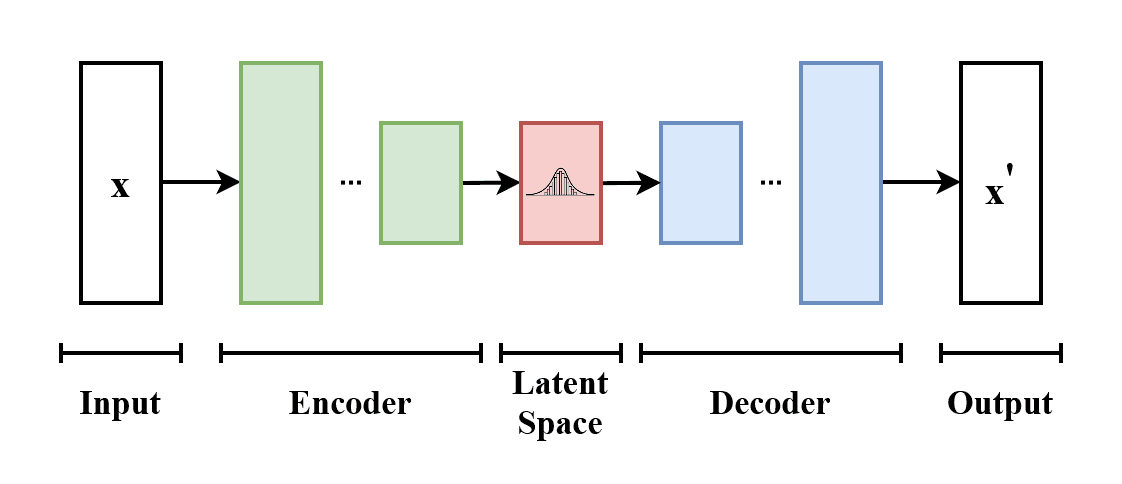
Key latent space difference between Autoencoder and VAE, and generative use
This tests deterministic versus probabilistic latent representations. Standard autoencoders encode fixed points; VAEs encode distributions. Sampling the regularized latent distribution generates new data. Red flag: calling VAEs mere noise adders.
Explain Denoising Diffusion models and forward/reverse processes.
This tests if you see diffusion as iterative latent generation, not GANs. Forward: add Gaussian noise over T steps until data is pure noise. Reverse: a network iteratively denoises random noise into data.
What is GAN mode collapse, its causes, and two mitigations?
Define mode collapse as diversity loss to few modes; cite discriminator imbalance and lenient JS loss; give two fixes: WGAN and mini-batch discrimination.

How does text guide Stable Diffusion via U-Net cross-attention?
Tests whether you know text embeddings condition the U-Net through cross-attention. Good answers explain that image features query text keys and values at every layer. Red flag: claiming the prompt is concatenated to the image latent.
Evaluating image generation: FID and IS
FID compares feature distributions of real and generated images, lower is better; Inception Score rewards confident, diverse classes but ignores real data.
DDIM: faster diffusion sampling
DDIM defines a non-Markovian deterministic process sharing DDPM's training, letting you skip steps and sample in far fewer iterations.
Diffusion-based image inpainting design
At each denoising step keep the known region by replacing it with the noised original, let the model generate only the masked area, condition on prompt and mask.
Temporal consistency in video diffusion
Add temporal layers, such as temporal attention or 3D convolutions across frames, so the model attends across time and frames denoise jointly rather than independently.
Classic image captioning architecture
A CNN encoder extracts image features, a recurrent or transformer decoder generates the caption word by word, and attention lets the decoder focus on image regions per word.
Early versus late modality fusion
Early fusion merges raw or low-level features so the model learns cross-modal interactions, while late fusion processes each modality separately and combines outputs.
Designing a Visual Question Answering system
Encode the image with a vision backbone, encode the question with a text encoder, fuse them via cross-attention into a joint representation, then decode or classify the answer.
How Stable Diffusion generates images
The text encoder turns the prompt into embeddings, the U-Net predicts noise to remove conditioned on those embeddings, and the scheduler controls how noise is stepped down over iterations in…
Aligning text and image representations
Contrastive learning like CLIP pulls matched image-text pairs together and pushes mismatches apart; alternatively projection layers map one modality into a frozen model's space.
LLaVA versus Flamingo vision-LLM design
LLaVA projects image features into the LLM input space and feeds them as tokens, keeping the LLM mostly intact; Flamingo inserts gated cross-attention layers inside a frozen LLM.
Batching strategy for multimodal training
Control dataset mixing ratios, use balanced sampling and per-source weighting, keep enough text-only data to avoid forgetting, and handle variable shapes via grouping or padding.
Perplexity versus BLEU for LMs
Perplexity measures intrinsic next-token prediction quality needing no references; BLEU measures n-gram overlap with reference outputs for tasks like translation.
Why human evaluation is the gold standard
Humans judge fluency, helpfulness, and correctness that n-gram or distribution metrics miss; automated scores correlate weakly with quality, are gameable, and penalize valid diverse outputs.
Standard metric for image generation quality
Name FID, explain it compares feature distributions of real and generated images via a pretrained network.
How FID is calculated versus Inception Score
FID fits Gaussians to Inception features of real and fake images then measures Frechet distance; it uses real references and detects mode collapse.