AWS CodeBuild: Managed Builds Without the Servers
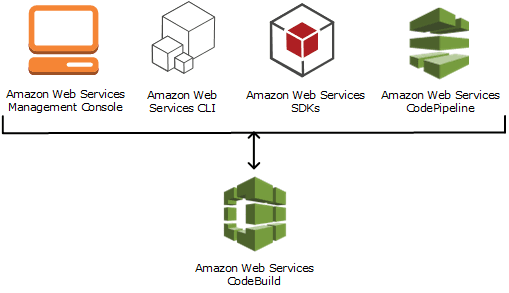
Think of AWS CodeBuild as an on-demand build server you don't manage. It's used in CI/CD to compile code, run tests, and create artifacts. The main footgun is thinking it's a full CI/CD platform; it's just the 'build' step, needing an orchestrator.
Why it exists
Building software requires a consistent, clean environment to compile code and run tests. Managing dedicated build servers is a hassle: you have to provision them, keep them patched, install dependencies, and scale them for peak loads. This creates operational overhead and slows down development.
The mental model
Think of CodeBuild as an ephemeral, on-demand build server. You define a "build project" which specifies the source code location, the build environment (like a Docker image with tools), and the commands to run. When a build is triggered, AWS spins up a clean container, runs your commands, and then tears it down. You only pay for the minutes it's running.
How it works
You typically provide CodeBuild with a buildspec.yml file in your source code's root directory. This file defines the build phases: install for dependencies, pre_build for setup commands, build for the main compilation and test commands (like mvn install or npm run build), and post_build for packaging artifacts. CodeBuild uses this spec to execute your build in a pre-configured or custom container environment. The output artifacts, like JARs or ZIP files, are then typically uploaded to an S3 bucket.
When to use it
Use CodeBuild as the build and test stage in your CI/CD pipeline. It's ideal for compiling code, running unit tests, and creating deployable artifacts. It integrates seamlessly with other AWS services like CodeCommit (source), CodePipeline (orchestration), and S3 (artifacts), forming a native AWS CI/CD solution.
When not to use it
CodeBuild is not a complete CI/CD orchestrator. If you need to manage a multi-stage release process (e.g., build -> staging deploy -> manual approval -> production deploy), you need a tool like AWS CodePipeline or Jenkins to call CodeBuild. It is not designed for long-running tasks, only for discrete, time-bound build jobs.
One canonical example
A developer pushes a commit to a branch in AWS CodeCommit. This triggers an AWS CodePipeline. The pipeline's "Build" stage invokes a CodeBuild project. CodeBuild pulls the source, uses a pre-packaged Java environment, runs mvn test and mvn package as defined in buildspec.yml, and uploads the resulting .jar file to an S3 bucket. The pipeline then proceeds to the "Deploy" stage.
Interview question
Which statement accurately describes a key limitation of AWS CodeBuild within a continuous integration/continuous delivery (CI/CD) workflow?
- a.It is primarily designed for compiling code and creating artifacts, but not for running unit tests.
- b.It cannot execute custom build commands or utilize custom Docker images for environments.
- c.It provides the build and test stages but needs an external service to orchestrate multi-stage pipelines.Correct
- d.It requires users to manually manage and scale the underlying build server infrastructure.
Why? this is the answer
The card explicitly states that CodeBuild is "not a complete CI/CD orchestrator" and is "just the 'build' step, needing an orchestrator" like AWS CodePipeline for multi-stage processes. The other options are incorrect because CodeBuild supports custom commands and environments via buildspec.yml, runs tests, and is a fully managed service that handles server provisioning and scaling.
Just read this? Test yourself on what you have been reading.
Read the original → docs.aws.amazon.com
You just looked this up. Could you explain it out loud?
That is the part interviews actually test. Tezvyn takes questions like this one and gives you what the interviewer is really checking, the answer that lands, and the mistake that ends the conversation, in the four minutes before your next meeting.
The iPhone app is on the way
We are building it. Until it lands, nothing here is held back from you: every interview card, your saved cards, streaks and the job board all work in Safari, plus hundreds of free practice quizzes of thirty questions each. Sign in and it all carries over to the app the day it arrives.
Want it as an icon? Tap Share at the bottom of Safari, then Add to Home Screen. It opens full screen and the cards you have read stay available offline.
We are hiring for this. Open roles that interview on aws — each one lists the topics its interview covers.
See open roles