AWS Reserved Instances: Commit to Compute, Save Big
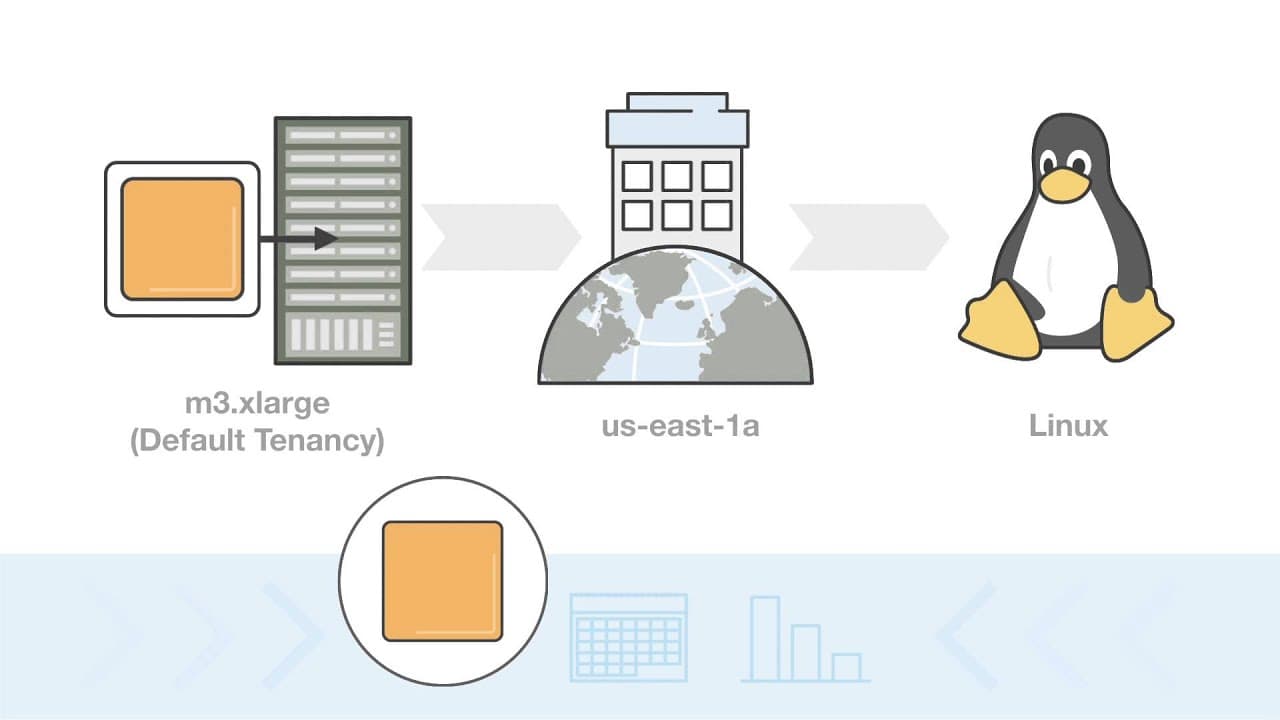
Reserved Instances are like leasing a car instead of renting daily: commit to 1-3 years of compute for a steep discount. They're ideal for predictable, steady-state workloads. The footgun is buying inflexible Standard RIs when your needs might change.
Why it exists
On-Demand cloud pricing is flexible but expensive for workloads that run constantly. Reserved Instances were created to offer a significant discount to customers who can commit to using a certain amount of compute over a long period, drastically reducing their total cloud spend for predictable infrastructure.
The mental model
Think of a Reserved Instance as a long-term lease on compute power. Instead of paying the high daily rate for a rental car (On-Demand pricing), you sign a 1- or 3-year lease for a specific car model (instance family). You get a much lower rate in exchange for your commitment. You don't receive a specific physical server, but rather a voucher that discounts your bill whenever you use compute resources that match your lease terms.
How it works
You purchase an RI for a specific instance family, region, OS, and tenancy for a 1- or 3-year term. AWS Billing then automatically finds running On-Demand instances in your account that match these attributes and applies the discounted hourly rate. You can choose between Standard RIs for the biggest discount (up to 72%) or Convertible RIs for less savings (up to 66%) but more flexibility to change instance families later.
When to use it
Use RIs for your baseline, predictable workloads that are always on. This includes core application servers, databases, caching layers, or any service with steady-state usage. If you must guarantee the ability to launch an instance in a specific Availability Zone, even during high demand, you can scope your RI to that AZ for a capacity reservation.
When not to use it
Avoid RIs for spiky, unpredictable, or short-term workloads. Development environments that are shut down frequently, temporary batch processing jobs, or applications with highly variable traffic are better suited for On-Demand or Spot Instances. Committing to an RI for these use cases would lead to paying for unused capacity.
One canonical example
A company runs a database on an m5.xlarge instance 24/7. This is a perfect candidate for an RI. By purchasing a 3-year Standard m5.xlarge RI, their hourly bill for that instance drops significantly. If they had instead bought a regional m5.2xlarge RI, the discount could automatically apply to two m5.xlarge instances, or even four m5.large instances, providing flexible savings across their fleet within that region.
Interview question
When would an AWS customer most likely choose a Convertible Reserved Instance over a Standard Reserved Instance?
- a.To secure the highest possible discount for a fixed, long-term workload.
- b.If they foresee potential changes in their instance family or operating system requirements.Correct
- c.To ensure dedicated physical server capacity for compliance reasons.
- d.When their compute needs are highly variable and unpredictable throughout the day.
Why? this is the answer
Convertible RIs offer flexibility to change instance families or operating systems later, making them suitable when future requirements are uncertain. Standard RIs, while offering the highest discount, lack this flexibility, making option A incorrect.
Just read this? Test yourself on what you have been reading.
Read the original → aws.amazon.com
You just looked this up. Could you explain it out loud?
That is the part interviews actually test. Tezvyn takes questions like this one and gives you what the interviewer is really checking, the answer that lands, and the mistake that ends the conversation, in the four minutes before your next meeting.
The iPhone app is on the way
We are building it. Until it lands, nothing here is held back from you: every interview card, your saved cards, streaks and the job board all work in Safari, plus hundreds of free practice quizzes of thirty questions each. Sign in and it all carries over to the app the day it arrives.
Want it as an icon? Tap Share at the bottom of Safari, then Add to Home Screen. It opens full screen and the cards you have read stay available offline.
We are hiring for this. Open roles that interview on cloud — each one lists the topics its interview covers.
See open roles