CDN Edge Computing: Code at the Cache
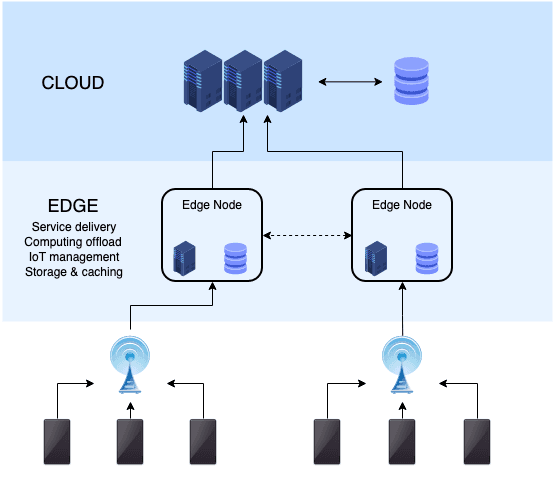
CDN Edge Computing runs your code at the network edge, not just caches files. It's for low-latency tasks like A/B testing or auth checks. The footgun is treating it like a full backend; it's stateless and resource-constrained.
Why it exists
Traditional CDNs excel at caching static files, but any dynamic request must travel back to a centralized origin server, adding latency. CDN Edge Computing was created to run small, dynamic computations close to the user, reducing this round-trip time for logic that doesn't need the full application stack.
The mental model
Think of it as serverless functions that run on the CDN's global network, not in a specific cloud region. Instead of your code living in a single data center like us-east-1, it's deployed to hundreds of Points of Presence (PoPs) worldwide. When a user makes a request, your code executes in the city closest to them.
How it works
A user's request hits a nearby CDN PoP. Instead of simply serving a cached file, the CDN can trigger a piece of your code (often JavaScript or WebAssembly). This function can inspect and modify the request, generate a response directly, or conditionally forward the request to your origin server. The result can often be cached at the edge as well, benefiting subsequent users.
When to use it
Use it for latency-sensitive logic that can execute quickly and is largely stateless. Common use cases include: first, running A/B tests by rewriting HTML at the edge; second, handling authentication by validating tokens before a request hits your core services; third, serving personalized content based on user location or cookies.
When not to use it
Avoid it for long-running tasks, heavy computation, or operations requiring a persistent database connection. Edge environments are ephemeral and have strict limits on execution time (often milliseconds), CPU, and memory. It is an extension of your backend, not a replacement for it.
One canonical example
An e-commerce site needs to redirect users to their country's specific storefront. An edge function intercepts the incoming request, checks the user's IP address or an HTTP header to determine their country, and then issues a 302 redirect to the correct URL (e.g., store.com/us or store.com/de). This happens instantly at the edge, without the request ever needing to reach the origin server in a distant data center.
Interview question
Which of the following tasks is LEAST suitable for implementation using CDN Edge Computing?
- a.Validating user authentication tokens before forwarding requests to an origin server.
- b.Dynamically rewriting HTML for A/B testing based on user cookies.
- c.Processing and storing large user-uploaded video files in a persistent database.Correct
- d.Redirecting users to a country-specific storefront based on their IP address.
Why? this is the answer
CDN Edge Computing is designed for small, latency-sensitive, stateless tasks with strict resource limits, not for long-running, heavy computations or operations requiring persistent database connections like processing and storing large files. Options A, B, and D are explicitly mentioned or fit the criteria for suitable edge functions.
Just read this? Test yourself on what you have been reading.
Read the original → en.wikipedia.org
- #cdn
- #edge computing
- #serverless
- #performance
Put your scrolling time to good use
Learn one idea, try a quiz and save useful cards for revision. Tezvyn makes it easy to learn and stay current in your tech field, a few minutes at a time.
The iPhone app is on the way
We are building it. Until it lands, nothing here is held back from you: every interview card, your saved cards, streaks and the job board all work in Safari, plus hundreds of free practice quizzes of thirty questions each. Sign in and it all carries over to the app the day it arrives.
Want it as an icon? Tap Share at the bottom of Safari, then Add to Home Screen. It opens full screen and the cards you have read stay available offline.
We are hiring for this. Every open role lists the topics its interview covers, so you can prepare for the real thing rather than guessing.
See open roles