Design an A/B test for loss aversion versus gain framing at checkout
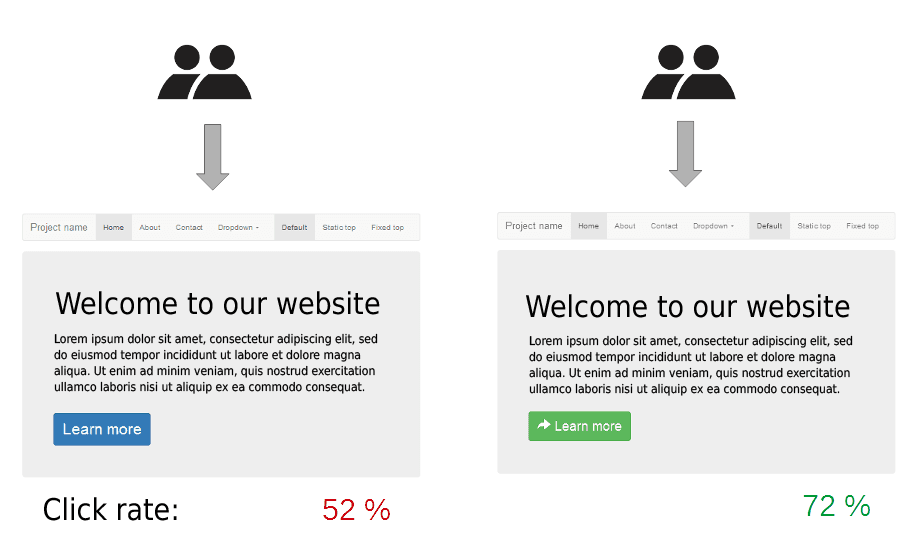
Tests whether you can isolate framing effects from checkout confounders. Strong answers detail user-level randomization, event logging, and guardrail metrics like revenue per visitor. Red flag: a conversion-only analysis with no unit of diversion defined.
What's really being asked
This question tests whether you treat behavioral framing as a controlled variable in a randomized experiment rather than a vague marketing tweak. The interviewer wants to see that you understand the difference between simply showing two banners and building a valid statistical comparison where the only systematic difference is the wording. You need to demonstrate awareness of confounders, stable assignment, and the full data pipeline from impression to outcome.
The full answer
First, define the unit of diversion as the authenticated user or stable device ID to ensure the same shopper always sees the same variant and you avoid within-subject contamination. Second, describe pre-allocation at the entry point to the checkout flow so the variant is assigned before the page renders, eliminating flicker or latency bias. Third, specify a raw event schema that logs an impression event with variant ID, timestamp, user ID, and context; a click or dismiss event; and a downstream purchase event with order value and discount applied. Fourth, choose a primary metric such as purchase conversion rate from checkout start to completion, and add guardrail metrics including average order value and revenue per visitor because loss-aversion language could increase conversion while depressing basket size. Fifth, mention power analysis and a minimum detectable effect, for example needing roughly ten thousand visitors per variant to detect a one-percentage-point change at ninety-five percent confidence, and commit to running the experiment for full business cycles to neutralize day-of-week effects.
The mistakes people make
A common red flag is suggesting session-level or page-refresh randomization, which splits users across variants and invalidates the experiment. Another is tracking only the final conversion rate without logging impressions, making it impossible to calculate denominator counts or debug drop-off. Candidates also err by ignoring novelty effects or launching the test during a holiday sale, conflating seasonal demand with framing impact. Proposing to measure only click-through on the banner instead of actual purchase completion is another weak pattern.
What usually comes next
The interviewer may ask how you would handle users who see the banner but abandon and return hours later, which tests your understanding of attribution windows and intent-to-treat analysis. They might also ask what you would do if revenue per visitor drops by five percent but conversion lifts by two percent, probing your ability to define a composite north-star metric or pre-specified trade-off rules. A third follow-up could involve asking how you would extend this to three or more variants, moving from a simple two-sample test to an ANOVA or sequential testing framework.
A concrete example
Imagine a checkout flow with one hundred thousand weekly visitors. You assign each visitor to variant A or B using a hash of their user ID modulo one hundred. Variant A shows a green badge reading You are saving twenty dollars, while variant B shows a red banner reading Complete your order or lose your twenty dollar discount. You log checkout_start, discount_impression with variant, checkout_submit, and purchase_confirmed events. Your primary metric is purchase rate from checkout_start to purchase_confirmed. Your guardrail is average order value. You run the test for two full weeks and analyze with a two-proportion z-test, checking that the guardrail metric does not fall below a pre-registered threshold of negative two percent before declaring a winner.
Interview question
To isolate the effect of loss-aversion versus gain framing at checkout, which assignment approach ensures the same shopper always sees the same variant and avoids within-subject contamination?
- a.Assign using a hash of the stable user ID before the checkout page rendersCorrect
- b.Split traffic by even and odd calendar days for the entire population
- c.Randomize by session so returning users may see either variant
- d.Rotate the banner by time of day to control for traffic patterns
Why? this is the answer
The card requires a stable user-level unit of diversion and pre-allocation before rendering to prevent contamination and flicker bias. Session-level randomization is explicitly flagged as a red flag because it splits users across variants and invalidates the experiment.
Just read this? Test yourself on what you have been reading.
Read the original → en.wikipedia.org
- #growth
- #experimentation
- #ab-testing
- #behavioral-economics
- #metrics
You just looked this up. Could you explain it out loud?
That is the part interviews actually test. Tezvyn takes questions like this one and gives you what the interviewer is really checking, the answer that lands, and the mistake that ends the conversation, in the four minutes before your next meeting.
The iPhone app is on the way
We are building it. Until it lands, nothing here is held back from you: every interview card, your saved cards, streaks and the job board all work in Safari, plus hundreds of free practice quizzes of thirty questions each. Sign in and it all carries over to the app the day it arrives.
Want it as an icon? Tap Share at the bottom of Safari, then Add to Home Screen. It opens full screen and the cards you have read stay available offline.
We are hiring for this. Open roles that interview on growth — each one lists the topics its interview covers.
See open roles