Distributed Version Control (DVCS): Everyone Gets a Copy
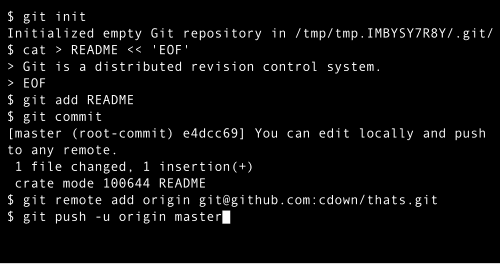
A DVCS gives every developer a full, independent copy of the repository, history and all. This is Git's model, making commits and branches instant because they're local. The footgun: your local copy isn't the team's truth until you push and pull to sync.
Why it exists
Centralized version control systems require a constant network connection to a single server, creating a performance bottleneck and a single point of failure. If the central server goes down, collaboration stops. DVCS was created to remove this dependency, enabling faster, more resilient development.
The mental model
Imagine a centralized system is a library with one master copy of a book; you must check it out to work. A DVCS gives every team member their own perfect, personal copy of the entire library. You can work on your copy offline, and then sync your changes with others when you're ready.
How it works
When you clone a repository, you download the entire project history, creating a full, independent repository on your local machine. Most operations, like committing changes, creating branches, and merging, happen locally and are therefore extremely fast. To collaborate, you explicitly push your changes to a shared remote repository and pull updates from it. This means every developer's machine is also a complete backup of the codebase.
When to use it
DVCS is the modern standard for software development. It's ideal for teams of any size, especially those that are distributed. Its powerful branching and merging capabilities support agile workflows and parallel development on multiple features. Git, the world's most popular version control system, is a DVCS.
When not to use it
For projects with massive binary files (like game assets or videos) where cloning the entire history is impractical, a centralized system might be better. Similarly, if you need strict, granular, file-level access controls, a centralized system may offer more direct administrative tools for that specific need.
One canonical example
A developer using Git clones a project from GitHub. She can then go offline, create a new feature branch, make several commits, and merge it back into her main branch—all without an internet connection. Once she's back online, she pushes her completed work to the GitHub server for the rest of the team to pull down.
Interview question
Which statement best describes a core operational principle of a Distributed Version Control System (DVCS)?
- a.Collaboration relies on developers directly sharing their local changes with each other's machines without a central hub.
- b.Each developer works with a complete, independent copy of the entire project history on their local machine.Correct
- c.Developers only download the most recent version of specific files they intend to modify, saving local storage.
- d.All changes made by a developer are immediately reflected on a central server upon commit.
Why? this is the answer
A DVCS provides every developer with a full, independent copy of the entire repository and its history, allowing most operations to occur locally. Option D describes a centralized system, where commits are immediately synchronized with a single server.
Just read this? Test yourself on what you have been reading.
Read the original → en.wikipedia.org
You just looked this up. Could you explain it out loud?
That is the part interviews actually test. Tezvyn takes questions like this one and gives you what the interviewer is really checking, the answer that lands, and the mistake that ends the conversation, in the four minutes before your next meeting.
The iPhone app is on the way
We are building it. Until it lands, nothing here is held back from you: every interview card, your saved cards, streaks and the job board all work in Safari, plus hundreds of free practice quizzes of thirty questions each. Sign in and it all carries over to the app the day it arrives.
Want it as an icon? Tap Share at the bottom of Safari, then Add to Home Screen. It opens full screen and the cards you have read stay available offline.
We are hiring for this. Every open role lists the topics its interview covers, so you can prepare for the real thing rather than guessing.
See open roles