How would you add E2E tests to CI and what challenges arise?
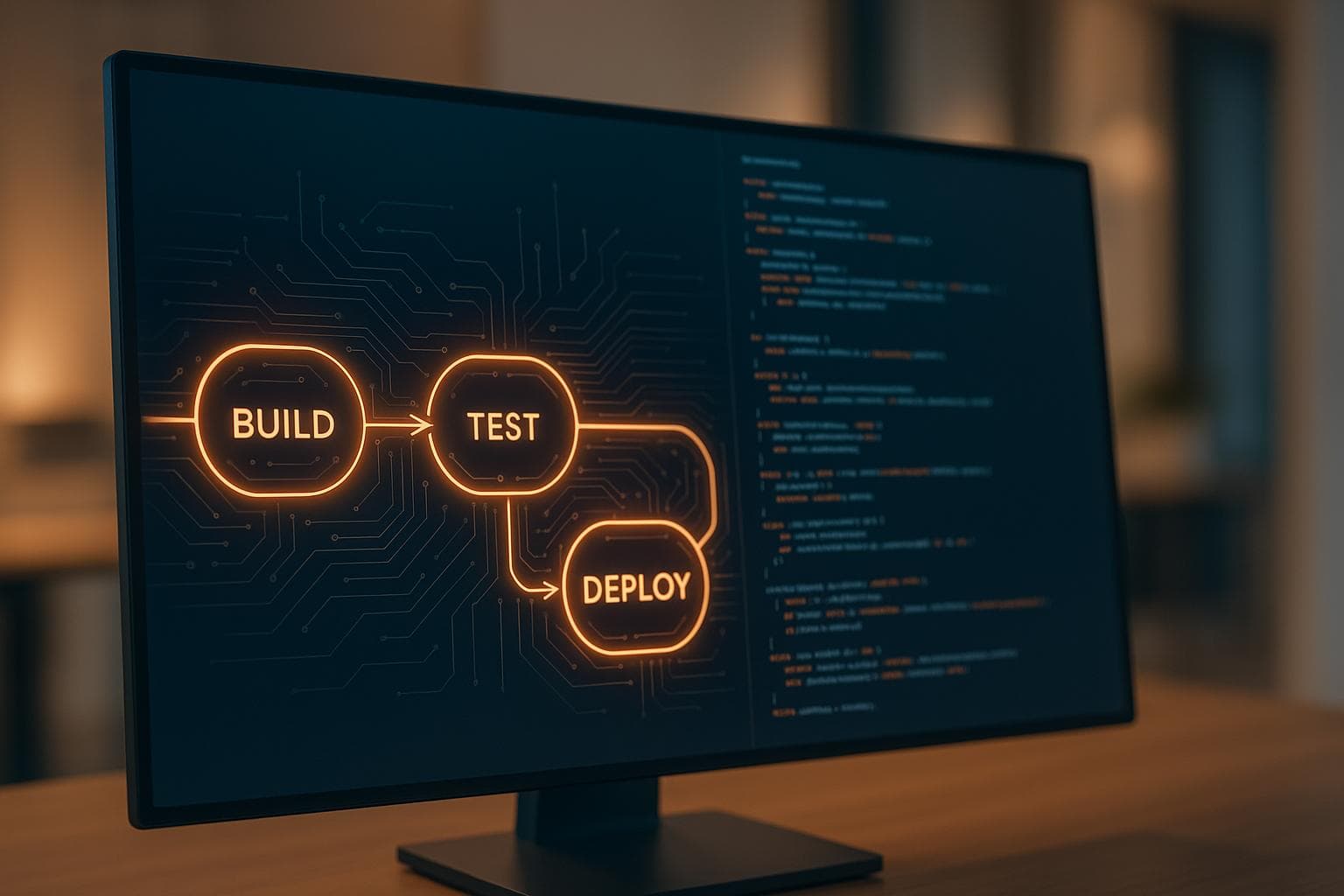
This tests CI/CD pipeline design. Cover Dockerized environments, parallel runs, flaky-test retries, and selective execution such as critical tests per commit and full suites nightly. Red flag: running all tests on every commit without isolation or retries.
What's really being asked
The interviewer wants to see if you understand that E2E tests in CI are fundamentally different from unit tests because they are slow, brittle, and resource-intensive. They are checking whether you can balance thoroughness with pipeline speed, manage infrastructure for reproducibility, and design failure handling that does not block teams on transient issues.
The full answer
First, environment isolation via Docker Compose to spin up the app, database, and dependencies with clean seeded data for every run. Second, parallelization strategy such as sharding tests across runners or using a framework like Playwright which benchmarks at roughly 4.5 seconds per test versus Cypress at about 9.4 seconds, since serial E2E suites can take tens of minutes. Third, flakiness mitigation through explicit waits instead of hard sleeps, automatic retry logic for failed tests, and network isolation to prevent cross-test contamination. Fourth, selective execution where critical smoke tests run on every commit while the full regression suite runs nightly or on release branches, preventing pull request feedback loops from ballooning. Fifth, artifact management including screenshots, videos, and logs on failure so developers can debug without rerunning locally.
The mistakes people make
A major red flag is suggesting the full E2E suite runs on every single commit with no retry or isolation strategy. Another is ignoring test data management, which leads to cascading failures when tests mutate shared state. Candidates who pick tools based only on popularity without mentioning tradeoffs, such as Cypress being limited to Chromium browsers or Selenium being slower than Playwright, also signal shallow experience. Finally, failing to discuss how to handle failures, whether by quarantining flaky tests or gating deployments, suggests a lack of operational thinking.
What usually comes next
The interviewer might ask how you would handle a test that fails one in ten runs, how to speed up a thirty-minute E2E stage, or how you would test features that rely on third-party services you cannot control. They may also probe your experience with specific tools like Playwright, Cypress, or Selenium, or ask how you would integrate test results back into pull request checks without making them required if flakiness persists.
A concrete example
In a previous project, we containerized the frontend, backend, and Postgres database using Docker Compose in GitHub Actions. We seeded the database before each run and used Playwright to execute tests across four parallel shards, cutting total runtime from roughly twenty-five minutes to under seven minutes. We configured two retries per failed test and uploaded trace files and screenshots as artifacts only on failure. Critical smoke tests ran on every pull request, while the full suite ran nightly against staging, which kept merge times fast without sacrificing release confidence.
Interview question
Which E2E CI strategy best balances fast pull request feedback with thorough release validation?
- a.Containerize the environment and run the complete suite per commit, choosing Cypress for popularity and blocking on every failure without retries
- b.Run the full E2E suite on every commit with automatic retries but without containerized environments
- c.Execute critical smoke tests on each pull request and run the full suite nightly in isolated Docker environments with retry logicCorrect
- d.Shard all tests across parallel runners but execute them against a shared persistent staging database
Why? this is the answer
The correct strategy uses selective execution to keep PRs fast while ensuring full coverage nightly, plus Docker isolation and retries to handle brittleness. Option A is tempting because it includes containerization, but running the entire suite on every commit without retries creates long pipelines and fragile gates.
Just read this? Test yourself on what you have been reading.
Read the original → ranger.net
- #ci/cd
- #e2e testing
- #pipeline design
- #test automation
- #flakiness
You just looked this up. Could you explain it out loud?
That is the part interviews actually test. Tezvyn takes questions like this one and gives you what the interviewer is really checking, the answer that lands, and the mistake that ends the conversation, in the four minutes before your next meeting.
The iPhone app is on the way
We are building it. Until it lands, nothing here is held back from you: every interview card, your saved cards, streaks and the job board all work in Safari, plus hundreds of free practice quizzes of thirty questions each. Sign in and it all carries over to the app the day it arrives.
Want it as an icon? Tap Share at the bottom of Safari, then Add to Home Screen. It opens full screen and the cards you have read stay available offline.
We are hiring for this. Open roles that interview on ci/cd — each one lists the topics its interview covers.
See open roles