How would you implement a timezone-safe, tamper-proof offer countdown?
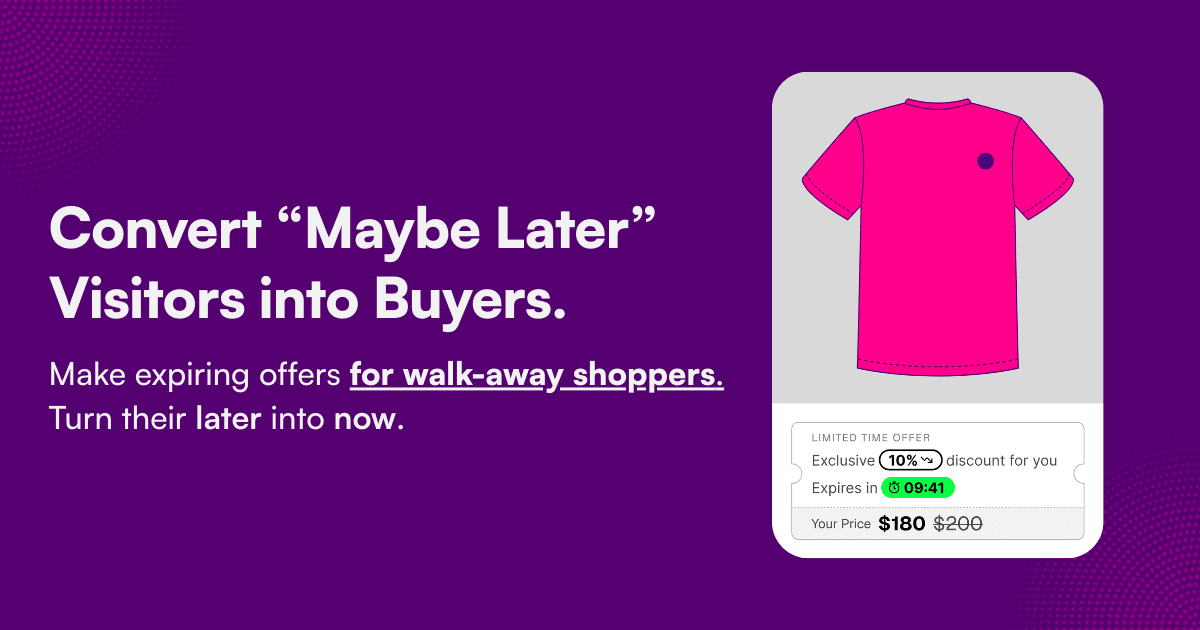
Tests distrust of the client and server-side UTC enforcement. Outline: server owns canonical end time; client syncs clock offset to render remaining time; checkout re-validates expiry. Red flag: using local Date.now or localStorage.
What's really being asked
This question looks simple but is designed to reveal whether you understand trust boundaries in distributed systems. A senior engineer knows that any code running on a user's device is adversarial by default. The interviewer wants to hear that you never let the client decide when an offer expires, because local clocks can be wrong, timezone conversions can be buggy, and malicious users can manipulate timestamps in localStorage or cookies. The core concept is canonical time ownership by the server and defense in depth.
The full answer
First, the server must own the absolute deadline as a UTC timestamp stored in the campaign database. The client fetches this via a dedicated endpoint that also returns the current server time. Second, the client calculates a one-time offset between the server timestamp and a local monotonic clock such as performance.now or Date.now captured at the moment of response. This offset drives the countdown display without trusting the user's system clock. Third, the UI must degrade gracefully when the timer reaches zero by hiding the banner or disabling the apply button, but this is purely cosmetic. Fourth, and most critically, the checkout or cart service must re-validate the offer server-side before finalizing the transaction. The promotion engine checks the canonical UTC deadline against the server clock, not any client-submitted value.
The mistakes people make
A major red flag is saying you would store the end time in a client-side cookie or localStorage and decrement it with setInterval. Another is suggesting you parse the deadline in the user's local timezone on the client. Some candidates mention NTP synchronization, which is over-engineering; you do not need atomic clocks, just a server-relative offset. Proposing to block the purchase with client-side JavaScript is also insufficient because scripts can be disabled or bypassed.
What usually comes next
The interviewer may ask how you would handle a user who opens the page before expiry but checks out after midnight server time. They might also ask what happens if the API that serves the deadline is cached by a CDN and returns a stale timestamp. A third follow-up could be how to prevent users from refreshing the page to see a reset timer, which tests whether you understand that the deadline must be session-independent and globally consistent.
A concrete example
Suppose a flash sale ends at 2025-11-27T23:59:59Z. The server stores this in the offers table. When the user loads the PDP, the client calls GET /api/offers/active and receives endTime: 1701129599000 and serverNow: 1701123000000. The client records localNow = Date.now, computes offset = serverNow - localNow, then every second recalculates remaining = endTime - (Date.now + offset). When remaining hits zero, the banner hides. Meanwhile, the checkout microservice queries the same offers table and rejects the promo code if the current server time is past the UTC deadline, ensuring no manipulation can succeed.
Interview question
When implementing a timezone-safe offer countdown, which design prevents users from manipulating the expiry?
- a.Store the UTC deadline in localStorage and decrement it with setInterval to persist across refreshes.
- b.Parse the deadline in the user's local timezone and compare it against Date.now to hide the banner.
- c.Disable the checkout button using client-side JavaScript when the countdown reaches zero without additional server checks.
- d.Let the server own the canonical UTC deadline, have the client sync via a server-time offset, and re-validate expiry at checkout.Correct
Why? this is the answer
This is the only option that keeps the canonical deadline on the server, uses a server-relative offset for display, and enforces expiry at checkout. Option A is tempting because localStorage seems like a simple way to persist state, but it allows trivial tampering with the deadline.
Just read this? Test yourself on what you have been reading.
Read the original → growthsuite.net
- #e-commerce
- #frontend
- #security
- #distributed-systems
- #utc
You just looked this up. Could you explain it out loud?
That is the part interviews actually test. Tezvyn takes questions like this one and gives you what the interviewer is really checking, the answer that lands, and the mistake that ends the conversation, in the four minutes before your next meeting.
The iPhone app is on the way
We are building it. Until it lands, nothing here is held back from you: every interview card, your saved cards, streaks and the job board all work in Safari, plus hundreds of free practice quizzes of thirty questions each. Sign in and it all carries over to the app the day it arrives.
Want it as an icon? Tap Share at the bottom of Safari, then Add to Home Screen. It opens full screen and the cards you have read stay available offline.
We are hiring for this. Every open role lists the topics its interview covers, so you can prepare for the real thing rather than guessing.
See open roles