Kotlin 2.4.0 Preview, Unified Toolchain, and LSP Alpha Land
Kotlin 2.4.0 stabilizes context parameters and explicit backing fields. A new Kotlin Toolchain unifies build, test, and agent workflows under one command, while the Language Server hits Alpha.
Why it matters
Kotlin is fifteen years old and now runs critical infrastructure from payments to tax filing. As AI agents become first-class participants in software development, the language and its tooling must evolve to support higher abstraction without sacrificing safety. The KotlinConf'26 keynote made clear that JetBrains is betting on ergonomics and trust as the differentiators that keep Kotlin relevant across JVM, native, and multiplatform codebases.
What changed
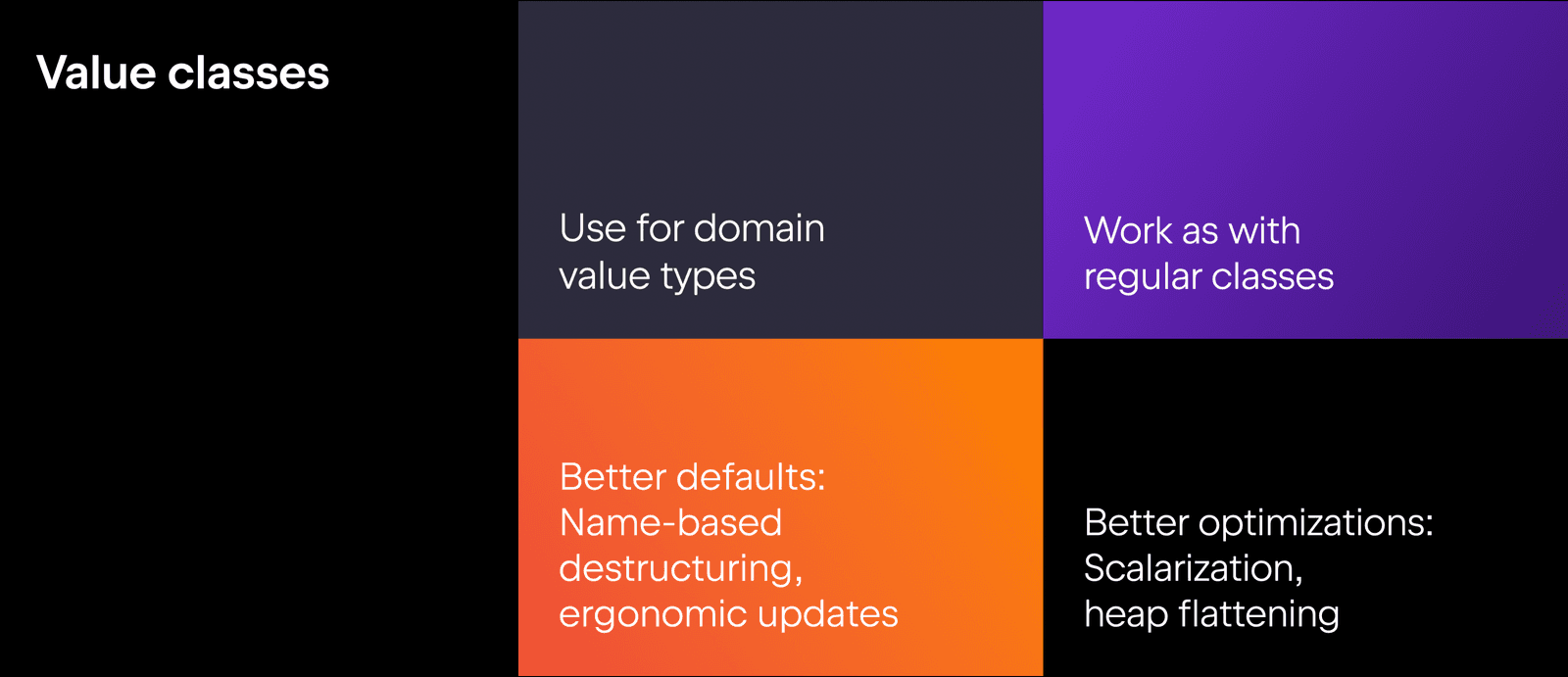
Kotlin Lead Language Designer Michail Zarečenskij previewed Kotlin 2.4.0, which stabilizes context parameters for more expressive APIs and explicit backing fields to cut boilerplate and improve safety. Experimental multi-field value classes are also incoming, offering automatic equals, hashCode, and toString implementations alongside safer name-based destructuring and no identity semantics, making them ideal for modeling money, colors, and other domain-specific data. On the tooling side, JetBrains introduced the Kotlin Toolchain, a unified command-line entry point that handles project creation, building, running, testing, formatting, documentation generation, and agent integration. Amper now serves as the core of this toolchain, which is available immediately for JVM and multiplatform projects. The Kotlin Language Server was promoted to Alpha, bringing IntelliJ-engine-backed diagnostics and completions to any LSP-compatible editor. Finally, the Kotlin Documentation Model introduces a specified, backward-compatible kdoc.jar format that ships alongside libraries so IDEs, Dokka, and AI agents can consume structured documentation programmatically.
What to watch
Kotlin 2.4.0 language features are still stabilizing, so watch for migration guides on context parameters and value classes before adopting in production. The Kotlin Toolchain is ready for evaluation now, but its planned LSP integrations, AI skills, and native dependency provisioning are still on the roadmap. Teams should also track the Language Server Alpha for stability if they are looking to reduce IntelliJ IDEA lock-in without sacrificing code intelligence.
Interview question
How do the Kotlin Language Server Alpha and the Kotlin Toolchain differ in purpose?
- a.The Language Server brings IntelliJ-engine-backed completions to LSP editors, while the Toolchain unifies build, test, and agent workflowsCorrect
- b.The Language Server generates kdoc.jar documentation for AI agents, while the Toolchain handles code formatting
- c.The Language Server is a unified CLI for building and testing, while the Toolchain provides editor diagnostics
- d.The Language Server stabilizes context parameters, while the Toolchain introduces explicit backing fields
Why? this is the answer
The Language Server delivers IntelliJ-engine-backed diagnostics and completions to LSP-compatible editors, whereas the Toolchain is a unified CLI for builds, tests, and agents. Option C reverses these roles, which is tempting because both tools were announced together and relate to developer workflow.
Just read this? Test yourself on what you have been reading.
Read the original → blog.jetbrains.com
You just looked this up. Could you explain it out loud?
That is the part interviews actually test. Tezvyn takes questions like this one and gives you what the interviewer is really checking, the answer that lands, and the mistake that ends the conversation, in the four minutes before your next meeting.
The iPhone app is on the way
We are building it. Until it lands, nothing here is held back from you: every interview card, your saved cards, streaks and the job board all work in Safari, plus hundreds of free practice quizzes of thirty questions each. Sign in and it all carries over to the app the day it arrives.
Want it as an icon? Tap Share at the bottom of Safari, then Add to Home Screen. It opens full screen and the cards you have read stay available offline.
We are hiring for this. Open roles that interview on kotlin — each one lists the topics its interview covers.
See open roles