Task Analysis: Mapping User Goals to Actions
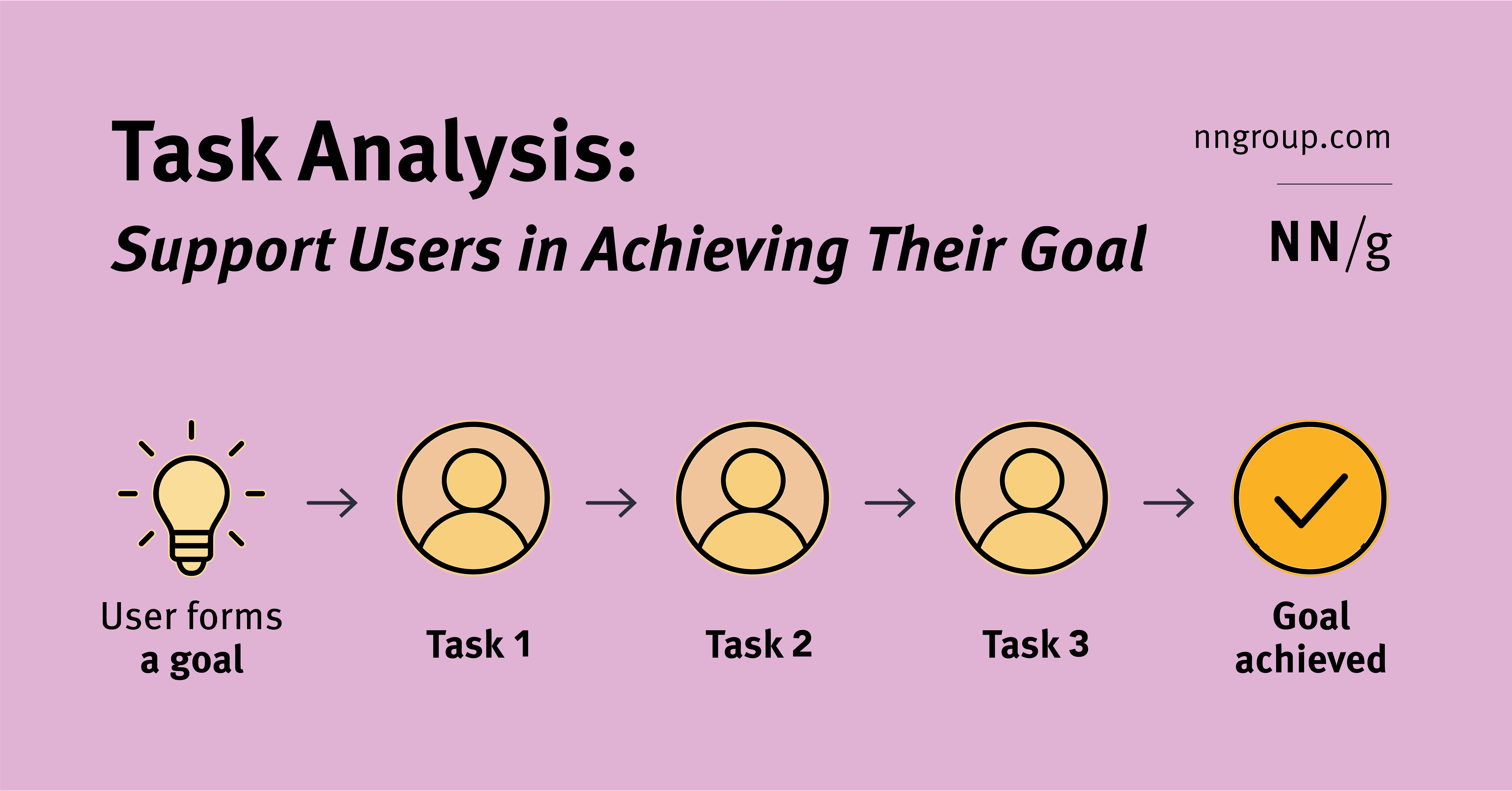
Task analysis maps the specific actions (tasks) a user takes to achieve their larger objective (goal). It's used to ensure a product actually helps users, not just creates busywork. The key mistake is designing for the task instead of the user's true goal.
Why it exists
Task analysis exists to prevent building products that solve the wrong problem. A design that doesn't support a user's actual tasks will fail, no matter how polished its UI. It grounds the design process in the reality of how people work, not how designers assume they work.
The mental model
Separate the "why" from the "how." The user's goal is the "why" (e.g., set up a retirement fund). The series of observable actions they take to get there are the "hows," or tasks (e.g., search for deals, speak to an advisor, fill out a form). Task analysis is the study of this entire goal-to-task chain.
How it works
It's a two-stage process. First, gather information by observing and speaking with users. Common methods include contextual inquiry (watching users in their own environment), critical incident interviews (discussing specific past events), and user diaries. Second, analyze this data to understand the sequence, hierarchy, and complexity of the tasks. This analysis is often documented with flow diagrams.
When to use it
Use task analysis early in the design process, before building a new product or redesigning an existing workflow. It's essential for understanding user needs and ensuring your solution is relevant. It can be applied to digital systems or even physical, system-agnostic processes like grocery shopping.
When not to use it
Task analysis focuses on a single user achieving their goal. It is not the right tool for understanding group dynamics or broad job roles. For understanding how multiple people collaborate, use workflow analysis. For understanding all the duties of a specific job over time, use job analysis.
One canonical example
A user's goal is to set up a retirement fund. Their goal is NOT to fill out a form. To achieve their goal, they perform several tasks: searching for good deals, speaking to a financial advisor, and finally, filling in an application form. A good design supports the entire goal, making each task easier, rather than just hyper-optimizing one isolated task like the form-filling.
Interview question
What is the primary benefit of conducting a task analysis in product design?
- a.To define the complete set of responsibilities and skills required for a user's job role.
- b.To create detailed flow diagrams illustrating every user interaction with the system.
- c.To identify and fix usability issues within specific user interface components.
- d.To ensure the product effectively helps users achieve their overarching goals.Correct
Why? this is the answer
The card states task analysis exists "to prevent building products that solve the wrong problem" by focusing on the user's "why" (goal) rather than just the "how" (tasks). Option B describes a method used in task analysis, not its primary benefit. Option A describes job analysis, which the card explicitly differentiates from task analysis. Option C is too narrow; task analysis focuses on the entire goal-to-task chain, not just individual UI components.
Just read this? Test yourself on what you have been reading.
Read the original → nngroup.com
- #ux research
- #user experience
- #product design
- #human factors
You just looked this up. Could you explain it out loud?
That is the part interviews actually test. Tezvyn takes questions like this one and gives you what the interviewer is really checking, the answer that lands, and the mistake that ends the conversation, in the four minutes before your next meeting.
The iPhone app is on the way
We are building it. Until it lands, nothing here is held back from you: every interview card, your saved cards, streaks and the job board all work in Safari, plus hundreds of free practice quizzes of thirty questions each. Sign in and it all carries over to the app the day it arrives.
Want it as an icon? Tap Share at the bottom of Safari, then Add to Home Screen. It opens full screen and the cards you have read stay available offline.
We are hiring for this. Open roles that interview on ux research — each one lists the topics its interview covers.
See open roles