The Beat Sheet: A Story's Structural Blueprint
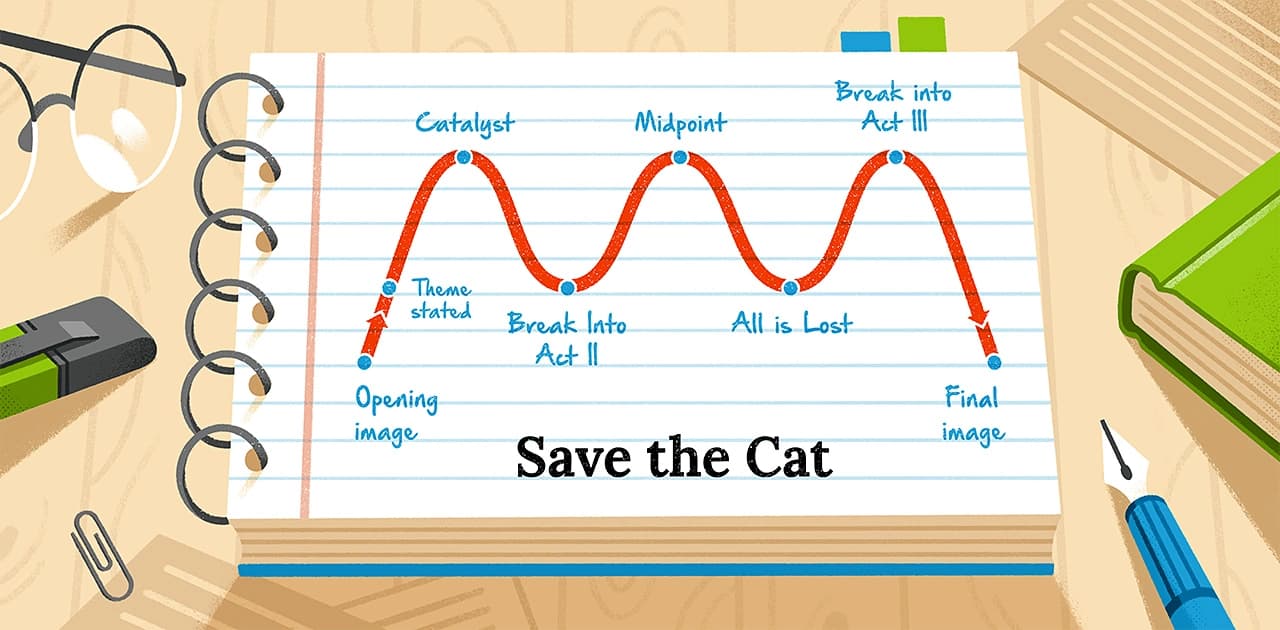
A beat sheet is a checklist of key emotional moments that structure a story. The popular "Save the Cat" method provides a template for outlining plots, ensuring proper pacing. The main footgun is following it too rigidly, creating a predictable story.
Why it exists
Stories need structure to be satisfying. Without a plan for pacing, character arcs, and plot twists, a narrative can feel aimless or rushed. The beat sheet was developed as a tool for writers to ensure a story hits all the necessary emotional and structural points to engage an audience from beginning to end.
The mental model
Think of a beat sheet as the architectural blueprint for a building. While the architect (the writer) still needs to choose the materials, design the interior, and add unique details, the blueprint ensures the foundation is solid, the walls are in the right place, and the roof won't collapse. It's a guide for structure, not a substitute for creativity.
How it works
The "Save the Cat" beat sheet, by screenwriter Blake Snyder, is the most well-known example. It breaks a story into 15 specific "beats" or plot points, such as "Opening Image," "Catalyst," "Midpoint," and "Final Image." Each beat corresponds to a specific event or character moment that should occur at a certain point in the story to maintain momentum and develop the plot. The name itself comes from a specific type of beat.
When to use it
Use a beat sheet during the outlining phase of a project, before you start writing prose. It's invaluable for plotting commercial fiction, screenplays, or any story where conventional pacing is desired. It helps you see the entire story at a glance, identify plot holes, and ensure your character's journey has a clear and compelling arc.
When not to use it
Avoid it for highly experimental or literary fiction where subverting traditional structure is the goal. The primary danger is treating the beat sheet as a rigid, paint-by-numbers formula. If you follow it too literally without injecting your own voice, your story can feel predictable and generic. Remember that an outline is only an outline.
One canonical example
The beat sheet's name comes from a specific type of beat designed to make the audience like the protagonist. Imagine a story where the hero is a cynical mercenary. Early in the story, you might include a scene where they, against their own stated character, stop to rescue a literal cat stuck in a tree. This single beat, the "Save the Cat" moment, endears the character to the audience and signals their inner goodness, making us want to follow their journey.
Interview question
A writer using a beat sheet should be most cautious about which potential pitfall?
- a.Failing to appeal to a broad audience due to niche structural choices.
- b.Overcomplicating the narrative with too many structural points.
- c.Neglecting character development in favor of plot mechanics.
- d.Producing a story that feels generic and lacks a unique voice.Correct
Why? this is the answer
The card warns that the primary danger is treating the beat sheet as a rigid, paint-by-numbers formula, which can make a story feel predictable and generic if the writer doesn't inject their own voice. While beat sheets guide plot, they also ensure character arcs, so neglecting character development is not their inherent pitfall.
Just read this? Test yourself on what you have been reading.
Read the original → reedsy.com
- #writing
- #storytelling
- #structure
- #plotting
You just looked this up. Could you explain it out loud?
That is the part interviews actually test. Tezvyn takes questions like this one and gives you what the interviewer is really checking, the answer that lands, and the mistake that ends the conversation, in the four minutes before your next meeting.
The iPhone app is on the way
We are building it. Until it lands, nothing here is held back from you: every interview card, your saved cards, streaks and the job board all work in Safari, plus hundreds of free practice quizzes of thirty questions each. Sign in and it all carries over to the app the day it arrives.
Want it as an icon? Tap Share at the bottom of Safari, then Add to Home Screen. It opens full screen and the cards you have read stay available offline.
We are hiring for this. Every open role lists the topics its interview covers, so you can prepare for the real thing rather than guessing.
See open roles