The Framing Effect: How Presentation Changes Decisions
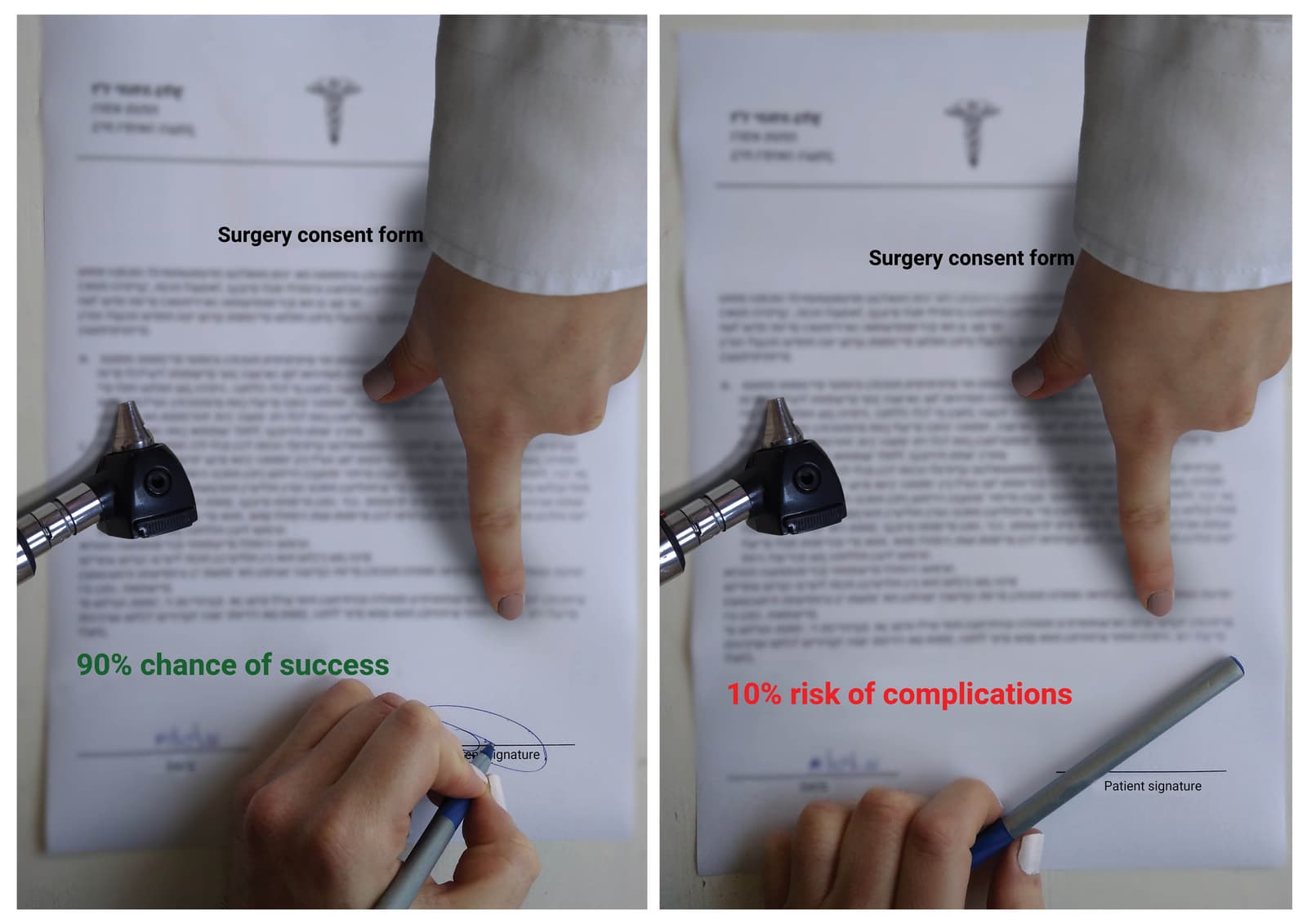
The way you frame a choice—as a gain or a loss—changes how people decide, even if the options are identical. This is why "80% lean" sells better than "20% fat." The footgun is assuming people are rational; presentation often beats pure logic.
Why it exists
The Framing Effect explains a predictable irrationality in human decision-making. We don't evaluate options in a vacuum based on pure logic. This cognitive bias shows our choices are heavily influenced by the context and language used, especially our deep-seated aversion to loss.
The mental model
Think of two identical products on a shelf. One is labeled "90% effective," the other "10% failure rate." Though logically the same, most people will perceive the first as superior. The "frame" (positive vs. negative language) changes the perceived value, not the underlying facts.
How it works
The effect hinges on loss aversion. People feel the sting of a loss more acutely than the pleasure of an equivalent gain. When options are framed as gains, we become risk-averse and prefer to lock in the sure thing. When framed as losses, we become risk-seeking, willing to gamble to avoid a guaranteed negative outcome. This is why people will choose a certain "200 lives saved" but reject a certain "400 deaths," even when the scenarios involve the same 600 total lives.
When to use it
This is a core tool in marketing, UX copywriting, and public policy. Use it to encourage adoption or guide behavior. For example, frame a software subscription as "Gain access to all features" instead of "Avoid losing access." Frame energy savings in terms of money gained rather than waste avoided.
When not to use it
Using framing to deceive or obscure important details is unethical and destroys user trust. It is also less effective on experts in a domain who are trained to convert all options to a common, objective metric before comparison. If your audience is highly analytical, focus on the raw data, as they are more likely to see through the frame.
One canonical example
In a famous study, participants considered a response to a disease expected to kill 600 people. In the positive frame, most chose Program A ("saves 200 people for sure") over Program B (a 1/3 chance of saving all 600). In the negative frame, most chose Program D (a 1/3 chance no one dies) over Program C ("400 people will die for sure"). Programs A and C are identical outcomes, as are B and D. The switch from a "gain" frame (lives saved) to a "loss" frame (people dying) reversed the popular choice.
Interview question
According to the Framing Effect, how does presenting a choice as a potential loss typically influence decision-making?
- a.Individuals become risk-seeking, willing to take chances to avoid the certain negative outcome.Correct
- b.Individuals tend to become risk-averse, prioritizing a guaranteed, smaller negative outcome.
- c.Individuals are more likely to defer the decision, seeking additional information to mitigate the perceived risk.
- d.Individuals evaluate the options more rationally, as the negative frame highlights potential pitfalls.
Why? this is the answer
The card explicitly states that when options are framed as losses, people become risk-seeking, willing to gamble to avoid a guaranteed negative outcome. Option B describes the behavior when choices are framed as gains, not losses.
Just read this? Test yourself on what you have been reading.
Read the original → en.wikipedia.org
- #cognitive bias
- #psychology
- #copywriting
- #ux
You just looked this up. Could you explain it out loud?
That is the part interviews actually test. Tezvyn takes questions like this one and gives you what the interviewer is really checking, the answer that lands, and the mistake that ends the conversation, in the four minutes before your next meeting.
The iPhone app is on the way
We are building it. Until it lands, nothing here is held back from you: every interview card, your saved cards, streaks and the job board all work in Safari, plus hundreds of free practice quizzes of thirty questions each. Sign in and it all carries over to the app the day it arrives.
Want it as an icon? Tap Share at the bottom of Safari, then Add to Home Screen. It opens full screen and the cards you have read stay available offline.
We are hiring for this. Every open role lists the topics its interview covers, so you can prepare for the real thing rather than guessing.
See open roles