User Journey Mapping: Seeing Your Product Through a User's Eyes
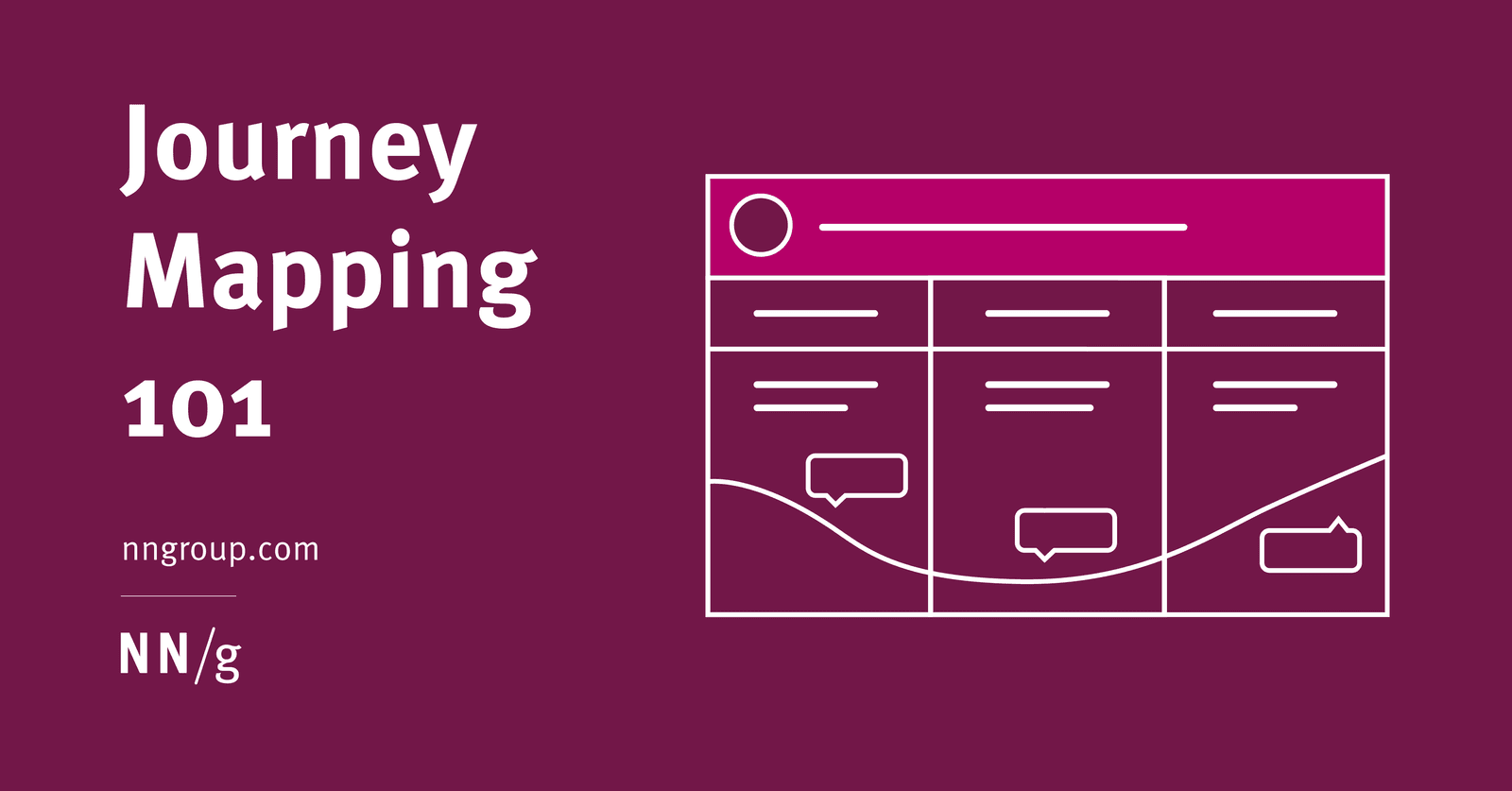
A user journey map tells the story of a user achieving a goal, visualizing their actions, thoughts, and feelings from start to finish. It's essential for understanding complex, multi-channel processes.
Why it exists
Teams often see their product in silos—frontend, backend, marketing—which can create a fragmented user experience. Journey mapping forces a holistic, user-centric view by visualizing the entire path a person takes to accomplish a goal, revealing the painful gaps between those silos.
The mental model
Think of a journey map as a movie script for your user. The "actor" is your main character (a specific persona), the "scenario" is the plot (their goal), and the "scenes" are the journey phases (discover, buy, use). For each scene, you document what the character does, thinks, and feels, revealing the emotional highs and lows of their experience.
How it works
A journey map is a visualization, typically a grid. The horizontal axis is a timeline broken into high-level phases. The vertical axis contains rows detailing the user's actions, thoughts, and emotions at each phase. The map starts by defining a single actor (persona) and a specific scenario with clear goals. The bottom of the map synthesizes this information into key insights, pain points, and opportunities for improvement, often assigning internal ownership to drive action.
When to use it
Use journey maps to understand and improve experiences that are a sequence of events over time. They are especially valuable for processes that cross multiple channels, like a customer who sees an ad, visits the website, and completes a purchase on their phone. They are also used for designing new products by mapping out an anticipated user flow.
When not to use it
Journey mapping is less useful for capturing a single, static moment; it's about a process. The biggest anti-pattern is creating a map based on internal assumptions or wishful thinking instead of grounding it in user research. A map without data is a work of fiction. Also, avoid creating one map for multiple user types; each actor needs their own map to provide a clear, actionable narrative.
One canonical example
An e-commerce company maps the journey of buying speakers. The actor is "Alex, the tech-savvy music lover." The scenario is "Find and purchase high-quality Bluetooth speakers." The phases are Discover, Research, Purchase, Use, and Seek Support. The map shows Alex's actions (reading reviews), thoughts ("Is this brand reliable?"), and emotions (frustration at checkout, delight with fast shipping), leading to opportunities like "Simplify the checkout form."
Interview question
Which scenario represents an anti-pattern when developing a user journey map?
- a.Focusing on a user's journey that involves multiple interaction channels
- b.Visualizing a user's actions, thoughts, and feelings across different stages
- c.Creating the map based on internal team brainstorming and assumptionsCorrect
- d.Mapping the experience of a single, well-defined user persona
Why? this is the answer
The card explicitly states that 'The biggest anti-pattern is creating a map based on internal assumptions or wishful thinking instead of grounding it in user research.' The other options describe best practices or core elements of effective user journey mapping.
Just read this? Test yourself on what you have been reading.
Read the original → nngroup.com
- #user journey mapping
- #ux
- #product management
- #user research
You just looked this up. Could you explain it out loud?
That is the part interviews actually test. Tezvyn takes questions like this one and gives you what the interviewer is really checking, the answer that lands, and the mistake that ends the conversation, in the four minutes before your next meeting.
The iPhone app is on the way
We are building it. Until it lands, nothing here is held back from you: every interview card, your saved cards, streaks and the job board all work in Safari, plus hundreds of free practice quizzes of thirty questions each. Sign in and it all carries over to the app the day it arrives.
Want it as an icon? Tap Share at the bottom of Safari, then Add to Home Screen. It opens full screen and the cards you have read stay available offline.
We are hiring for this. Every open role lists the topics its interview covers, so you can prepare for the real thing rather than guessing.
See open roles