Visual Regression Testing: Spot the Difference for UIs
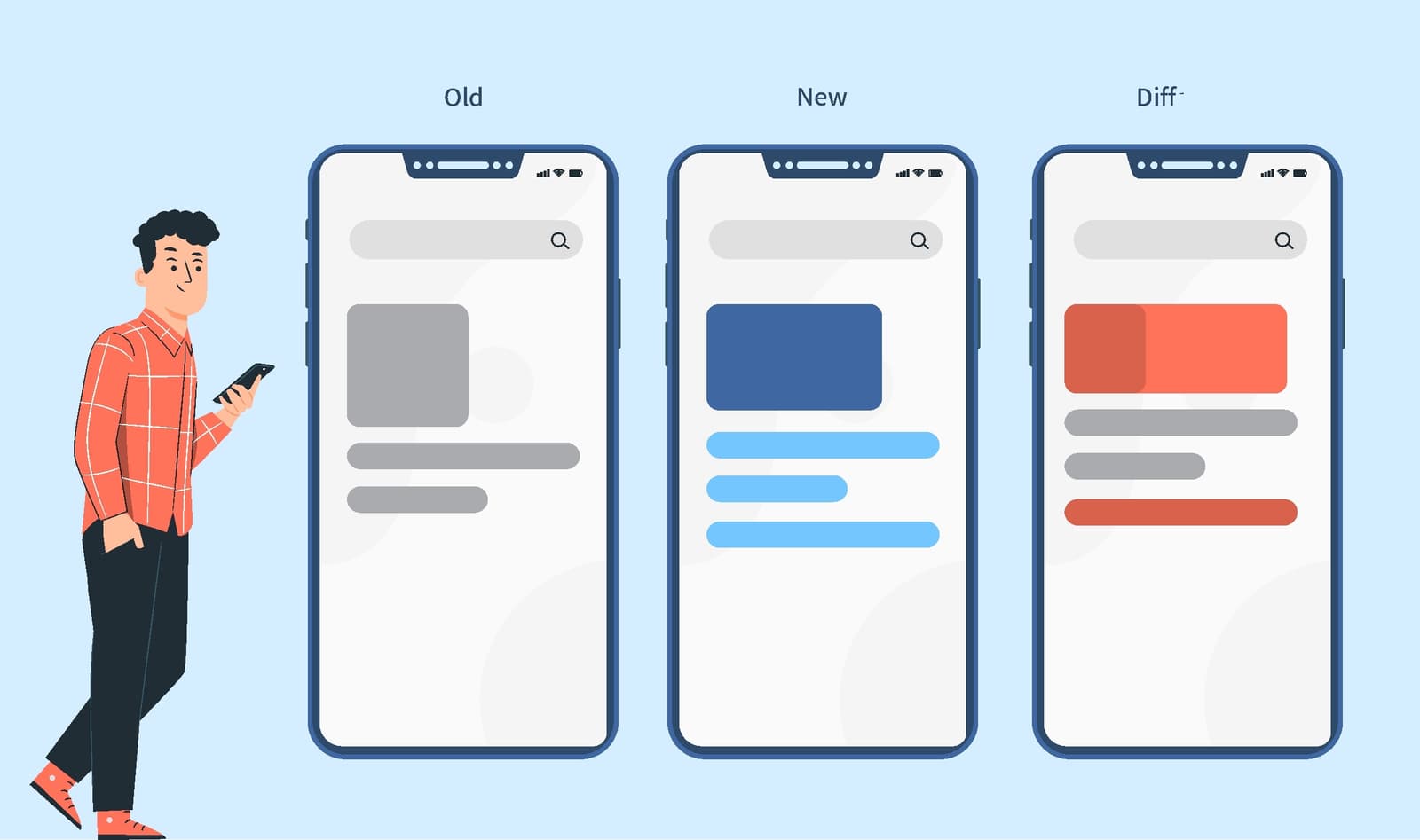
Visual regression testing is like an automated 'spot the difference' for your UI, catching visual bugs functional tests miss. It's used in CI/CD to compare screenshots before and after a code change.
WHY IT EXISTS Functional tests ensure an application works, but not that it looks right. A button can be clickable but be 100px to the left, the wrong color, or hidden behind another element. Visual regressions degrade user trust and break the user experience, and are tedious and unreliable to catch manually across many browsers and devices.
THE MENTAL MODEL Think of it as an automated 'spot the difference' game. You provide a 'before' picture (the baseline) of a UI component or page. After you change your code, a tool takes an 'after' picture and highlights every single pixel that changed. Your job is to look at the highlighted differences and decide if the change was an intended improvement or an accidental bug.
HOW IT WORKS The process involves three main steps. First, a tool captures a baseline image of a UI component in a known-good state. Second, after code changes are committed, the tool captures a new image of the same component in the exact same environment. Third, a pixel-by-pixel comparison is performed. If differences are found, the tool generates a 'diff' image that highlights the changes for a developer to review. If the change is intended, the developer approves it, and the new image becomes the baseline for future tests. If it's a bug, they reject it and fix the code.
WHEN TO USE IT Use it in your CI/CD pipeline to automatically verify the visual integrity of your UI components and pages. It is especially valuable for design systems, component libraries, and applications where visual consistency is critical. It acts as a safety net against unexpected CSS side effects that are easy for developers to miss during code review.
WHEN NOT TO USE IT Avoid using it on pages with highly dynamic, unpredictable content like third-party ads, live data feeds, or complex animations, as these will constantly trigger false positives. The overhead of managing baselines for rapidly changing, low-impact pages may also outweigh the benefits. It is not a replacement for functional testing; it complements it.
ONE CANONICAL EXAMPLE A developer updates the padding on a primary button component in a design system. They run the visual regression tests. The test for the button component fails, showing a diff where the button is slightly larger. This is expected, so they approve the change. However, a test for the site's main login form also fails. The diff shows the larger button now overlaps the 'Forgot Password' link. This is an unintended side effect—a visual bug—that the developer can now fix before it reaches production.
Read the original → browserstack.com
Get five bites like this every day.
Tezvyn delivers a daily feed of 60-second tech bites with quizzes to lock in what you learn.