W3C Design Tokens: A JSON Standard for Design Systems
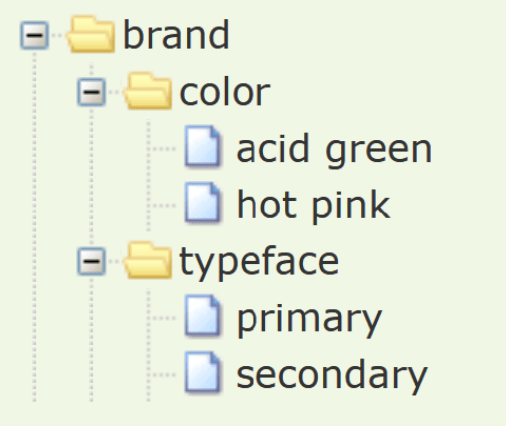
The W3C Design Tokens format is a universal translator for your design system's variables. It's a standard JSON structure that lets design tools and codebases speak the same language for colors and spacing.
Why it exists
Before the W3C standard, every design tool and code-generation library had its own proprietary format for design tokens. This created a 'Tower of Babel' problem, requiring brittle, custom scripts to translate values between Figma, Style Dictionary, and various codebases. The standard format creates a single, predictable language for all tools to speak, enabling true interoperability.
The mental model
Think of the Design Tokens format as a universal power adapter for your design system's properties. Instead of having separate, incompatible plugs for your web, iOS, and Android projects, you define your core design decisions—colors, spacing, typography—once in a standard JSON format. Tooling then acts as the adapter, converting this single source of truth into the specific format each platform needs, like CSS variables, Swift code, or XML values.
How it works
The specification defines a standard JSON structure. At its core, a design token is an object with a value and a type (e.g., color, dimension, fontFamily). Tokens are organized into hierarchical groups. The real power comes from aliases, which allow one token to reference another's value using a string like '{color.brand.primary}'. This lets you build a semantic system (e.g., button.background.primary) on top of primitive values (e.g., blue.500), so a single change to the primitive propagates everywhere.
When to use it
Adopt this standard when you need to maintain a design system across multiple platforms (web, iOS, Android) or multiple teams. It creates a single source of truth that automates the handoff from design to engineering, drastically reducing inconsistencies and manual work. It's essential for scaling design systems.
When not to use it
For a small, single-platform project with a solo developer, the overhead of setting up a token pipeline might be unnecessary. If you're only targeting the web, using native CSS custom properties directly might be a simpler and faster approach. The standard's value shines with cross-platform complexity.
One canonical example
A token file might define a base color like color.brand.primary with a value of #0A74FF and a type of color. A semantic token, like button.primary.background, can then reference this using an alias: its $value would be the string '{color.brand.primary}'. When a tool processes this file, it resolves the reference, ensuring the button's background is always the correct brand color.
Interview question
Which feature of the W3C Design Tokens specification is most crucial for maintaining consistency across a design system when primitive values change?
- a.The standard JSON structure, which ensures universal tool compatibility.
- b.The use of aliases, enabling semantic tokens to reference and resolve primitive values.Correct
- c.The explicit 'type' property for each token, ensuring data integrity.
- d.The hierarchical grouping of tokens, allowing for logical organization.
Why? this is the answer
Aliases are explicitly stated as the mechanism that allows semantic tokens to reference primitive values, ensuring a single change to a primitive propagates everywhere. While the standard JSON structure enables tool compatibility, aliases are key for internal system consistency during value updates.
Just read this? Test yourself on what you have been reading.
Read the original → designtokens.org
You just looked this up. Could you explain it out loud?
That is the part interviews actually test. Tezvyn takes questions like this one and gives you what the interviewer is really checking, the answer that lands, and the mistake that ends the conversation, in the four minutes before your next meeting.
The iPhone app is on the way
We are building it. Until it lands, nothing here is held back from you: every interview card, your saved cards, streaks and the job board all work in Safari, plus hundreds of free practice quizzes of thirty questions each. Sign in and it all carries over to the app the day it arrives.
Want it as an icon? Tap Share at the bottom of Safari, then Add to Home Screen. It opens full screen and the cards you have read stay available offline.
We are hiring for this. Open roles that interview on design systems — each one lists the topics its interview covers.
See open roles