Search
Find a bite, explore a topic or look for a role.
Results for “Python”
Bites 291
Task Decomposition: Teaching LLMs to Plan
Task decomposition for an LLM agent is like writing a recipe: break a big goal into a checklist of small, executable steps. It's vital for complex requests like planning a trip, but a bad initial plan can cause cascading failures that doom the entire process.
Core ML: On-Device Machine Learning for Apple Apps
Core ML runs pre-trained machine learning models directly on Apple devices, enabling fast, private, and offline AI. It's used for features like real-time image recognition or text analysis. The footgun: Core ML only runs models; it doesn't train them.
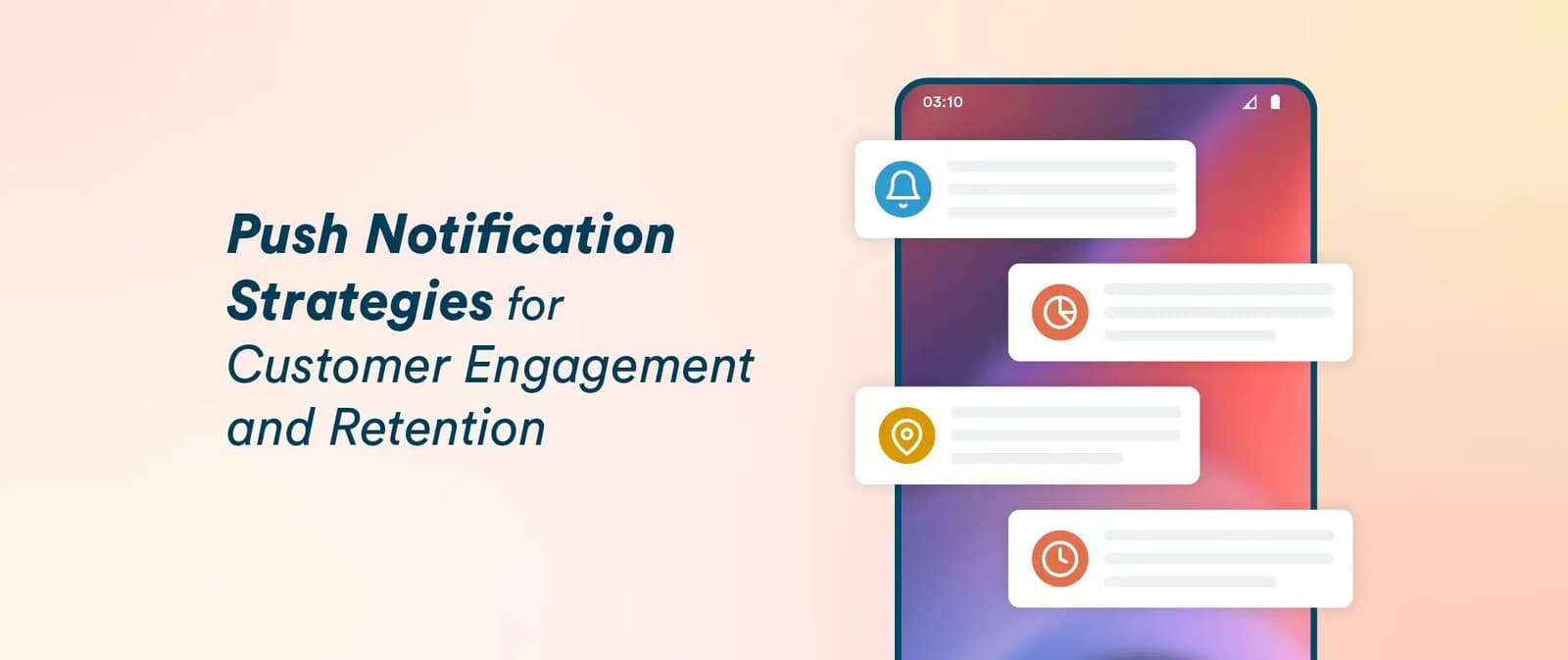
Push Notifications: Strategy Over Noise
A push notification strategy treats a user's lock screen like rented real estate, not a free megaphone. It's used by mobile apps to re-engage users with timely value, like sales or reminders.
cbindgen: Auto-generate C/C++ Headers for Rust
cbindgen automatically generates C/C++ headers for your Rust code, saving you from writing tedious FFI boilerplate. Use it when exposing a Rust library to other languages. Its feature set is ad-hoc, so it may not support your specific edge case out of the box.
Rust: Expose Functions to C with `#[no_mangle]`
The #[no_mangle] attribute tells the Rust compiler not to alter a function's name, exposing a stable symbol for C code to call. Use it with extern "C" to create Rust libraries for other languages. The footgun is forgetting extern "C", causing crashes.
Rust: Bridging C Strings with CStr and CString
CString and CStr are Rust's safe wrappers for C's nul-terminated strings. CString builds a C-compatible string to pass *out* of Rust; CStr interprets one coming *in*. Use them for any FFI calls.
Regex Engines: Backtracking vs. Finite Automata
A backtracking regex engine tries one path at a time, which can be fast but also exponentially slow. A finite-automata engine (like Go's) checks all paths at once, guaranteeing linear time. The footgun is using a backtracking engine on untrusted user input.
Rust's Turbofish (`::<>`): When the Compiler Needs Help
The turbofish (::<>) is your tool to resolve ambiguity when Rust's compiler can't infer a type or trait. Use it when a type implements multiple traits with same-named methods, forcing the compiler to pick the one you specify.
Go's Design Philosophy: Engineering Over Novelty
Go's design philosophy is engineering over novelty, built to solve Google's problems with slow builds and complexity in massive codebases. It excels at large, networked systems where maintainability and fast compilation are critical.

Prometheus Exporters: Translating Metrics for Monitoring
A Prometheus Exporter is a translator, converting metrics from third-party systems like databases or hardware into the format Prometheus can scrape. Use one when you can't modify an app's code directly.

Kubernetes Jobs: For Tasks That Need to Finish
A Kubernetes Job runs a task to completion, unlike a Deployment which runs forever. Use it for one-off operations like database migrations or batch processing. The footgun is forgetting to set a retry limit, causing failed jobs to loop indefinitely.
Artifact Registry: Google's Universal Package Manager
Artifact Registry is a private, universal package manager for all your software components, not just Docker images. Use it to store your company's Docker images, Java JARs, and Helm charts in one place, integrated with GCP CI/CD.
Docker Push and Pull: Moving Container Images
Think of docker push and pull like git push and pull, but for container images. They move images between your machine and a remote registry. A common mistake is forgetting to tag an image with the registry's full address before pushing.
Docker Compose: Orchestrate Multi-Container Apps Locally
docker compose is a conductor for multi-container apps, using a single YAML file to define and run all the parts of your stack together. It's ideal for local development to spin up a database and API with one command.
Docker Image Scanning: A Background Check for Your Code
Docker image scanning is a background check for your software dependencies, checking packages against known vulnerability lists (CVEs). It's used in CI/CD to block vulnerable builds and in registries for continuous monitoring.
Docker Multi-stage Builds: Slimmer, Faster Images
Treat your Dockerfile like a pipeline: build your app in one stage with all its tools, then copy only the final artifact to a clean production stage. This keeps images small by excluding build-time dependencies.
Docker Networking: How Containers Talk to Each Other
Docker gives each container its own isolated network, preventing port conflicts. Containers connect via networks, like bridge for local communication. For containers to find each other by name, you must use a user-defined bridge network; the default one…
Docker Image Tagging: Versioning for Containers
A Docker tag is a human-readable label for a specific image version, like ubuntu:22.04. You use tags to pull specific base images or version your own builds. The biggest footgun is relying on the latest tag, which is just a convention.
The 'Works on My Machine' Problem
Code runs on your laptop but fails in production because of hidden differences in environments. Docker solves this by packaging an app and its dependencies into a portable container, ensuring it runs the same everywhere.
Semantic Versioning: The MAJOR.MINOR.PATCH Contract
Semantic Versioning (MAJOR.MINOR.PATCH) is a contract that tells users if an update will break their code. It's used by package managers to safely resolve dependencies.