Search
Find a bite, explore a topic or look for a role.
Results for “Kubernetes”
Bites 384
Docker Compose for Multi-Container Apps
Docker Compose is a conductor for your containers. Instead of running each service manually, you define your app and its database in one YAML file and launch them together. This is standard for local Node.js/Postgres development.

PM2: The Process Manager for Production Node.js
PM2 is a process manager that keeps your Node.js apps online. Use it to automatically restart crashed apps, run them in the background, and scale across CPU cores. The footgun is forgetting to run pm2 save to make your process list survive server reboots.
Shift-Left Resilience: Chaos in Your CI/CD Pipeline
Think of it as an automated stress test in your build pipeline that breaks things on purpose. It runs alongside integration tests, injecting faults like pod failures to find weaknesses before a merge.
Service Discovery: How Services Find Each Other
Instead of hardcoding IP addresses, services ask a central registry for the live address of other services they need to call. This is crucial in dynamic microservice environments where IPs change constantly.
Log Aggregation: Centralize Your System's Story
Log aggregation funnels scattered logs from many servers into one central, searchable system. It's crucial for debugging distributed systems where one request touches many services.
OpenTelemetry Resource: The 'Who' of Your Telemetry
An OpenTelemetry Resource is the return address for your telemetry, describing the service instance that produced it. It attaches stable context like service name and version to every signal, enabling filtering.
OpenTelemetry Collector: The Swiss Army Knife for Telemetry Data
The OpenTelemetry Collector is a universal adapter for your telemetry data. It receives data in one format, processes it, and exports it to multiple backends, letting you centralize configuration and avoid vendor lock-in.
Pull vs. Push: How Your Metrics Get to the Collector
Push vs. Pull metrics is about who starts the conversation. In a push model (like OTLP), the app sends metrics to a collector. In a pull model (like Prometheus), the collector scrapes metrics from the app. The footgun: pull can miss short-lived jobs.
Health Checks: Is Your Service Alive or Just Running?
A health check answers 'Can you do your job?', not just 'Are you running?'. Load balancers and orchestrators use this API endpoint to stop routing traffic to sick instances.
Cloud Cost Allocation: Making Teams Own Their Spend
Cloud cost allocation answers "who pays for what?" by assigning every dollar of your cloud bill to a team or project. It uses metadata like tags and account structures to create showback reports.
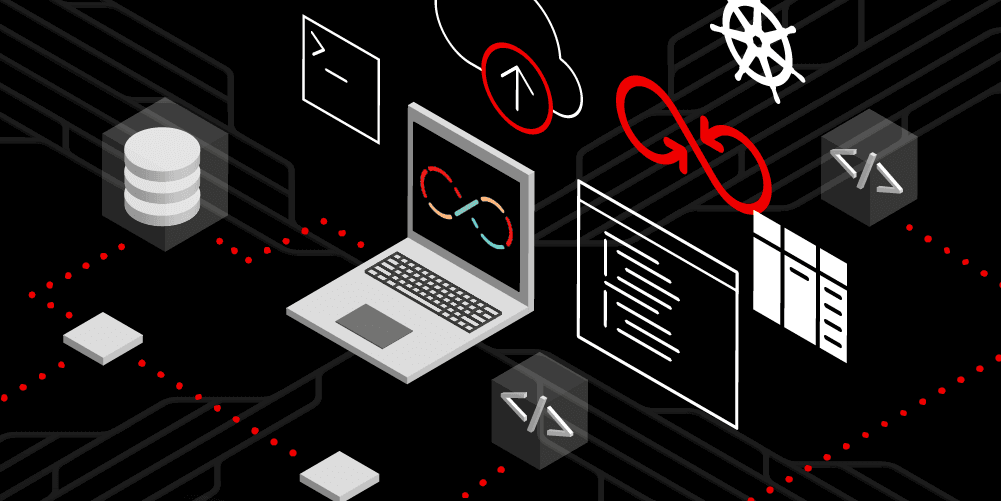
Hybrid Cloud MLOps: Train Anywhere, Deploy Everywhere
Treat your ML infrastructure like your applications—a consistent platform that runs anywhere, avoiding siloed stacks for data science and app dev. Use it to train on cloud GPUs but deploy on-prem for low latency, ensuring dev/prod parity across environments.
Compute Abstraction Layer: Run Code Anywhere
A Compute Abstraction Layer is a universal adapter for your code, letting you run it on a laptop, cloud GPU, or cluster without changes. It's used in MLOps to scale a script from local debug to production training. The footgun is a leaky abstraction.
BentoML: Packaging Models for Production APIs
BentoML is a standardized shipping container for your ML models, packaging them into production-ready API endpoints. Use it to deploy LLMs or RAG systems without managing complex infrastructure. Its focus is purely on inference, not model training.
Load Balancing for Model Serving
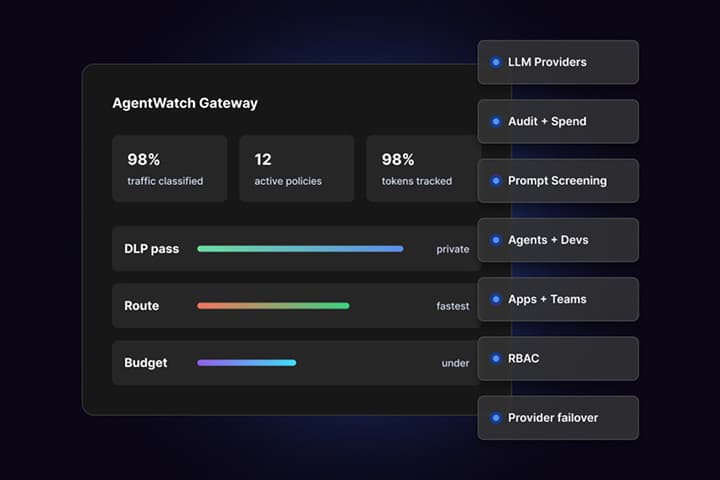
A load balancer is a traffic cop for your AI model's API, directing requests to multiple model copies to prevent overload. It's essential for production systems to ensure high availability. The footgun is forgetting health checks, causing failed requests.
GitOps for MLOps: Your ML System as Code
GitOps for MLOps treats your entire machine learning pipeline—data, code, and models—as declarative configuration in Git. It automates ML workflows, ensuring reproducibility by making every change a reviewable commit.
Elastic Training: Training Models on Unreliable Hardware
Elastic Training lets ML training jobs survive worker nodes being added or removed mid-run. It's like a construction crew that adapts to a changing number of workers, making it ideal for training large models on cheap but unreliable cloud spot instances.
Slurm: The Job Scheduler for Supercomputers
Slurm is the reservation system for a shared supercomputer, queuing up jobs and assigning them to available nodes. It's the backbone of high-performance computing clusters in science and ML.
Secrets Management: Beyond Environment Variables
Treat secrets like cattle, not pets: they should be temporary and replaceable. Use a central vault to dynamically inject credentials into apps at runtime, especially in CI/CD and containerized environments.

Go Cobra: Build Complex CLIs Like `kubectl`
Cobra gives your Go CLI a command tree, like git remote add. It's for apps with nested commands and persistent flags, not just simple tools. The footgun is using it for a single command when Go's flag package would suffice.
Pod Topology Spread: Spreading Pods for High Availability
Pod Topology Spread Constraints prevent putting all your pods in one basket. They instruct the scheduler to distribute a service's pods evenly across nodes or zones, improving availability. The main footgun is that it's a soft preference by default.