Search
Find a bite, explore a topic or look for a role.
Results for “Kubernetes”
Bites 384

The Sidecar Pattern: Offload and Isolate Application Logic
The Sidecar Pattern attaches a helper container to your main application, like a sidecar on a motorcycle. It offloads tasks like logging or proxying, letting you add features without changing the main app's code. The footgun is over-engineering a solution.
Horizontal Pod Autoscaler (HPA): Scale on Demand
A Horizontal Pod Autoscaler (HPA) is a thermostat for your app's capacity, adding or removing pods based on load. It's used to handle traffic spikes by watching metrics like CPU, but a common footgun is setting aggressive thresholds that cause flapping.

Procfile: Declare Your App's Startup Commands
A Procfile is the start script for your cloud app, telling the platform what commands to run. You use it to define processes like a web server for HTTP traffic or workers for background jobs.

RBAC: Manage Permissions with Roles, Not Users
RBAC manages permissions by assigning users to roles (e.g., "editor"), not by giving permissions directly. This simplifies security in large systems like AWS IAM. The footgun is creating overly broad roles that grant excessive, unintended access.
Managed Cloud DNS: Offload Your DNS Server Management
Managed Cloud DNS is DNS-as-a-service, letting you publish records without managing servers. Use it for public domains or private name resolution in your VPCs.
Multi-cloud: Spreading Bets Across Cloud Providers
Multi-cloud is a strategy for using services from two or more cloud providers to avoid vendor lock-in. It's used to cherry-pick best-in-class services or improve resilience. The footgun is underestimating the complexity of managing disparate APIs and security.
Software Scaffolding: Building Projects from Templates
Scaffolding is like a prefabricated house foundation; it automates creating a standardized project structure from a template. Use it to bootstrap new services with consistent CI/CD, security, and observability from day one.
Platform API: The Contract for Your Developer Platform
The Platform API is the central contract for your internal developer platform, abstracting complex tooling into simple, self-service actions. It's what a developer portal or CLI calls to provision a database or scaffold a new service without knowing the…

Golden Paths: The Paved Road for Developers
A golden path is the company-supported 'paved road' for building and shipping software, offering pre-configured tools. It reduces developer cognitive load and enforces standards for CI/CD and security.
Internal Developer Platform: Your Org's 'Easy Button'
An Internal Developer Platform (IDP) is your company's internal 'PaaS,' offering a self-service 'easy button' for common developer tasks. It lets teams ship faster by abstracting away infrastructure complexity.
Argo AnalysisTemplates: Reusable Health Checks for Deployments
An AnalysisTemplate is a reusable recipe for judging a deployment's health. During a canary rollout, Argo uses it to query metrics like error rates to decide whether to promote or roll back the new version.
Argo CD ApplicationSet: Manage Many Applications as One
Think of an ApplicationSet as a factory for Argo CD Applications. It uses a template and generators to automatically create apps for many clusters or services in a monorepo.
Flux HelmRelease: Declarative Helm Charts in Git
A Flux HelmRelease is like putting your helm install command into a YAML file and checking it into Git. It lets you declaratively manage Helm charts for any application via GitOps.
The GitOps Reconciliation Loop
Think of it as a thermostat for your infrastructure. A GitOps agent continuously compares your live system's state against the desired state in Git. If it detects drift, it automatically corrects it.
eBPF: Run Sandboxed Programs in the Linux Kernel
eBPF lets you run sandboxed programs directly in the Linux kernel, like adding programmable event handlers to your OS. This enables high-performance networking, security, and observability without changing kernel code.
CI/CD and the Principle of Least Privilege
Treat your CI/CD pipeline like a temporary worker, not a superuser. Grant it only the minimum permissions needed for its specific task, like building code or deploying to staging.
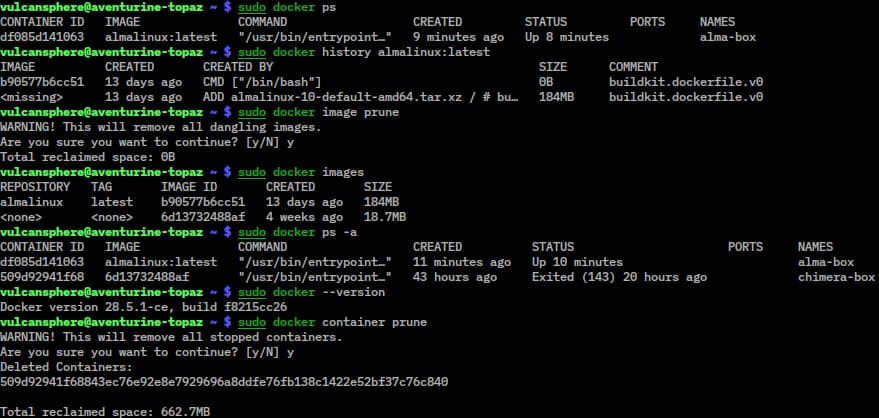
Dockerfile: The Recipe for Your Container
A Dockerfile is a recipe for building a container image. It's a text file of commands that automates an application's environment setup, ensuring it runs identically anywhere. The footgun is creating bloated images with unnecessary build tools.

Pulumi: Infrastructure as Code with Real Programming Languages
Pulumi is Infrastructure as Code using real languages like Python or TypeScript, not a special DSL. This lets you use loops, functions, and classes to define resources. The main footgun is writing overly complex, clever code that becomes unmaintainable.

Ephemeral Environments: A Staging Server for Every PR
Ephemeral environments are disposable, production-like test servers created for every pull request. They let developers test changes in isolation without waiting for a shared staging server, catching integration bugs earlier.
Ansible: Automating Infrastructure with Playbooks
Ansible is like a recipe book for your servers. You write simple "playbooks" describing a desired state, and Ansible makes it happen over SSH without installing agents. It's ideal for configuration management, app deployment, and orchestrating workflows.