Search
Find a bite, explore a topic or look for a role.
Results for “PostgreSQL”
Bites 111
What is a database page?
A page is a fixed-size block, often 8KB, holding multiple rows; databases read and write whole pages because disk and OS I/O are block-oriented, amortizing seek cost and matching the buffer pool unit.
How MVCC enables non-blocking reads
Writers create new row versions instead of overwriting, readers see a consistent snapshot, so readers never block writers.
Read Committed versus Serializable isolation levels
Name the four levels, map each anomaly (dirty read, non-repeatable read, phantom) to the level that blocks it.
Serverless functions with a relational database
Concurrent function instances each open connections and exhaust the database's bounded pool; fix with a connection proxy or pooler, init-phase reuse, or capped concurrency.
Data warehouse versus OLTP database
Warehouses use columnar storage for analytical scans, OLTP uses row storage for fast transactions, each fits a different workload.
When to build an Operator vs a Helm chart
Charts handle install-time templating; operators add continuous day-two logic like failover, backups, and scaling for stateful apps.

How do you speed up slow integration tests without compromising quality?
Tests your ability to optimize CI/CD pipelines while preserving coverage. A strong answer covers parallel execution, Test Impact Analysis, ephemeral containers, and test data as code. Red flag: proposing to delete tests or disable integration stage entirely.

Describe the difference between a Deployment and a StatefulSet
Tests stateful pod identity versus stateless scaling. Outline: contrast Deployments' interchangeable replicas with StatefulSets' stable hostnames, per-pod PVCs, and ordered rollout; give a database example.
How do you manage configuration and secrets for a containerized FastAPI app?
Tests 12-factor config separation and Docker secret hygiene. A strong answer uses pydantic-settings with runtime env vars, lru_cache, and keeps .env out of the image. Red flag: baking credentials into Dockerfile layers or committing .env files.
Explain FastAPI dependency overrides with an in-memory SQLite test example
This tests FastAPI's hook for swapping dependencies cleanly in tests. A strong answer names app.dependency_overrides, defines a test-only in-memory SQLite session, and handles teardown. A red flag is patching globals or mocking ORM instead of dependency.
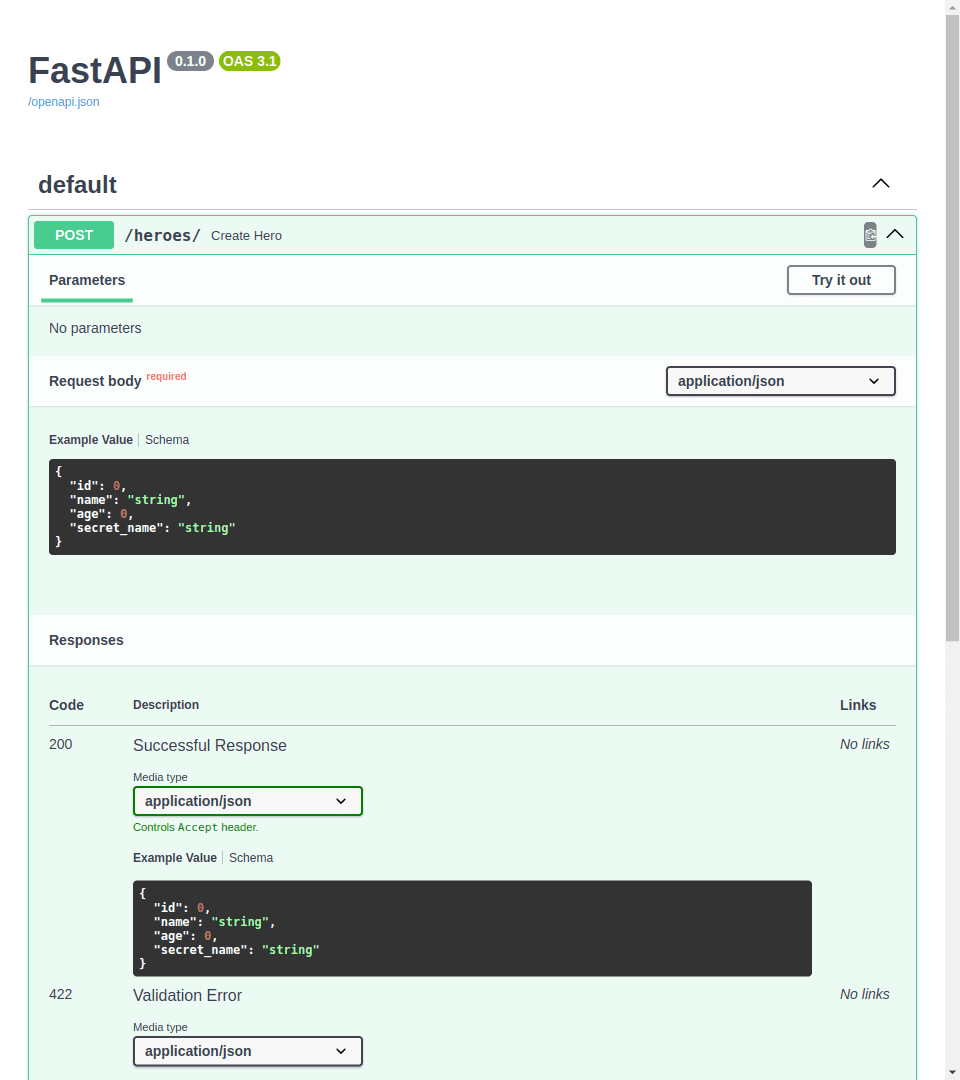
Describe SQLAlchemy setup in FastAPI from database config to endpoint
Tests FastAPI dependency injection and SQLAlchemy session lifecycle. Good answers cover: engine with pooling, declarative models, a yield-based session dependency, and endpoint queries. Red flag: engine per request or global session shared everywhere.
How would you override a FastAPI dependency during testing?
Tests your grasp of FastAPI's dependency override mechanism. A strong answer mentions app.dependency_overrides, notes that sub-dependencies are bypassed, and stresses clearing overrides after each test.
How does Uvicorn use asyncio to handle thousands of concurrent connections?
Tests async concurrency and the GIL. Great answers cover the event loop suspending coroutines at await, Uvicorn interleaving connections, and multi-process workers for parallelism. Red flag: claiming asyncio uses threads per request or bypasses the GIL.
Python Async Context Managers
Async context managers let you await during setup and teardown. Use async with for database connections or streams where acquiring and releasing both need I/O. The footgun is applying @contextmanager to async cleanup, which cannot await and will crash.
How would you technically evaluate a major product pivot?
Structured feasibility under uncertainty. Strong answers: define requirements and SLOs, timebox spikes to de-risk unknowns, audit architecture, data, infra, security, and team skills against thresholds.
Callback Hell: The Pyramid of Doom
Callback hell is what happens when nested async callbacks indent so deeply the code forms an unreadable pyramid. You see it in legacy Node.js when chaining database queries or file reads.
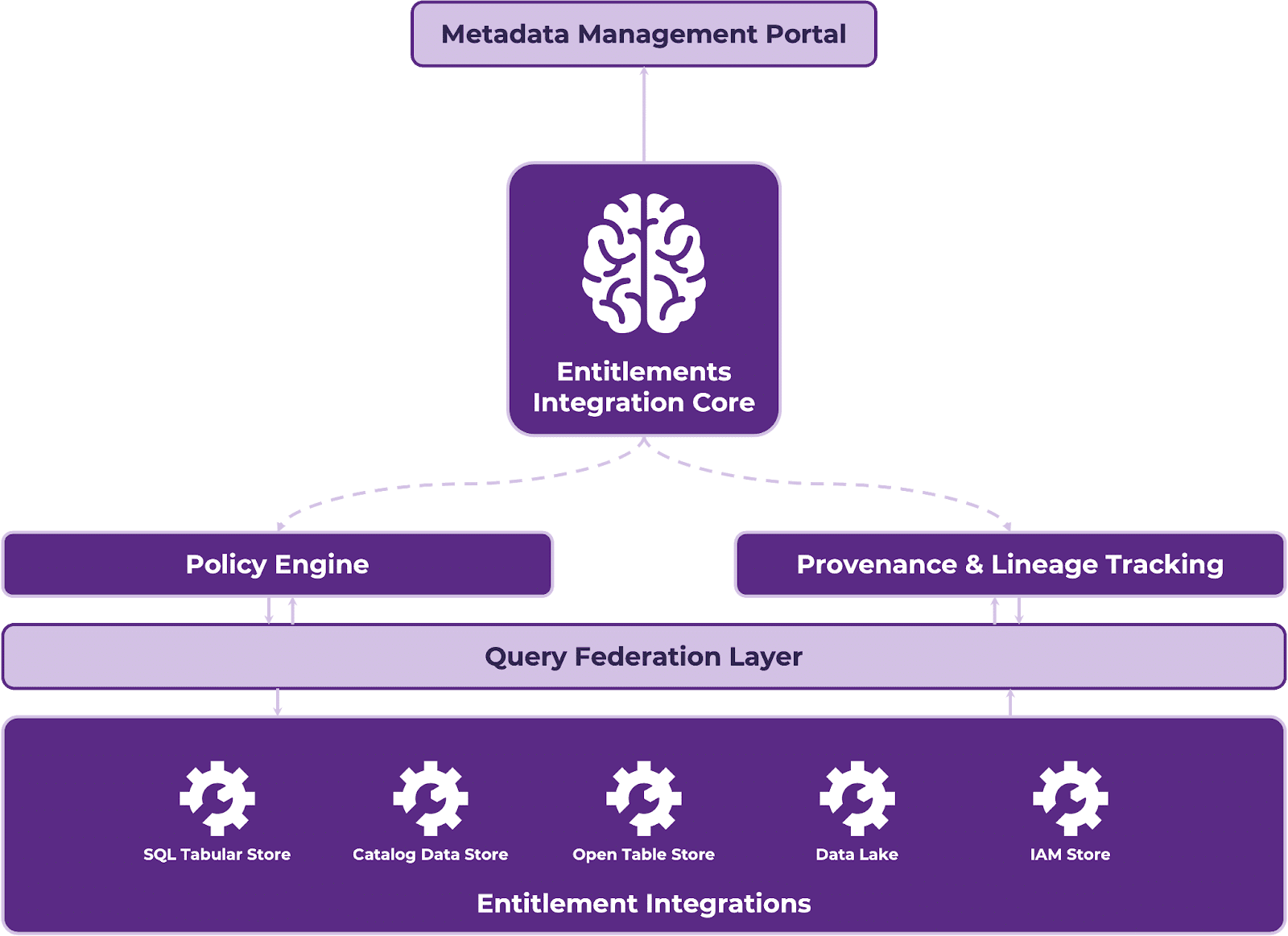
Design a highly available entitlements service with caching
This tests balancing read performance with consistency in access control. A strong answer proposes tiered caching with proactive invalidation, read-optimized hot paths, and event-sourced temporary grants.
Design a near real-time user interaction tracking and analytics system
Tests decoupling ingestion from querying with justified tech choices. Outline: client → Kafka → Flink → ClickHouse → API; budget sub-30s latency and backpressure per stage. Red flag: one monolithic RDBMS or batch ETL handling both writes and reads.
What is the difference between DDL and DML in SQL?
DDL shapes schema with CREATE or ALTER; DML handles row-level data with SELECT, INSERT, UPDATE, or DELETE.
Backpressure: Slow the Producer or Crash
Backpressure is a feedback signal telling upstream to slow down when downstream cannot keep up. You see it in stream processors like Flink or Kafka where a slow consumer risks memory exhaustion. Ignore it and queues grow until the service crashes.