Search
Find a bite, explore a topic or look for a role.
Results for “React”
Bites 747
Composing Gestures: Race, Simultaneous, Exclusive
Gesture composition lets multiple detectors negotiate one touch stream. Use it when a view must scroll and pinch together. The footgun is assuming gestures cooperate by default; without explicit composition, one steals the stream and breaks the rest.
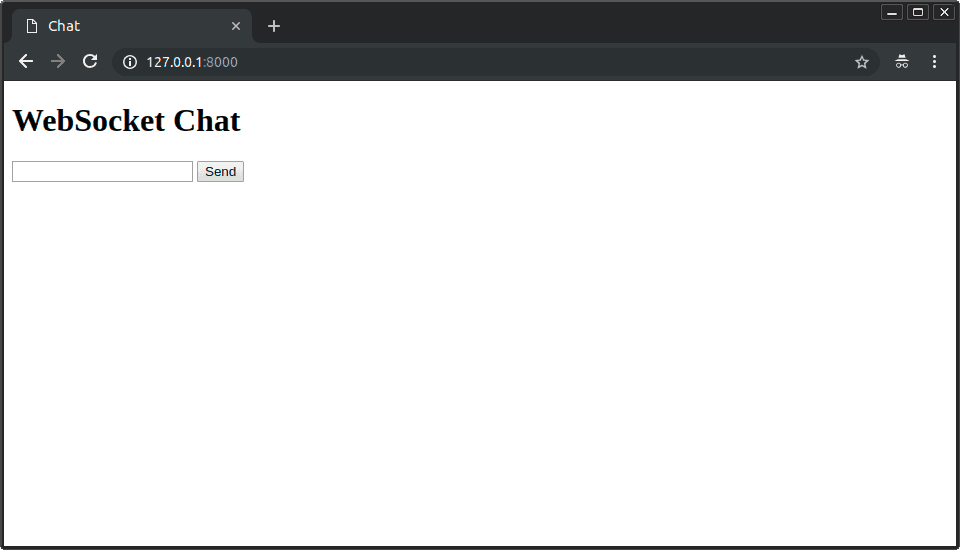
How do you handle a WebSocket client disconnect in FastAPI?
Cite installing websockets, Handling disconnections and multiple clients pattern, and Depends.
Which FastAPI CORSMiddleware parameters beyond allow_origins fix a PUT preflight?
Configure allow_methods for PUT and allow_headers for Authorization so the browser approves the cross-origin call.
Frontend on localhost:3000 gets errors calling FastAPI on localhost:8000. Name and fix?
This tests whether different ports mean different origins, causing CORS errors. A strong answer names CORS, notes ports are distinct origins, and outlines using CORSMiddleware with allow_origins.

Compare webhooks to sandboxed plugins for monolith extensibility
Tests distributed vs in-process extensibility. Webhooks are async, loosely coupled, and isolated but add network latency. Sandboxed plugins run in-process for low-latency UI depth yet need strict host API permissions and lifecycle gating.

KPIs for a new registration form and technical instrumentation
Tests pairing outcomes with instrumentation. Pick a conversion KPI and a field-level friction KPI, then explain client-side events correlated with server logs while scrubbing PII. Red flag: relying solely on frontend analytics or vanity metrics.
KVO: Swift's Built-In Observer Pattern
KVO lets an object subscribe to property changes on another object automatically. It shines when you need UI updates driven by model state, but forgetting to remove observers before deallocation crashes your app with an NSException.

How do you systematically manage and pay down experiment debt?
Tests sustainable velocity through experiment lifecycle hygiene. Strong answers cover isolated experiment directories, TTLs on feature flags, and recurring cleanup sprints. Red flag: banning experiments or treating all experiment code as permanent.
How would you track a 'Sign Up' button click end-to-end?
It tests your ability to instrument a custom event and validate the pipeline. Attach a gtag listener to the button, fire a sign_up_click event, then confirm the hit in GA4 DebugView or real-time reports.
How do you attribute signups to Facebook, Google, and blog campaigns?
This tests URL-based campaign attribution and session persistence. A strong answer covers UTM tags, landing page parsing, cookie storage, and writing the source to the user record at signup.
Define a WebEvent enum with PageLoad, PageUnload, and KeyPress
Tests Rust enum syntax: unit versus tuple variants. A good answer defines WebEvent with PageLoad, PageUnload, and KeyPress(char), then instantiates WebEvent::KeyPress('q'). A red flag is forgetting the double colon or using struct variant syntax.
Difference between context.watch, context.read, and Selector in Provider and Riverpod
Tests rebuild granularity in Flutter. A strong answer distinguishes listening versus one-time lookup, explains that Selector filters rebuilds by comparing sub-values, and warns that context.read inside build causes missed updates.
Describe a strategy for ListView on phones and GridView on tablets
This tests Flutter adaptive layout skills. Use LayoutBuilder or MediaQuery to read screen width, pick a breakpoint near 600 dp, and return ListView or GridView conditionally.
Explain single-subscription vs broadcast Streams in Dart
Tests dart:async stream lifecycle. Outline: single-subscription allows one listener and emits on listen; broadcast supports many but drops events for late arrivals. Red flag: saying single-subscription allows multiple listeners or buffers events.

Design a type-safe polymorphic component that renders as different HTML elements
Tests TypeScript generics and prop forwarding in design systems. Answer: generic as constrained to keyof JSX.IntrinsicElements, merged with ComponentPropsWithoutRef<C>, omit clashes, forward ref with ElementRef.

Two strategies to prevent style leakage in reusable components and their trade-offs
This tests style encapsulation in design systems. A strong answer contrasts Shadow DOM, which fully isolates CSS via a shadow root, with scoped naming like BEM or CSS Modules. Red flag: proposing global resets or !important as a solution.

When should data in a reusable component be a prop or state?
This tests controlled versus uncontrolled patterns. Great answers ask who owns the data: props when parent must drive or observe it, state only for private details.

Describe a robust architecture for implementing theming using design tokens
Three tiers, CSS custom properties for live switching, and layered overrides.
.avif&w=1600&q=75)
How does a mature design system change cross-functional collaboration?
Tests whether you view maturity as a collaborative operating framework, not just components. Strong answers hit shared definitions of done, living documentation, code/design parity, and trust-based adoption. Red flag: calling it a docs or enforcement problem.

What governance model would you propose for a centralized design system?
Tests balancing standardization with autonomy across legacy silos. A strong answer proposes a hybrid model with a core team and contribution rules, weighing consistency against migration cost.