Search
Find a bite, explore a topic or look for a role.
Results for “PostgreSQL”
Bites 111
Volcano Model: Pipelined Query Execution
Volcano makes every query operator a generator yielding one tuple per call. Scans, joins, and sorts stream data upward through open-next-close interfaces without materializing intermediates. The hidden cost is millions of virtual calls that stall modern CPUs.

Design an incremental load pipeline from a transactional DB to a warehouse
Contrast timestamp watermarking, CDC from transaction logs, and open-table incremental reads; cite merge logic and idempotency.

SQL or NoSQL for high-volume semi-structured event ingestion?
Choose NoSQL for schema-less landing; use SQL downstream for structured analytics.

How would you implement zero-downtime secrets rotation?
Inventory secrets and app caching; baseline monitoring; dual-phase rotation with overlapping secrets; verify before revoking old.
Prevent developer access to production secrets while preserving debuggability
Use dynamic short-lived credentials, break-glass with dual-control audit, and structured telemetry or synthetic transactions for debugging.
What is Twelve-Factor's config recommendation for CI/CD and scalability?
Tests Factor III and CI/CD scaling implications. Strong answer: config lives in env vars, never in code, so one build promotes across stages and new instances start with correct context immediately. Red flag: config files checked into version control.
Dynamic Secrets: Temporary On-Demand Credentials
Dynamic secrets are temporary credentials minted on demand, not static passwords living in config files. A CI job requests a 15-minute database lease instead of a long-lived env var.
Vault: Centralized Secrets with Dynamic Leasing
Vault is a secrets firewall: it centralizes credentials and issues short-lived leases instead of static keys. Use it when apps need DB passwords not hardcoded. The footgun is using Vault without audit logs, leaving secrets unmonitored.
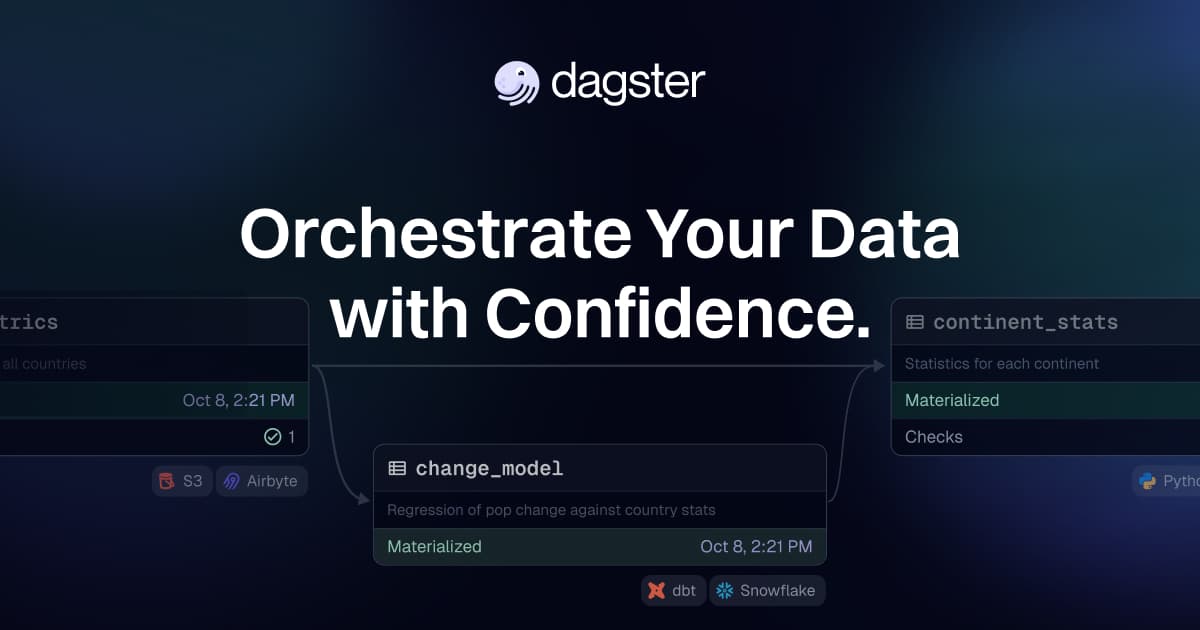
Design a real-time mobile analytics pipeline
Tests decoupling high-volume ingestion from low-latency querying. Strong designs use an event broker, a stream processor for windowed aggregates, and an OLAP database for sub-second dashboards.
Design a CDC pipeline that handles schema evolution gracefully
Tests designing resilient CDC pipelines against schema drift. A strong answer covers schema registries with versioning, backward-compatible serialization, and automated compatibility checks.

Explain data warehouse purpose and how it differs from OLTP
This tests whether you know the OLTP versus analytics split. A great answer contrasts OLTP row-level writes and normalized schemas with warehouse denormalized schemas and BI reads. A red flag is calling a warehouse just a bigger OLTP database.
Outline an automated pipeline to load a daily CSV into a database
Event trigger on drop, schema validation, idempotent load, and observability.

How do you guarantee at-least-once event delivery for a financial transaction?
Write events to a DB outbox in the same transaction as the biz update; a relay polls and publishes to analytics.
Implement CDC from an OLTP database to a data warehouse
This tests your grasp of production system trade-offs. A good answer compares log-based and trigger-based CDC, focusing on source impact and data fidelity, then recommends log-based for its low overhead.
What is a data warehouse vs. a transactional database?
Tests your grasp of systems optimized for different access patterns (writes vs. reads). Define OLTP for transactions and OLAP for analytics. Contrast their schema (normalized vs. denormalized), data, and workload. A red flag is calling it a 'big database'.
Build a pipeline to load a daily CSV into a database
This tests your ability to connect basic cloud services (storage, compute, database) into a simple, event-driven data pipeline. A good answer mentions an event trigger (S3), a serverless function (Lambda), and a database (RDS), plus error handling.
What is a data warehouse vs. a transactional database?
Tests your grasp of read-optimized (OLAP) vs. write-optimized (OLTP) systems. A great answer defines warehouses for analysis, contrasts them with transactional DBs for operations, and explains the resulting differences in workload, schema, and data structure.
Build a pipeline to load CSVs into a database
Tests your grasp of event-driven architecture and basic ETL. A good answer outlines a trigger (storage event), a processing function (serverless), and a destination (database), mentioning error handling. A red flag is describing a manual or cron-based process.
Servant Leadership in Scrum: Meaning and Examples
Tests your ability to apply agile theory. Define servant leadership as enabling team success, not managing tasks. Give concrete examples like shielding the team from distractions or facilitating technical decisions.
SQLAlchemy 2.0: Async Without Blocking the Event Loop
SQLAlchemy 2.0 wraps its synchronous core with an async API, letting you await database calls without blocking your app's event loop. Use it in frameworks like FastAPI.