Intermediate everything in AI & ML, page 15
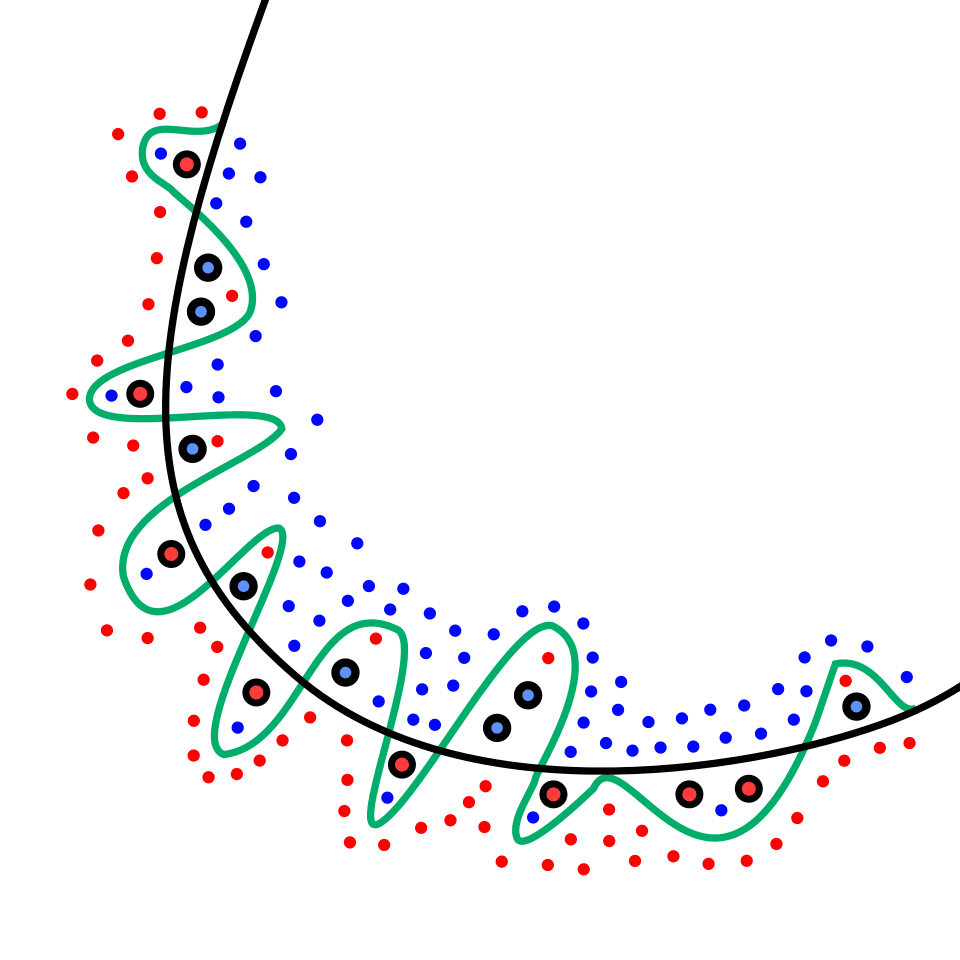
Validation loss increases while training loss decreases: what is this?
This tests recognition of overfitting and regularization. A strong answer names it, offers early stopping, dropout or weight decay, and data augmentation or more data. A red flag is suggesting longer training or more parameters without fixing generalization.
State-Space Models Replace Quadratic Attention
State-space models replace attention with recurrent linear dynamics, scaling linearly with sequence length. They excel at long DNA, audio, and video modeling. The footgun is naive discretization, which collapses stability on long sequences.
NIST AI RMF for LLM Deployment
The NIST AI RMF is a pre-flight checklist for organizational AI risk, not just code bugs. Teams use it to justify LLM deployment across legal, security, and fairness dimensions.
Data Poisoning: Corrupting Models at the Source
Data poisoning is slipping lies into a textbook that a model memorizes forever. It shows up when you train on scraped web data or open fine-tuning sets. The footgun is assuming clean benchmarks mean clean weights; poison can hide until a trigger appears.
HHH: The Three-Way Tug-of-War in LLMs
HHH frames LLM alignment as a three-way tug-of-war: helpful, harmless, honest. It governs RLHF reward models and safety filters, where maximizing one axis weakens the others. The footgun is optimizing helpfulness, producing sycophants or dangerous compliance.
ROUGE Score: Recall Overlap for Generation
ROUGE measures text generation recall by counting overlapping words and phrases against a reference. It is the default metric for summarization benchmarks. Perfect paraphrases score poorly while keyword-stuffed nonsense can score high.
Tool Definition Schema: Contracts for LLM Actions
A tool schema is JSON that tells an LLM what actions it can take. Use it when you want the model to call APIs instead of just chatting. The model only emits arguments; it never runs the tool, and vague descriptions cause silent failures.
Function Calling: LLMs Using Tools
Function calling turns an LLM into an API translator: it reads input and emits JSON telling your code which tool to run. Use it when the model needs live data it cannot store in weights. The model never executes the call and can hallucinate arguments.
Masked Language Modeling: Fill-in-the-Blank Pretraining
MLM hides random tokens and trains the model to reconstruct them from context. It powers BERT-style encoders for classification and search. The catch is that it never learns left-to-right generation, so it needs extra machinery for open-ended text.
Masked Multi-Head Attention in Decoders
Masked multi-head attention runs parallel detectors over past tokens only, stopping a decoder from peeking ahead. It powers autoregressive models like GPT. The footgun is using the causal mask in bidirectional encoders, which silently destroys context.
Transformer Encoder Block
A Transformer encoder block mixes full sequence context in parallel: every token attends to all others to refine its vector. It drives bidirectional models like BERT. The footgun is using it unmasked for generation, which leaks future information.
Position-wise FFN: Each Token's Private Workshop
Think of the position-wise FFN as each token's private gym after attention: it bulks up features and stores facts, but never shares between seats. Cutting it to save parameters starves the model because attention cannot do this alone.
Tokenization and Input Embeddings in LLMs
Tokenization splits language into tokens, and embeddings map token IDs into vectors with meaning. Every transformer does this first. The footgun is assuming one token equals one word—token counts behave unpredictably when words merge or split.
Few-Shot Prompting
Few-shot prompting embeds task examples directly in the prompt to guide output format without retraining. It excels at niche tasks and consistent formatting, but mismatched examples degrade performance more than no examples at all.
Walk me through a CNN's layers for image classification
Tests hierarchical feature extraction in CNNs. Answer: conv filters learn edges-to-objects with shared weights, pooling reduces dimensions and adds invariance, fully-connected layers classify.
How do you leverage and fine-tune BERT for niche classification?
Tests transfer learning with scarce labels. Outline: pick a domain-adjacent checkpoint, add a classification head, use learning rates near 2e-5 with early stopping, and stratify tiny validation splits.
Describe Transformer architecture and why self-attention beats recurrence
This tests parallelization and long-range dependencies. A strong answer outlines the encoder-decoder stack with multi-head self-attention, contrasts O(1) sequential steps versus RNNs' O(n) unrolling, and warns that describing it as averaging misses key ideas.

What is Simpson's Paradox and how can it bias A/B tests?
Tests whether you recognize that aggregate trends can reverse within subgroups. A strong answer defines the paradox, gives an A/B example where treatment wins overall but loses in every segment due to skewed allocation, and prescribes stratified analysis.

How do network effects violate A/B tests and how to mitigate them?
Tests SUTVA violations and network experiment design. Answers note treated users alter control outcomes, then propose social-graph cluster randomization to isolate spillovers. Red flag: ignoring peer-to-peer spillover and using user-level randomization.

Why not stop an A/B test when it looks significant early?
Tests whether you understand repeated looks inflate false positives. The term is peeking: checking daily can turn a 5% Type I error rate into roughly 15% by day 3. Red flag: citing "low sample size" without stating that early stopping invalidates the p-value.
We are hiring for this. Every open role lists the topics its interview covers, so you can prepare for the real thing rather than guessing.
See open roles