Intermediate everything in AI & ML, page 16

What is cross-validation and why is it more robust than a holdout split?
A single split is noisy and wastes data; k-fold rotates each fold as test, averages scores, and trains on all data.

How would feature engineering for categoricals differ for logistic regression versus LightGBM?
It tests model-specific encoding decisions. Logistic regression needs one-hot to avoid false ordinality; tree models like LightGBM use ordinal encoding since splits rely on thresholds, not distance.

Explain bias-variance tradeoff and how regularization or tree depth manage it
Tests understanding of generalization error decomposition. Define bias as underfitting and variance as sensitivity to training noise; show regularization and shallow trees trade excess variance for slightly higher bias. Red flag: claiming both can hit zero.
How does a U-shaped EDA pattern influence feature engineering?
Add age squared or splines; trees handle splits but explicit terms aid linear models.

How do you visualize clusters in 100-dimensional numerical data?
Tests PCA versus t-SNE tradeoffs for high-dimensional visualization. Strong answers use PCA first for global variance and outliers, then t-SNE with perplexities 5-50 run to stability. Red flag: interpreting t-SNE cluster sizes or distances as literal metrics.
How do you detect and handle outliers in multivariate datasets?
This tests statistical judgment beyond univariate thresholds. A strong answer names multivariate methods like Mahalanobis distance or isolation forests, PCA or pair plots for visualization, and checks for measurement error before removal.

When is streaming better than batch, and what are its infrastructure challenges?
Tests if you separate low-latency decisions from analytics and know ops pain. Good answer: fraud detection vs batch; cite exactly-once, state recovery, backpressure, schema drift. Red flag: calling streaming faster batch while ignoring backpressure or state.
How would you partition a massive user events table?
Tests whether you map query patterns to storage layout to cut bytes scanned. Strong answers pick time-based partitioning for range pruning, cluster by high-cardinality filters, and justify against WHERE clauses.

What is data pipeline idempotency and how do you design for it?
This tests resilient pipeline design under failure. A strong answer defines idempotency as identical output on repeated runs, highlights safe retries and partial failure recovery, and proposes idempotency keys with atomic writes for daily API loads.
Why is scaling unnecessary for trees but critical for SVM or K-Means?
Tests whether you understand model internals. Trees split on rank order, so scale is irrelevant. SVM and K-Means rely on distance or margin geometry, making magnitude dominate.
What is data leakage in preprocessing and cross-validation?
This tests recognition of data leakage through preprocessing statistics. A strong answer defines leakage, describes scaling using global statistics before CV splits, and states transformers must be fit per training fold.
Implement OAuth 2.0 flow to get an access token for API requests
Tests your grasp of OAuth 2.0 grant-type selection and token lifecycle. Strong answers match the script context to client credentials or authorization code flow, detail the token endpoint exchange, and address refresh and expiry.

SQL or NoSQL for high-volume semi-structured event ingestion?
Choose NoSQL for schema-less landing; use SQL downstream for structured analytics.
How would you scrape a page with dynamically loaded JavaScript content?
It tests if you know dynamic pages need a real renderer. A great answer names Playwright or Selenium, uses explicit waits for elements, and extracts via DOM or network interception. Red flag: suggesting only static parsers like BeautifulSoup or blind sleeps.

Design a rate-limited REST API data collection script
Tests client-side throttling discipline versus reactive 429 handling. Strong answers proactively pace calls using rate-limit headers, cap concurrency, and apply exponential backoff with jitter. Red flag: tight-loop retries or ignoring headers.
Convert string timestamps to datetime and extract day of week
This tests pandas datetime parsing and accessor fluency. A strong answer uses pd.to_datetime, assigns the result, then extracts the day via .dt.day_name() or .dt.dayofweek. Red flag: manual string splitting or Python loops instead of vectorized ops.
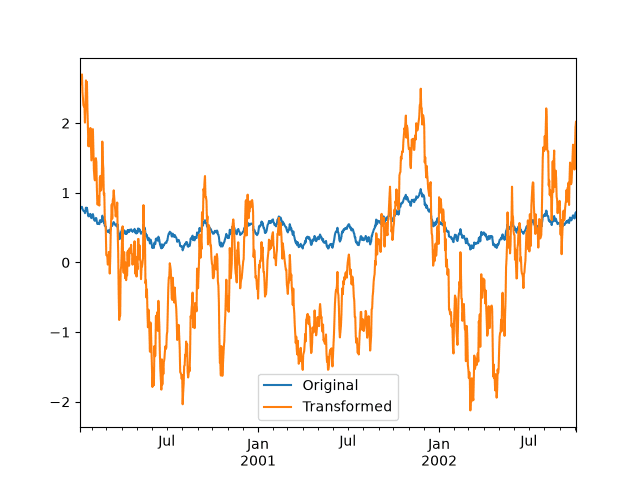
Calculate total and average sales per region in pandas
Tests split-apply-combine fluency. A strong answer groups by Region then calls agg with a dict or named aggregation to return sum and mean of Sales_Amount together. Red flag: chaining separate groupby calls or looping rows manually.
What is vectorization in NumPy and pandas?
Tests if you know why NumPy operations beat Python loops via contiguous memory and C-level SIMD. A strong answer defines vectorization as array-wide operations without explicit loops, contrasts a ufunc to a for-loop, and cites interpreter overhead removal.
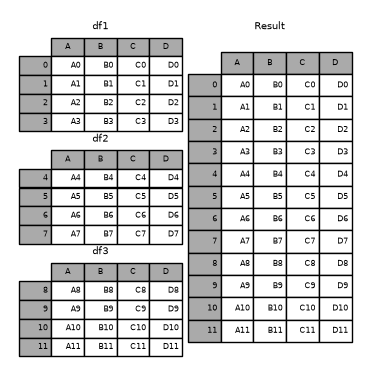
How would you combine customer and transaction DataFrames and describe join types?
This tests relational merging and join semantics in pandas. Answer: use pd.merge on customer_id, then groupby sum; describe inner, left, right, and outer joins by key preservation. Red flag: proposing concat without keys or conflating inner and left joins.

Why is 99% accuracy misleading with 1% disease prevalence?
Tests class imbalance intuition. A strong answer notes that an all-negative classifier hits 99% accuracy, then names precision, recall, F1, and AUC-PR to expose false negatives and false positives. Red flag: claiming accuracy is fine after rebalancing.
We are hiring for this. Every open role lists the topics its interview covers, so you can prepare for the real thing rather than guessing.
See open roles