Advanced everything in Backend Dev, page 9
Accessing the Raw Request Object in FastAPI
Think of it as dropping to a lower level. Instead of FastAPI handing you validated data, you grab the raw Starlette HTTP request yourself. Use this for data not covered by standard declarations, like a client's IP.
Overriding FastAPI Dependencies for Testing
Overriding dependencies lets you swap real components for fakes during tests. This is vital for isolating tests from external services like auth providers or databases, letting you control inputs and avoid slow, flaky network calls.
FastAPI's Security Utility: Dependencies for Auth
FastAPI's Security utility is a specialized Depends for authentication. It signals to OpenAPI that a dependency is required for security, enabling interactive docs. Use it to protect endpoints by injecting the authenticated user.
FastAPI: Setting Custom Response Headers
Set custom HTTP headers in FastAPI by adding a Response parameter to your endpoint. This lets you add metadata like trace IDs without changing your return data. The footgun is thinking you must return the Response object; just return your data as usual.
FastAPI `yield` Dependencies for Setup and Teardown
A yield dependency is a context manager for your endpoints. Code before yield runs setup, like getting a DB connection; code after yield runs teardown.
Pydantic Computed Fields: Serialize Derived Values
A Pydantic computed field makes a derived value, like an area from width and length, part of your model's serialized output. Use it to include calculated attributes when calling .model_dump().
Starlette's Request Object: A Clean API for ASGI
Starlette's Request object is a high-level wrapper around the raw ASGI scope, providing a clean API for request data. Use it in endpoints to read headers, query params, or parse the body. The footgun: the request body can only be read once.
FastAPI: Use HTTPException to Return Client Errors
FastAPI's HTTPException is your tool for stopping an operation and sending a clean HTTP error. Raise it when business logic fails, like a missing database record. The footgun is catching it yourself; just raise it and let FastAPI do the rest.
The Python GIL: One Thread at a Time
The Python Global Interpreter Lock (GIL) is a mutex ensuring only one thread executes Python bytecode at a time. This serializes CPU-bound threads, but the lock is released during I/O, making it effective for network-bound tasks.
Python Concurrency vs. Parallelism
Concurrency is juggling tasks; parallelism is doing them at once. In Python, use concurrency (threading/asyncio) for I/O-bound work like API calls, and parallelism (multiprocessing) for CPU-bound tasks.
Accessing Python Type Annotations Safely
Accessing an object's type hints isn't just obj.__annotations__. Use inspect.get_annotations() in Python 3.10+ for safe access. This is key for tools like FastAPI that introspect your code.

CI/CD Pipelines for Node.js Applications
A CI/CD pipeline is an automated assembly line for Node.js code, installing dependencies, running tests, and packaging your app for deployment. This is standard for any professional project, but a common footgun is not caching dependencies, leading to slow…
Docker Compose for Multi-Container Apps
Docker Compose is a conductor for your containers. Instead of running each service manually, you define your app and its database in one YAML file and launch them together. This is standard for local Node.js/Postgres development.
PM2: Zero-Downtime Reloads in Cluster Mode
PM2's reload command updates a clustered Node.js app without downtime by restarting processes one by one. Use this for live deployments. The footgun is using it on a stateful app, which will cause data loss unless state is externalized.
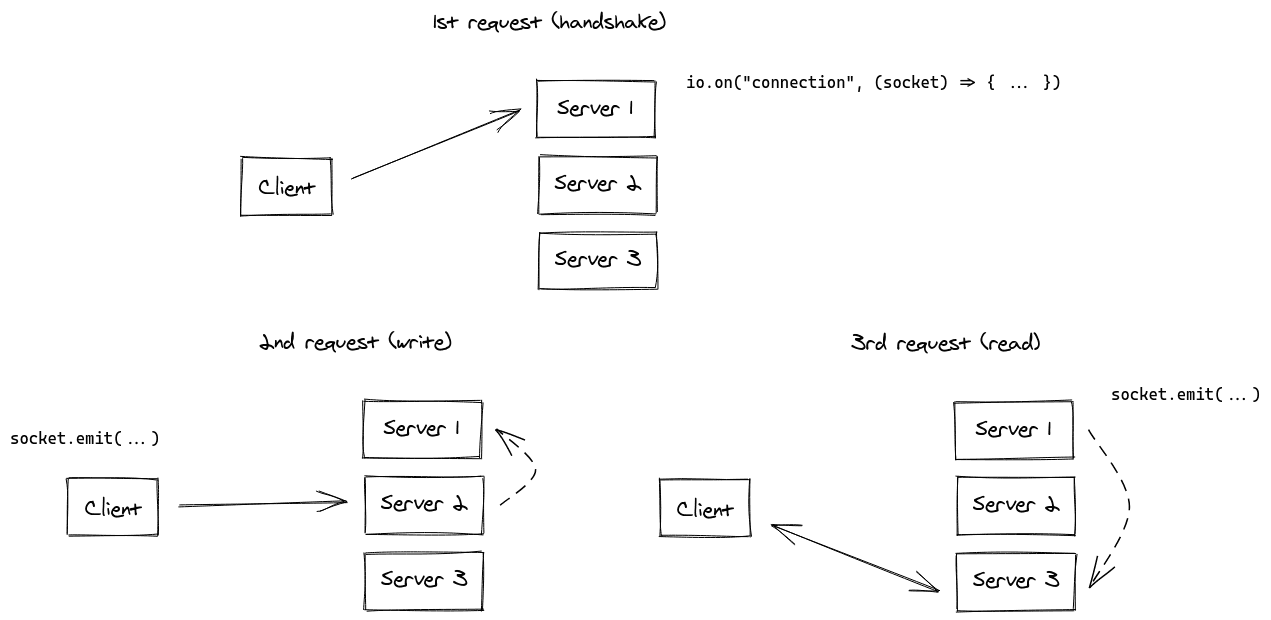
Sticky Sessions: Pinning a User to a Server
Sticky sessions pin a user's requests to a single server in a multi-server setup. This is crucial for stateful apps like Socket.IO, where a user's session lives on one machine.
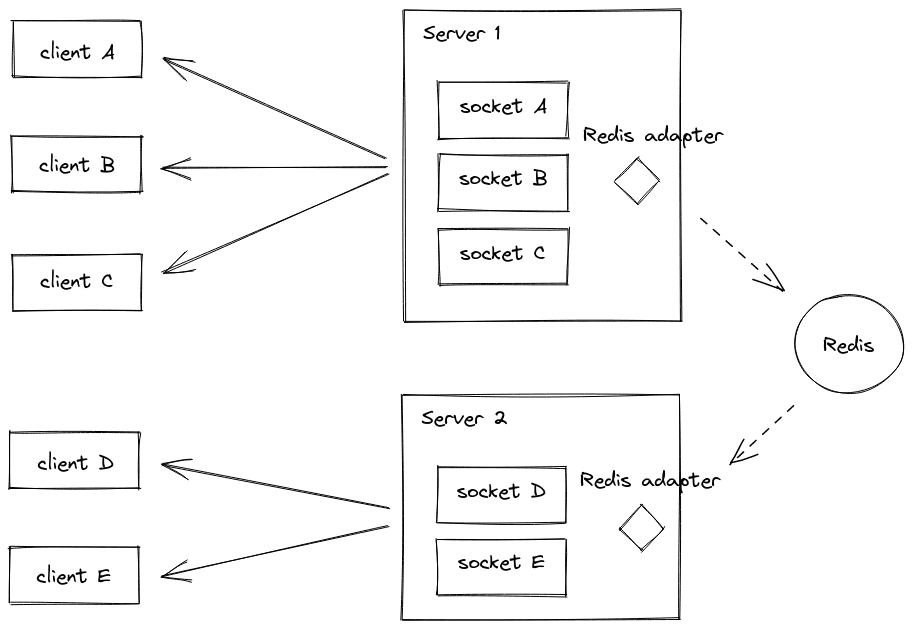
Socket.IO Adapters: Scaling Beyond One Server
Socket.IO adapters let you scale beyond one server. They use a backend like Redis Pub/Sub to broadcast messages across all your instances, so a user on Server A gets events from Server B. The footgun is assuming this handles everything; you still need a load.
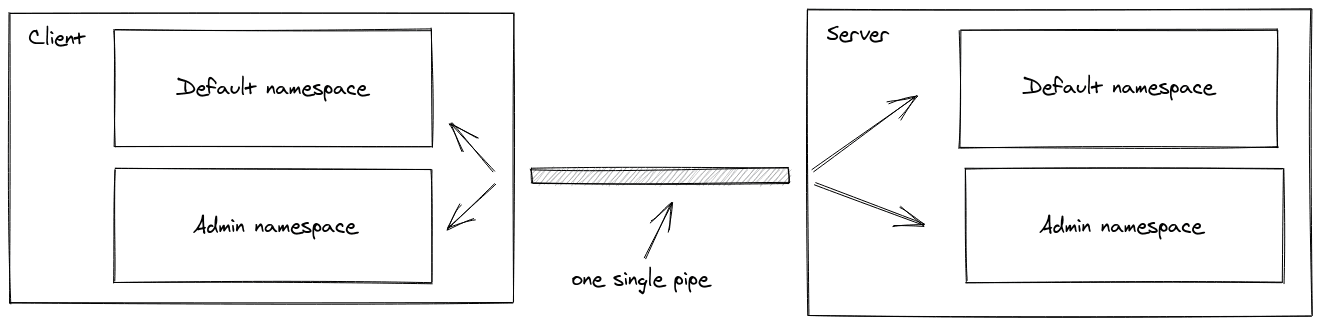
Socket.IO Namespaces: Channels on One Connection
Socket.IO namespaces are virtual channels over a single WebSocket connection, letting you split app logic without multiple connections. Use them for separate areas like /admin or for multi-tenancy.
V8's Garbage Collector: A Performance Pillar
V8's garbage collector is a key to its speed, using a "stop-the-world, generational, accurate" approach to reclaim memory. This runs automatically in Node.js and Chrome, but its pauses can impact performance.

SharedArrayBuffer: True Shared Memory for JS Threads
SharedArrayBuffer is a shared whiteboard for JS threads, letting them access the same memory without slow data copies. It's used for high-performance parallel tasks. The footgun: without Atomics to coordinate, you'll get race conditions and corrupted data.
Nock: Intercept and Mock Node.js HTTP Requests
Nock acts like a fake switchboard for your Node.js app's outgoing HTTP calls, redirecting them to pre-defined responses. This lets you unit test code that relies on external services, making tests fast, deterministic, and offline-capable.
We are hiring for this. Every open role lists the topics its interview covers, so you can prepare for the real thing rather than guessing.
See open roles