Advanced concepts in Databases & Architecture
Transaction Isolation Levels: The Concurrency vs. Correctness Dial
Think of isolation levels as a database dial trading transaction correctness for raw concurrency. You tune this when balancing performance against the risk of data anomalies. The footgun: the default level isn't always the safest; you must know its guarantees.
Relational Algebra: The Math Behind SQL Queries
Relational algebra is the formal logic behind SQL, treating tables as mathematical sets. It provides a grammar for operations like joins and filters, allowing a database to translate your declarative query into a precise, optimizable execution plan.
Codd's 12 Rules: The Relational Database Litmus Test
Codd's 12 Rules are a litmus test for whether a database is truly "relational." They demand that all data and operations be managed purely through the relational model, not through lower-level system access.
Boyce-Codd Normal Form (BCNF): Stricter Than 3NF
BCNF is a database design rule stricter than 3NF, ensuring no attribute is determined by anything but a superkey. It's used to eliminate all data redundancies from functional dependencies, but can force trade-offs with dependency preservation.
Materialized Views: Pre-computing Slow Queries
A materialized view trades data freshness for query speed by storing the result of a slow query as a physical table. It's ideal for dashboards that run heavy aggregations, making them load instantly. The footgun is stale data: users see old results.
Fourth Normal Form (4NF): Isolating Independent Facts
4NF prevents storing independent, multi-valued facts in one table. It applies when a key relates to two unrelated lists, like a restaurant's pizza types and its delivery areas.
Timestamp Concurrency Control: No Locks, Just Time
Timestamp-based concurrency control bets that transaction conflicts are rare, using timestamps to order operations instead of locking data. It's used where lock overhead is high, but the footgun is that frequent conflicts can cause transaction starvation.
Snapshot Isolation: A 'Photo' of Your Database
Snapshot Isolation gives a transaction a private 'photo' of the database from when it started, ensuring consistent reads. It's used in high-concurrency systems to prevent readers from blocking writers. The footgun is that it doesn't prevent all anomalies.
Write Skew: The Phantom Anomaly of Snapshot Isolation
Write skew is when two transactions read the same data, make decisions, and then update *different* data, violating a business rule. It's common in booking systems or when enforcing multi-row constraints under Snapshot Isolation.
Serializable Snapshot Isolation: True Serializability Without Heavy Locking
SSI upgrades Snapshot Isolation to true serializability. It optimistically lets transactions run, but aborts one if a dangerous read-write dependency arises. This prevents subtle data corruption in systems like PostgreSQL without heavy locking.
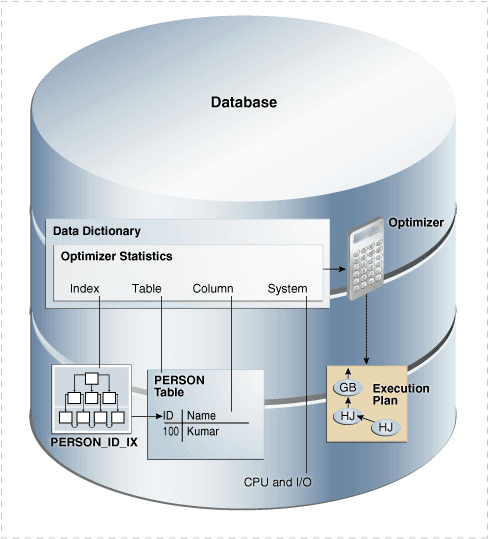
Database Statistics: The Query Optimizer's Internal Map
Database statistics are the raw data the query optimizer uses to guess the cheapest way to run your query. It uses stats like row counts and value distribution to decide between a full table scan and an index seek.
Cardinality Estimation: How Databases Guess Query Costs
A database's query optimizer guesses how many rows each part of a query will return to pick the fastest execution plan. This guess, cardinality estimation, is key for choosing join strategies.
Predicate Pushdown: Filter Data at the Source
Predicate pushdown tells the database to filter data at the source, not after fetching it. This speeds up queries in data warehouses and lakehouses by reducing network traffic. The main footgun: not all data sources can execute all types of filters.
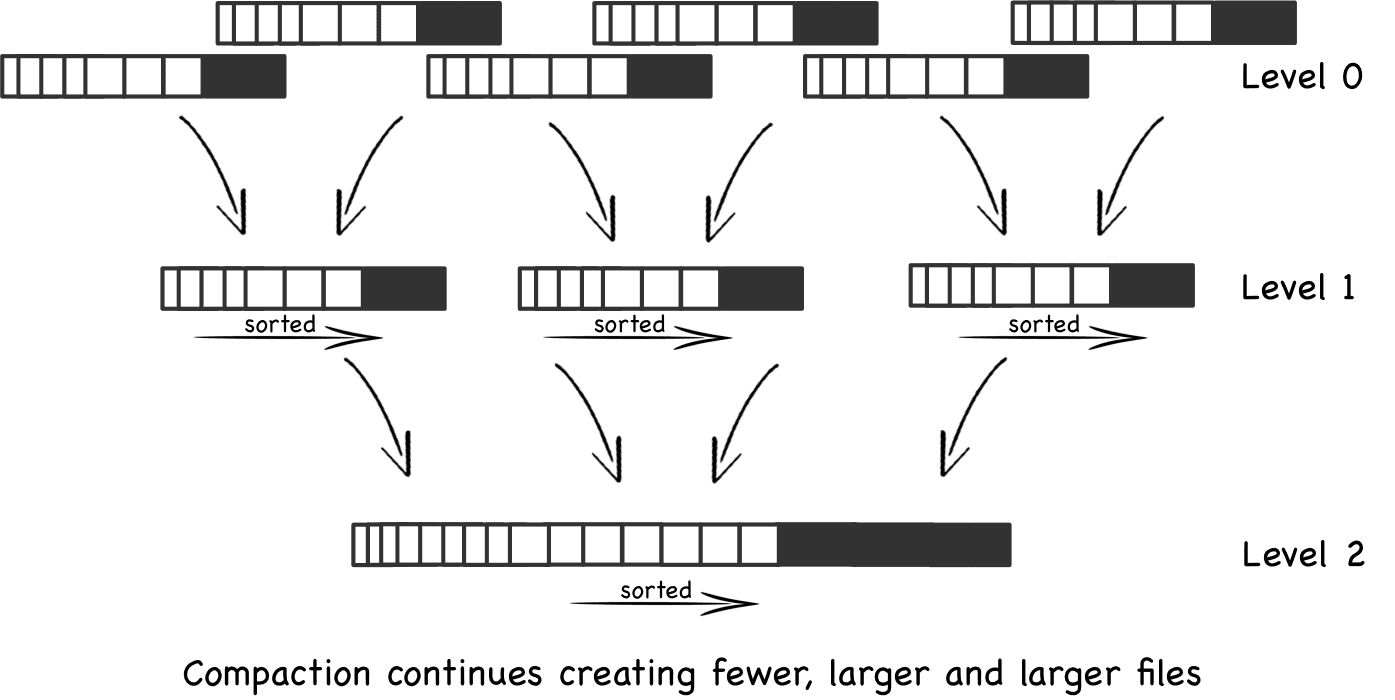
LSM-Tree: Fast Writes, Later Merges
An LSM-tree optimizes for high-volume writes by batching them in memory before flushing to disk, like a notepad for a busy filing cabinet. It's used in databases like Cassandra for write-heavy tasks. The footgun is unpredictable read latency.
ARIES Recovery Algorithm
ARIES is a widely-used database recovery algorithm, found in systems like IBM Db2 and SQL Server. It enables high performance by supporting a 'no-force, steal' policy, ensuring data integrity after a crash. The main footgun is not understanding this policy.

PostgreSQL's Free Space Map: Finding Room to Write
A Free Space Map is a table of contents for empty space in a Postgres table. It lets Postgres quickly find a page with enough room for a new row or index entry, avoiding a slow scan. It's used on every INSERT/UPDATE.

BASE: Trading Consistency for Availability
BASE is a database design philosophy that prioritizes availability over strict consistency, the opposite of ACID. It's used in large-scale systems like social media where uptime is key and slightly stale data is okay.
Polyglot Persistence: Use the Right Database for the Job
Polyglot persistence means using multiple, specialized data stores in one system. Instead of one database handling everything, you might use a relational DB for transactions, a document DB for profiles, and a graph DB for connections.
Vector Databases: Searching by Meaning, Not Keywords
A vector database finds "what's most like this?" instead of "find me exactly this." It organizes data by semantic meaning, not just exact values, making it ideal for recommendation engines, semantic search, or finding similar images.
CRDTs: Syncing Data Without Locks or Conflicts
CRDTs are data structures where updates can be applied in any order and reach the same state, avoiding locks. They enable offline editing in collaborative apps and distributed databases.
We are hiring for this. Every open role lists the topics its interview covers, so you can prepare for the real thing rather than guessing.
See open roles