Intermediate concepts in DevOps & Cloud, page 4
Managed Cloud DNS: Offload Your DNS Server Management
Managed Cloud DNS is DNS-as-a-service, letting you publish records without managing servers. Use it for public domains or private name resolution in your VPCs.
Software Performance Testing: How a System Behaves Under Stress
Performance testing answers 'how does it work under load?' It simulates user traffic to measure a system's responsiveness, stability, and resource use. The footgun is testing unrealistic scenarios instead of finding real-world breaking points.
Downsampling: Trading Granularity for Speed in Time Series Data
Downsampling trades resolution for speed by summarizing old, high-granularity metrics into coarser ones. This makes long-range queries faster and cheaper, common in systems like Thanos for long-term Prometheus data.
NAT Gateway: Your VPC's Outbound-Only Internet Door
A NAT Gateway is a one-way door for your private cloud resources. It lets instances in private subnets initiate outbound traffic to the internet—like for updates or API calls—but blocks unsolicited inbound connections.
Telemetry Correlation: Connecting Dots in Distributed Systems
Telemetry correlation links logs, metrics, and traces from a single user request into one coherent story. It works by propagating a shared context, like a unique ID, across all services involved.
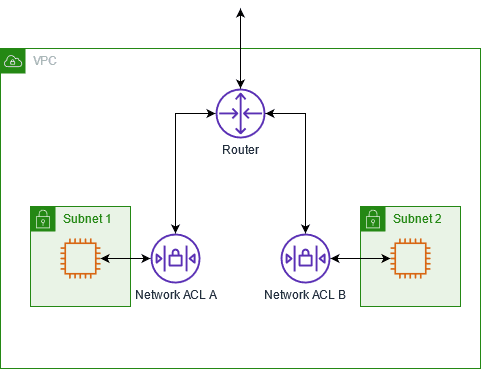
Network ACLs: A Stateless Firewall for Subnets
A Network ACL (NACL) is a firewall for an entire cloud subnet, checking traffic as it enters or leaves. It's used for broad, stateless rules, like blocking a malicious IP from all instances.
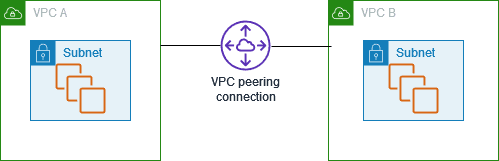
VPC Peering: Connect Private Networks Securely
VPC peering connects two virtual networks as if they were one, letting them talk over private IPs. Use it to share files or access resources between VPCs across accounts or regions without going over the public internet.
Load Balancer Health Checks: Don't Route to Dead Servers
A load balancer uses health checks to ask backend servers "Are you alive?" before sending them traffic. This is essential for any high-availability setup, preventing users from being routed to a crashed or unresponsive instance.
etcd: Kubernetes's Single Source of Truth
etcd is the distributed key-value store that acts as the brain for a Kubernetes cluster, storing its entire configuration and state. The API server uses it to persist all objects, from Pods to Secrets.
Kubelet: The Node Agent of Kubernetes
The kubelet is the primary agent on each Kubernetes node, ensuring containers described in PodSpecs are running and healthy. It watches the API server for work and reports status back. The footgun is trying to manage it directly; always use the API server.
Maven Coordinates (GAV): The Address of Your Code
Maven Coordinates (GAV) are like a postal address for a software library. You use them in a pom.xml to declare your project's identity and specify its dependencies.
Package Lock Files: Ensuring Reproducible Builds
A package lock file is a snapshot of your dependency tree, ensuring everyone on your team and your CI server installs the exact same package versions. It's crucial for preventing "works on my machine" bugs.
Mean Time to Acknowledge (MTTA): Your First Response Clock
MTTA measures the time from an alert firing to a human acknowledging it. It's about reaction speed, not fix time. On-call teams use this to ensure issues are seen quickly, minimizing downtime.
Maven SNAPSHOTs: Versions for Active Development
A SNAPSHOT version tells Maven 'this is a work-in-progress,' allowing newer builds to replace it without a version bump. Use it in CI for active development so dependent projects get the latest changes.
Mean Time To Repair (MTTR): Measuring Your Fix Velocity
MTTR measures how quickly your team can fix a problem once active work begins. It's the 'wrench time' of incident response, not total outage duration. SREs track it to gauge runbook and diagnostic effectiveness.
The Incident Commander: Direct the Response, Don't Debug
The Incident Commander (IC) is a conductor, not a soloist. During an outage, they coordinate the response, delegate tasks, and manage communication, not fix the bug themselves. This prevents chaos from uncoordinated heroics.
ChatOps: Your CLI Inside Your Chat Room
ChatOps moves your command-line tools into your team's chat, making operations a spectator sport. Instead of a solo SSH session, you run commands via a bot for all to see. Use it for deployments and status checks. The biggest footgun is security.

Service Principal: Your App's Identity
A service principal is an application's identity in a specific security context, like a "robot user." It's the local instance that gets permissions, separate from the app's global blueprint. This is how CI/CD pipelines authenticate to cloud APIs.

Follow-the-Sun: A Global Relay Race for Work
Follow-the-sun is a global relay race for work. Teams hand off tasks to the next timezone as their day ends, enabling 24/7 coverage without requiring overnight shifts. The footgun is a poor handoff, where lost context erases all the time savings.
Key Management Service (KMS): Don't Roll Your Own Crypto
A KMS is a secure vault for your cryptographic keys. Instead of storing secrets in code or config, you ask the KMS to perform cryptographic operations for you. It's used for encrypting database fields, signing data, and managing secrets for microservices.
We are hiring for this. Every open role lists the topics its interview covers, so you can prepare for the real thing rather than guessing.
See open roles