Intermediate everything in Flutter & Dart, page 4
Fix RenderFlex overflow in Row with long truncating text
Wrap Text in Expanded; set overflow to TextOverflow.ellipsis and maxLines: 1; leave siblings unwrapped.
How do Flexible and Expanded differ in a Row or Column?
Tests Flutter main-axis flex constraints. Key point: Flexible uses FlexFit.loose so the child may be smaller than its space share; Expanded uses FlexFit.tight so the child must fill its share.
Explain lifting state up with a concrete scenario and benefits
Tests moving state to a common ancestor when siblings share data. Outline: pick two siblings, hoist state to the parent, pass values and callbacks down. Red flag: mutating a sibling via GlobalKey or choosing Provider before proving the parent cannot own it.
How can you prevent unnecessary child rebuilds in Flutter?
Tests your grasp of Flutter build-boundary isolation. Strong answers hit const constructors, extracting the child into its own widget, and granular state selectors. Red flag: saying Keys alone stop rebuilds or recommending RepaintBoundary to skip builds.
What is BuildContext? Give two tree-interaction examples.
Tests if you know BuildContext is an Element handle to a widget's tree location. Strong answers cite Theme.of and Scaffold.of as ancestor lookups, explain the own-context trap, and warn against caching across async gaps. Red flag: calling it the widget itself.
Relationship between Widget, Element, and RenderObject trees and their benefits
Widget configures, Element owns state, RenderObject paints; Element.update reuses the RenderObject, so rebuilds stay cheap.
Fetch user profiles concurrently and handle individual failures
Tests Future.wait concurrency and per-future error isolation. Answer: map IDs to fetchProfile, pass to Future.wait. For partial failures, attach catchError per future to return null, then filter. Red flag: try-catch around Future.wait or sequential awaits.
Explain single-subscription vs broadcast Streams in Dart
Tests dart:async stream lifecycle. Outline: single-subscription allows one listener and emits on listen; broadcast supports many but drops events for late arrivals. Red flag: saying single-subscription allows multiple listeners or buffers events.

Describe the Dart event loop and queue execution order
Tests your grasp of Dart's single-threaded event loop priority. Great answers state: microtasks drain fully before the next event processes, cycling forever. Red flag: saying Future and scheduleMicrotask interleave in call order.
How do you model Product and safely parse JSON into List<Product>?
Tests bridging dynamic JSON to Dart's type system. A strong answer uses an immutable Product with a factory constructor that validates fields and converts types, mapping over the list. Red flag: leaving everything dynamic or assuming perfect API data.
What is a Dart factory constructor and common use cases?
Explain a factory need not create new instances and can return cached objects or subtypes; contrast with generative ones; give JSON or singleton examples.
What are the key differences between Dart extends, implements, and with?
This tests your grasp of Dart's inheritance, interface, and mixin models. extends gives single inheritance; implements forces full reimplementation; with injects shared behavior.
What is a Dart closure? Write a function that returns a function.
Tests lexical scoping: define a closure as a function plus its captured environment, show a makeAdder where the inner function uses a parent variable after the parent returns.
How do you use collection-if and collection-for to declaratively build a list?
Tests Dart's declarative collection control-flow features. Answer: show collection-for to filter inside a literal, collection-if for conditional items, and combine both in one expression. Red flag: imperative loops and add() instead of literal syntax.
What problem does late solve in Dart?
Tests definite assignment and lazy init in null-safe Dart. Strong answers cover: deferred non-nullable field init, lazy final evaluation, and LateInitializationError on early access. Red flag: treating late as nullable or saying it bypasses null safety.
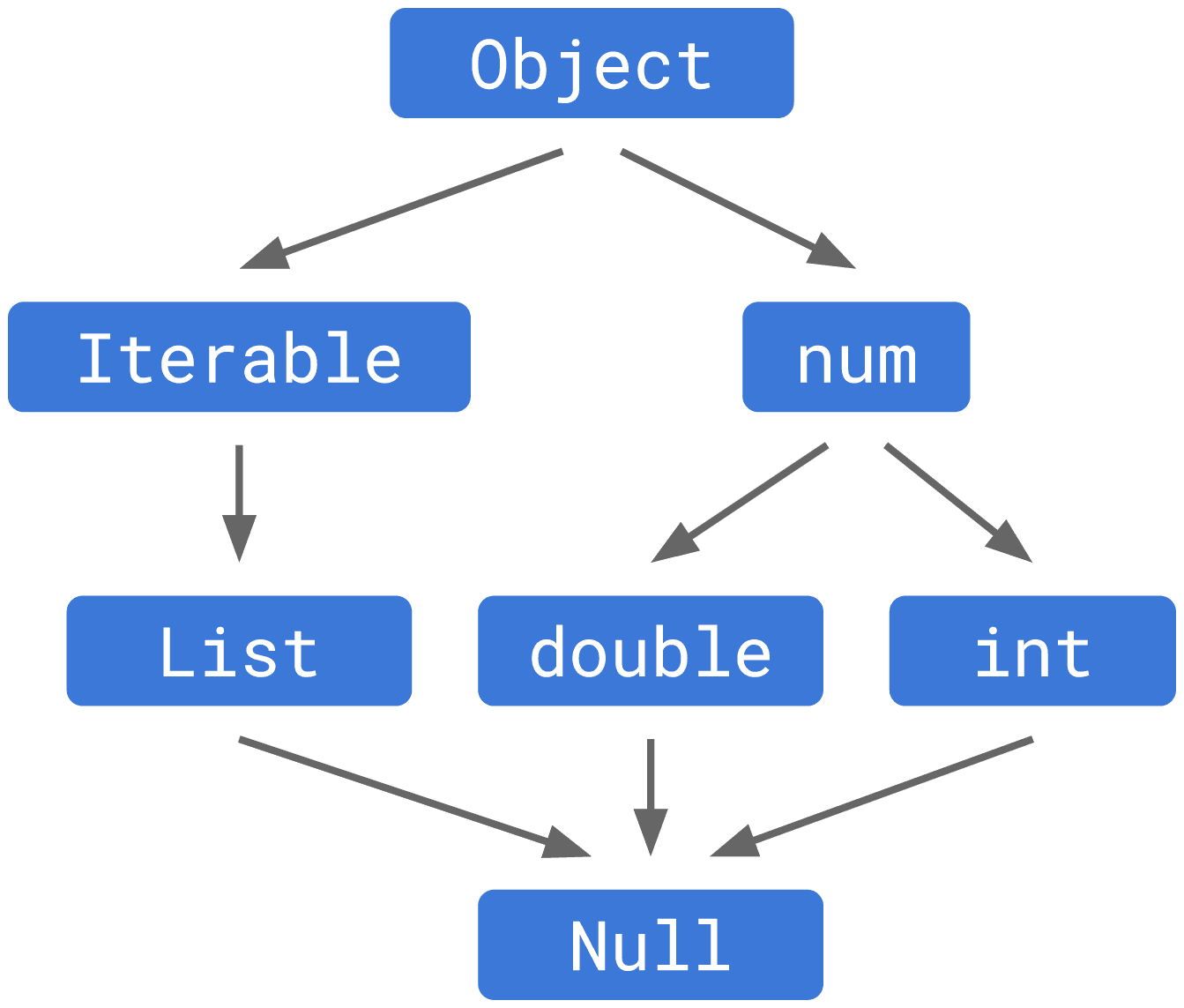
Describe Dart's null-aware ?. and null assertion ! operators
Tests Dart null safety mechanics: ?. short-circuits member access on null, while ! casts away nullability. A strong answer notes ?. avoids NPEs and ! is a risky opt-out. Red flag: claiming ! is safe or that ?. provides a default value.
Flutter Performance Overlay
Flutter's Performance Overlay is a real-time EKG for frame budgets. Two graphs reveal whether Dart UI work or GPU rasterization is causing jank during animations. The footgun is rewriting widget logic when the raster thread is actually the bottleneck.
Tree Shaking Removes Unused Flutter Code
Tree shaking is the compiler deleting code your app never calls, so importing a massive package only costs the pieces you use. It runs automatically in release builds. Relying on dynamic dispatch or dart:mirrors silently disables it and brings back the bloat.
Legacy Integration Testing with flutter_driver
flutter_driver remotely pilots your app from a host via Dart VM service, common in legacy codebases with host-side scripts. Do not treat it as an in-process widget test because it runs outside the app; you cannot inspect state or use flutter_test matchers.
Repository Pattern: Hide Your Data Sources
A repository is a contract that hides where your data lives. Your Flutter app should not care if a user profile comes from Firebase, SQLite, or a mock. Engineers often leak HTTP clients or database models into UI instead of returning domain models.
We are hiring for this. Every open role lists the topics its interview covers, so you can prepare for the real thing rather than guessing.
See open roles