Interview questions in Frontend Dev, page 19
Releasing a breaking Button change with SemVer
Bump the major version, write a changelog and migration guide, deprecate before removing where possible, and communicate clearly.
Explain Svelte Action update and provide a reactive CSS example
Tests Svelte actions beyond initial mount. Strong answers explain update re-runs when parameters change, give a CSS custom properties example, and contrast with destroy. Red flag: suggesting the action re-runs from scratch or using reactive statements.

Describe the Service Worker lifecycle and cache versioning
Tests your grasp of the Service Worker lifecycle and cache versioning. A strong answer sequences register, install, activate, and fetch; notes install precaches assets while activate purges old caches and finalizes takeover.
Explain streaming with Server Components, Suspense, and loading.js
Tests progressive HTML streaming through Suspense boundaries. Strong answers state loading.js auto-wraps a route segment in Suspense so the server can stream the shell instantly and defer slow data without blocking first paint.
Bundling a component library for tree-shaking
Ship ES modules, mark sideEffects false, preserve named exports, and externalize peers so consumers tree-shake and code-split.
Vue computed vs method: performance difference and when to choose each?
This tests Vue reactivity caching. Answer: computed caches and reruns only when reactive deps change, while methods run each render. Choose computed for derived data; methods for events/args. Red flag: saying computed is always faster or passing arguments.
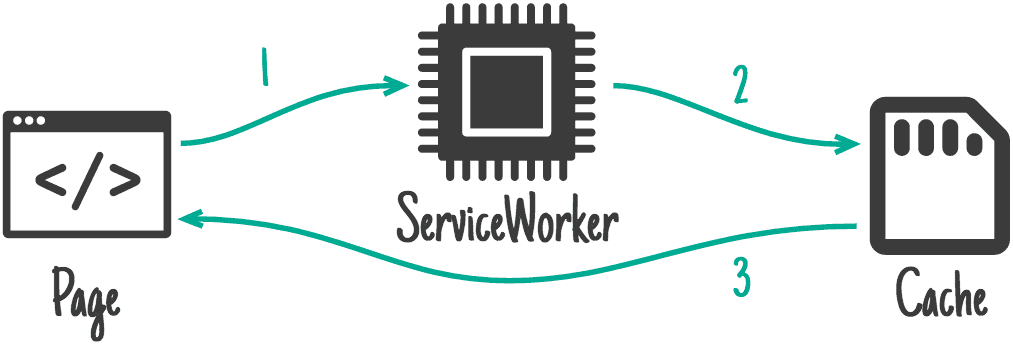
Explain Network First vs Cache First caching and when to use each
Tests matching caching strategy to asset freshness. Cache First serves static assets from the Cache API, falling back to network. Network First fetches fresh content, falling back to cache offline.
How do you implement on-demand revalidation from a CMS webhook?
Tests Next.js cache invalidation and webhook security. Answer: secure Route Handler that calls revalidatePath or revalidateTag; next request rebuilds. Red flag: full redeploys, no secret check, or Server Component revalidate calls.
Dedicated vs Shared vs Service Workers compared
Dedicated worker serves one page for offloading CPU; Shared worker is one instance across same-origin contexts via ports; Service worker is a network proxy for caching and push, event-driven and killable.
CI/CD pipeline for a design system monorepo
Install and cache, then parallel lint, type-check, unit and visual tests, then build, and on main a release job bumps versions and publishes.

How do you lazy-load a route in Vue or Angular?
Tests route-level code splitting. Strong answers mention dynamic imports in Vue Router or Angular loadChildren and highlight a smaller initial JS bundle. Red flag: confusing this with image lazy loading or claiming it speeds up runtime navigation.
How would you use generateStaticParams for known products and on-demand unknowns?
Tests App Router hybrid rendering. Export generateStaticParams for known slugs at build time; leave dynamicParams true so unknown slugs server-render on demand. Red flag: citing Pages Router fallback or ignoring route segment config.
Documenting a single UI component
Purpose and when to use, a props API table, live examples of variants and states, accessibility notes, and do and don't guidance.
How would you use dynamic import() to lazy-load a component-specific library?
Tests lazy loading and bundle splitting. Good answers call import() inside the component lifecycle, await the module namespace, let the bundler split the chunk, and handle loading and error states. Bad answers put import() at top level, defeating lazy loading.

Design a Service Worker caching strategy for a news app
Cache First for the app shell, Stale-While-Revalidate for static assets, and Network First for article APIs.
Create a basic GET API endpoint in Next.js App Router
Tests App Router backend conventions. Create route.js in an app segment, export async GET with NextRequest and return NextResponse; route.js isolates the endpoint from page.js. Red flag: citing pages/api or raw Node res objects.
Classifying a Card change under SemVer
Removing a prop is breaking so the whole release is major, document and migrate, and release the highest applicable level.
Why does an OnPush Angular child not update when its input changes?
Tests OnPush reference equality and manual change detection. Strong answers name: in-place object mutation as the root cause; ChangeDetectorRef.markForCheck or detectChanges to force updates; and Angular Signals as a modern path.
How do you programmatically play, pause, and dynamically set a video source?
Your grasp of HTMLMediaElement's imperative API and the play() Promise. Query the video, attach play() and pause() to buttons, and set src or swap source children then call load(). Treating play() as synchronous or changing src without load().
How do you parse JSON body in a POST Route Handler?
It tests whether you know Next.js App Router Route Handlers use the standard Web Request API. Call await request.json() inside the POST function; handle errors with try-catch and return a 400 for invalid JSON.
We are hiring for this. Every open role lists the topics its interview covers, so you can prepare for the real thing rather than guessing.
See open roles