Advanced everything in Frontend Dev, page 2
Modeling responsive design tokens
Model a token as a breakpoint-to-value map, transform into a base custom property redefined in media queries, components use one var per viewport.
Token architecture for white-label multi-brand
A shared semantic schema, per-brand primitive and mapping overrides, a build step emitting one bundle per brand, components consume stable semantic names.
Architect themes on a token foundation
Separate primitive tokens from semantic alias tokens that themes redefine, emit semantics as custom properties per theme scope, components use only semantics.
Versioning a design system library
Monolithic versioning is simple and coherent but couples unrelated changes; independent versioning gives granular upgrades but adds tooling complexity.
Support a one-off that deviates from the system
Offer sanctioned escape hatches like custom-property overrides, scope the one-off to the app not the library, track it for promotion or removal.
Build a custom PostCSS plugin (px to rem)
Export a plugin returning visitor hooks, walk Declaration nodes, parse and rewrite px values to rem against a base size.
Diagnose and shrink a large CSS bundle
Purge unused selectors, minify and merge with cssnano, split critical CSS and code-split per route.
Build a scalable Sass theming system
Store themes as maps, emit values as CSS custom properties so runtime switching needs no recompile, generate per-theme scopes via mixins.
Using :is() and :where() to manage specificity
:is() groups selectors and takes its most specific argument's specificity, :where() does the same grouping but contributes zero specificity, ideal for easily overridable defaults.
Utility-first versus semantic CSS trade-offs
Utility-first gives speed, small purged bundles, and no naming overhead but verbose markup; semantic BEM gives readable markup and clear boundaries but naming and dead-CSS risk.
Should a component own its outer spacing?
Components own internal padding but should not own external margin; the parent or layout owns spacing between siblings, keeping components context-independent.
What are CSS variable fonts?
One file encodes a continuous range along axes, cutting requests and bytes, controlled via font-weight, font-style, and font-variation-settings.
What is a CSS containing block?
Containing block is the reference rectangle; static and relative use the nearest block ancestor's content box, absolute uses nearest positioned ancestor, fixed uses the viewport.

Nuxt 4.4 Adds Custom Fetch Factories and Router v5
Nuxt 4.4 ships createUseFetch factories, Vue Router v5, and 28x faster dev route updates. Custom fetch instances with typed defaults cut API boilerplate, while the router upgrade drops unplugin-vue-router and clears the path for stable typed routes.
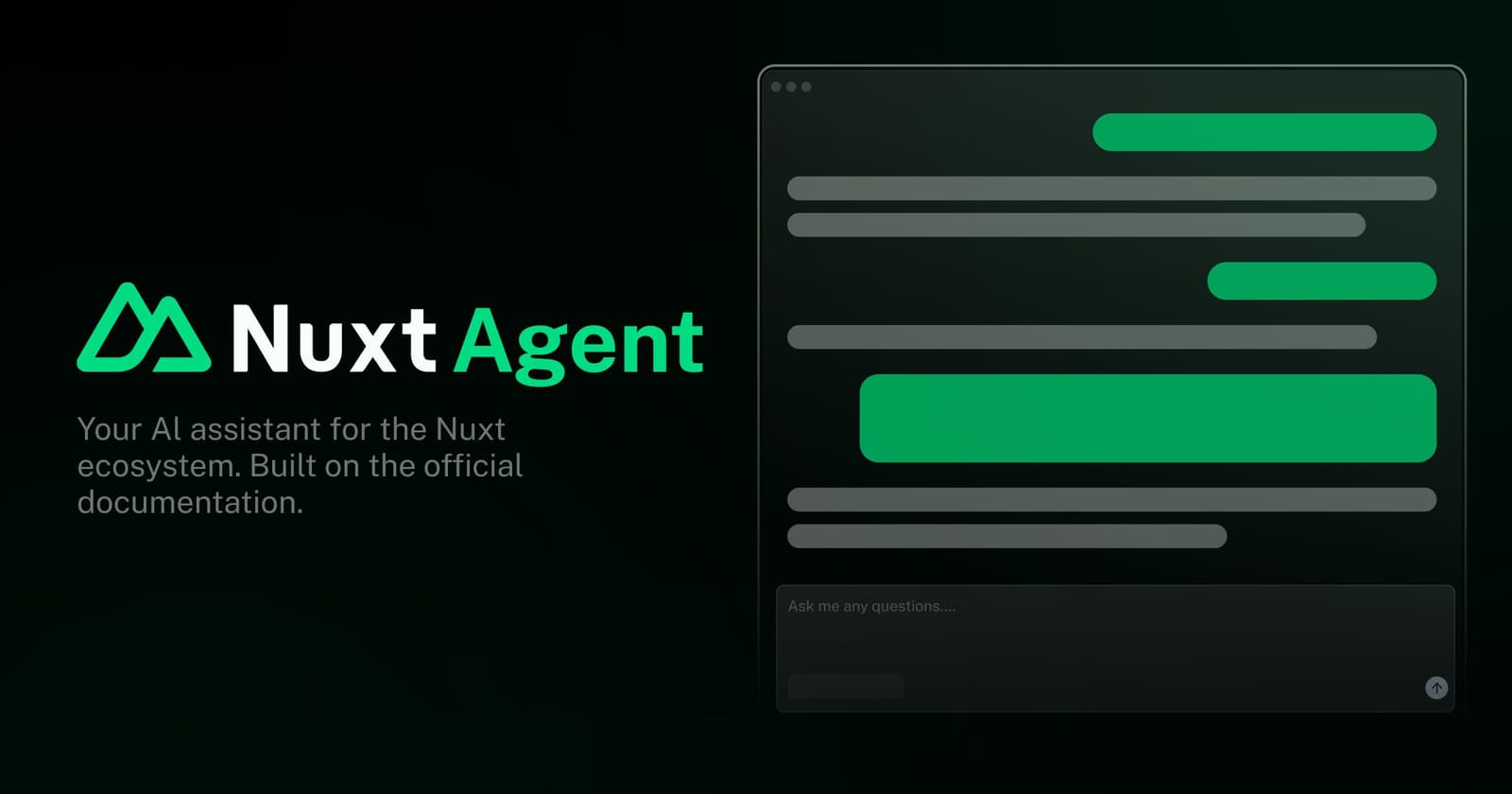
Nuxt Agent beta replaces docs chat with MCP assistant
Nuxt Agent beta replaces Kapa.ai with an MCP assistant rendering module cards and StackBlitz links as live UI. It grounds answers in docs and GitHub issues via the same MCP server Cursor uses. Try the ⌘I panel on nuxt.com to see if it cuts your.

Nuxt ships Nuxi AI agent with context-aware docs help
Nuxt's AI agent Nuxi grounds answers in docs, modules, and GitHub issues using your current page context. GitHub sign-in syncs chats across devices, while branching lets you fork conversations. Use it to cut doc-hunting time and find v4 patterns faster.
SvelteKit 2.56 overhauls remote functions, adds TypeScript 6.0
SvelteKit 2.56 overhauls remote functions with breaking changes to query refreshes, caching, and a new run() method, plus TypeScript 6.0 support. The Svelte CLI adds experimental community plugins. Audit your remote function calls before upgrading.
SvelteKit 2.61 breaks remote functions, adds live queries
SvelteKit 2.61 removes .run() from remote queries and rewrites enhance callbacks, forcing refactors. New query.live() adds async-iterable real-time streams. If you use remote functions, check three breaking changes before upgrading.
Angular v22 stabilizes Signal Forms, Aria, Asynchronous Reactivity APIs
Angular v22 promotes Signal Forms, Angular Aria, and Asynchronous Reactivity APIs from developer preview to production-ready status, giving teams stable primitives for reactive forms, accessibility, and async signals without experimental guardrails.
Angular v21 ships while AI models write outdated code
Angular v21 ships while standard AI models still write outdated code. Zoneless architecture and Signals now dominate performance roadmaps. Audit AI PRs for legacy patterns and verify zoneless readiness before Q3.
We are hiring for this. Every open role lists the topics its interview covers, so you can prepare for the real thing rather than guessing.
See open roles