Easy everything in Mobile Dev, page 16
IntentService: Queued Background Work (Deprecated)
IntentService was a simple tool for running background tasks sequentially. You sent it work as an Intent, it processed it on a worker thread, and shut down when done. It's now deprecated; use WorkManager for modern background jobs.
AsyncTask: The Deprecated Way to Do Background Work
AsyncTask was Android's original tool for short background tasks that update the UI. It was used for simple network requests or disk I/O. It's fully deprecated due to memory leaks and lifecycle issues; use Kotlin Coroutines instead.

Threads: Your App's Second Pair of Hands
A thread is a separate path of execution for background work, keeping your app's UI responsive. It's used for long tasks like network calls or disk I/O. The main footgun is trying to update the UI from a background thread, which will crash your app.
@HiltAndroidApp: The Entry Point for Hilt DI
@HiltAndroidApp is the main power switch for Hilt dependency injection. You place it on your Application class to trigger code generation and create the top-level dependency container.
Dependency Injection: Your Objects Shouldn't Create Their Own Helpers
Instead of creating its own helpers (like a network client), an object receives them from an outside source. This is crucial for building testable Android apps, as it lets you swap a real UserRepository with a fake one during tests.
OkHttp: A Smarter HTTP Client for Your App
OkHttp is a smart, resilient HTTP client for Android and Java. It automatically handles complexities like connection pooling, caching, and GZIP compression to make requests faster and more reliable.

Kotlinx.serialization: Kotlin's Native Data Converter
Kotlinx.serialization is Kotlin's native way to convert data classes into formats like JSON. It uses a compiler plugin to automate the process, making it ideal for API calls or saving data.
Retrofit: Turn Your HTTP API into an Interface
Retrofit turns your HTTP API into a simple interface, letting you define network calls as annotated methods. It's the standard for most Android network tasks. Footgun: forgetting to run calls off the main thread will crash your app.
REST: The Architectural Style for Web APIs
REST is the architectural style for web APIs, using standard HTTP methods like GET and POST to manage data. Your Android app uses it to fetch user profiles from a server. The footgun is treating REST as a strict protocol; it's a set of guidelines.
Preferences DataStore: The Safe SharedPreferences
Preferences DataStore is Android's modern way to save simple key-value data. It uses Kotlin's Flow to read data asynchronously, preventing UI freezes. Use it for user settings, but remember you can't read values synchronously like with SharedPreferences.
Room Database: SQL Made Simple on Android
Room is an abstraction layer over SQLite that lets you work with Kotlin/Java objects, not raw SQL. It's the standard for local data persistence in Android, like caching network data.
Room DAO: Your App's Type-Safe SQL Interface
A Room DAO is an interface that translates your method calls into SQL queries. It's how your Android app's code talks to its local database without writing boilerplate. The footgun is putting business logic in a DAO; it should only access data.
Room Entity: Your Database Table as a Kotlin Class
A Room Entity is a data class that maps to a database table; each object is a row, each property a column. Use it to define your local SQLite schema in Android. The footgun: forgetting the @PrimaryKey annotation, which is required for Room to manage.
Android's UI Layer: Displaying Data, Handling Events
The UI layer is what users see and touch. It displays app data on screen and sends user input like taps to your business logic. It's used in every screen, from login forms to media players.
State in Jetpack Compose: The UI's Memory
In Compose, state is any value that can change over time. The UI is a direct function of this state; when the state updates, the UI automatically redraws (recomposes) to match. The main footgun is not "hoisting" state, which makes components hard to test.
Jetpack Compose Modifiers: Styling Your UI
Think of Modifiers as a chain of instructions that style and add behavior to your UI components. They're used for everything from setting padding and size to handling clicks.
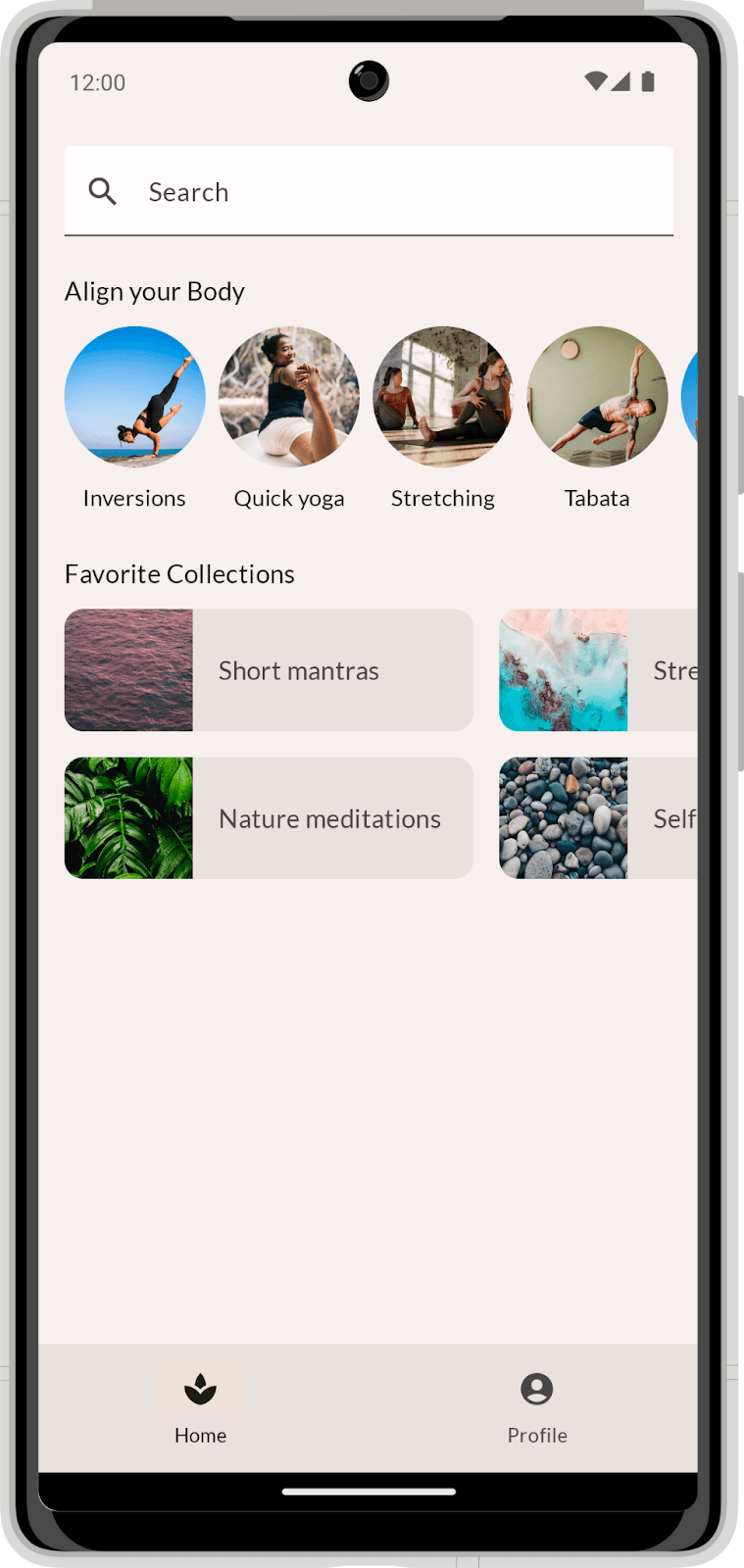
Compose Layouts: Build UI by Describing It
Describe your UI, and Compose draws it. Use Column and Row to position elements, then augment them with modifiers. The footgun is coding before you've broken the visual design into reusable parts, leading to a tangled mess.
Composable Functions: Building UI with Kotlin Functions
Composable functions are Kotlin functions that describe your UI. Instead of creating View objects, you call functions like Text to build a UI tree. They are the core of Jetpack Compose for building Android UIs declaratively.
Handling Android UI Events: Listeners and Callbacks
Think of UI event handling as setting tripwires. You attach a "listener" object to a UI element, and when a user interacts with it, your listener's code (the "callback") is triggered. This is how you make buttons and lists interactive.
View and ViewGroup: The Building Blocks of Android UI
A View is a single UI widget like a button; a ViewGroup is a container that arranges them. This is the fundamental structure for all Android UIs. The common footgun is creating deeply nested ViewGroups, which slows down rendering performance.
We are hiring for this. Every open role lists the topics its interview covers, so you can prepare for the real thing rather than guessing.
See open roles