Intermediate everything in Mobile Dev, page 10
Handling Network Errors in React Native
Network errors are normal state, not bugs to silence. In React Native, every fetch should expect flakiness and surface a retry path. The footgun is treating a timeout as permanent failure and wiping optimistic local state.
React Native State Persistence
React Native state dies when the OS kills your app. Persistence writes critical data to disk so users resume where they left off. The footgun is testing with a swipe-close instead of a real process kill, or restoring stale data without schema checks.
useAnimatedGestureHandler: UI-Thread Gesture Worklets
useAnimatedGestureHandler bridges RNGH events to Reanimated shared values on the UI thread via worklets, keeping pan gestures at 60fps without JS drops. The footgun is reading JS state inside worklet, which crashes because worklets run in an isolated runtime.
Composing Gestures: Race, Simultaneous, Exclusive
Gesture composition lets multiple detectors negotiate one touch stream. Use it when a view must scroll and pinch together. The footgun is assuming gestures cooperate by default; without explicit composition, one steals the stream and breaks the rest.
React Native Gesture Handler: Native-Driven Touch
React Native Gesture Handler moves touch recognition to the native thread so gestures stay smooth when JavaScript is busy. Use it for swipeable cards and bottom sheets. The footgun is using it without Reanimated, gaining complexity without the frame-rate win.
Debugging React Native Performance
React Native drops frames when the JS thread overloads, not just from bad code. Complex re-renders, console.log statements, or dev mode freeze touches and animations. Never trust performance numbers from development builds; always test in release mode.
React Native's Platform Build Glue
React Native integrates into Android via Gradle files. You edit settings.gradle and both build.gradle files to wire the React Native Gradle Plugin and enable autolinking. The footgun: editing the wrong build.gradle breaks native modules silently.
Touchable Components in React Native
TouchableOpacity and siblings wrap views to give press feedback by dimming or highlighting. Use them for simple taps on buttons or list items. They inject extra Animated.View nodes that can silently break layout, and Pressable has superseded the entire family.
Describe lightweight vs heavyweight Core Data migration and a heavyweight example
This tests inferred versus manual Core Data migrations. Contrast lightweight additive changes with heavyweight transforms like entity splits, citing promoting a string to a new entity. A red flag is claiming renames always need custom mapping.
Describe a pattern for background Core Data fetches and UI updates
This tests NSManagedObjectContext concurrency and queue confinement. Strong answer: create a background context, fetch, pass objectIDs or structs to main, then main context fetches by ID to update UI. Red flag: passing NSManagedObjects across threads.
How do you pop to root in SwiftUI NavigationStack?
This tests declarative state-driven navigation. A strong answer binds NavigationStack to a NavigationPath, passes the binding down, and clears the path to pop to root. A red flag is suggesting UIKit popToRootViewController or legacy isActive hacks.
Handle a deep link URL in SceneDelegate and navigate to order detail.
Handles willConnectTo and openURLContexts; parses path with URLComponents; validates ID; pushes detail onto nav stack.

Pass data back from a modally presented view controller delegate versus closure
This tests decoupled UIKit communication and memory safety. A strong answer outlines a weak delegate protocol and a closure with weak self, contrasting coupling and retain cycles. Red flag: singletons or direct parent references.

Explain the Coordinator pattern and the navigation problem it solves in MVC
This tests if you see view controllers bloat from absorbing navigation flow. A good answer names 3 problems (delegate bloat, massive view controllers, embedded routing) and says coordinators own creation and routing.
How does the Coordinator pattern decouple navigation, and what are its components?
This tests iOS separation of concerns. Explain that Coordinators extract navigation logic from view controllers for reuse, and describe AppCoordinator tree with child coordinators. A red flag is treating it as a router or ignoring parent-child retention.
How do you complete a file download after the app backgrounds?
This tests iOS background execution and URLSession background transfers. Configure a background URLSession, handle AppDelegate events, and respect the 30-second completion handler limit. Never claim NSTimer or beginBackgroundTask sustains background downloads.
Explain MVVM, its improvements over MVC, and Swift data binding techniques.
Tests architectural separation of concerns and pattern comparison skills. Define ViewModel as state transformer, cite MVC's massive view controller, and list Combine or closures for binding. Red flag: calling MVVM as MVC with no testability.
How do AppDelegate and SceneDelegate responsibilities differ?
AppDelegate owns process events (launch, push); SceneDelegate owns per-window lifecycle and UI.
Integrate SwiftUI into UIKit and wrap UIKit for SwiftUI
Tests bridging architecture between UIKit and SwiftUI using UIHostingController and UIViewRepresentable. A strong answer names hosting controllers for SwiftUI in UIKit, representable protocols for UIKit in SwiftUI, and lifecycle hooks.
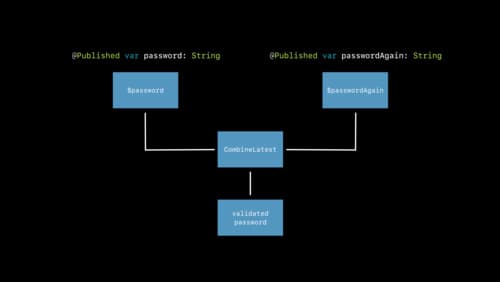
Differences between @State, @Binding, @ObservedObject, and @EnvironmentObject
Tests SwiftUI state ownership and propagation. @State owns local value types; @Binding borrows for two-way edits; @ObservedObject accepts an external ObservableObject; @EnvironmentObject reads one from the environment.
We are hiring for this. Every open role lists the topics its interview covers, so you can prepare for the real thing rather than guessing.
See open roles