Intermediate interview questions in Python & FastAPI
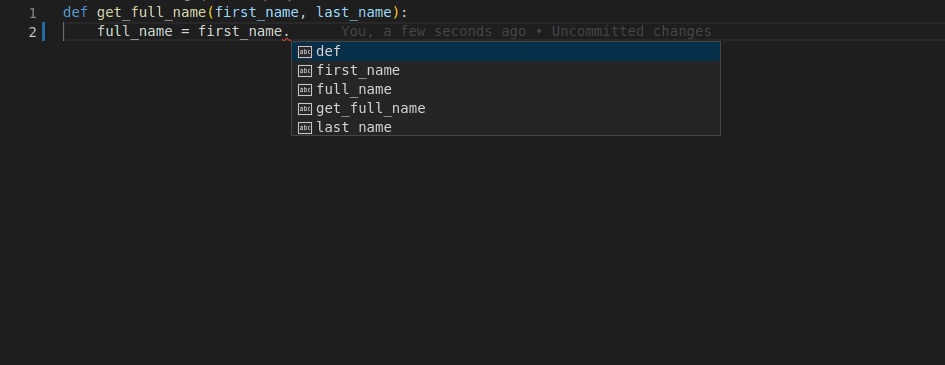
How does FastAPI leverage Pydantic for request validation and serialization?
This tests your understanding of FastAPI's declarative validation. Explain that type hints trigger auto-parsing, Pydantic enforces schemas and errors, and return types auto-serialize responses. Red flag: manually parsing request.body() or json.loads in routes.
Write an async decorator that logs execution time for FastAPI
Use functools.wraps, wrap perf_counter around awaited call, log ms, and place decorator above path operation.

How do you structure concurrent API calls with asyncio.gather in FastAPI?
Tests FastAPI async concurrency. Strong answer: async def endpoint with two async HTTP requests in asyncio.gather, cutting total latency from sum to max of the two. Red flag: using sync clients or threads instead of async I/O.
How FastAPI uses type hints for validation
Hints drive parsing, validation, and conversion; a path declared int is coerced or returns 422; OpenAPI is auto-generated.
What is the difference between a path parameter and a query parameter?
Tests REST API design and FastAPI binding. A strong answer states path params identify resources in the URL while query params filter after the question mark, then codes user_id in the route and q: str | None = None in the function.
How does FastAPI distinguish required optional and default query parameters
Tests whether you know FastAPI infers query parameter optionality from Python signature defaults. Answer: no default means required, Optional[T] = None means optional, T = value sets a default, with all three in one signature.
What standard and code elements power FastAPI's auto-generated API docs?
Tests whether you know FastAPI uses the OpenAPI standard and extracts metadata from Python type hints, Pydantic models, decorators, and docstrings to build interactive docs. Red flag: claiming you must manually maintain a separate schema file.
Enforce positive price and SKU format using Pydantic Field without custom validators
Use Field(gt=0) for price and Field(pattern=r'^ITEM-\d{5}$') for SKU; mention Annotated.
Implement a custom validator for a single Pydantic model field
Use @field_validator as a classmethod, raise ValueError on failure, return the value.
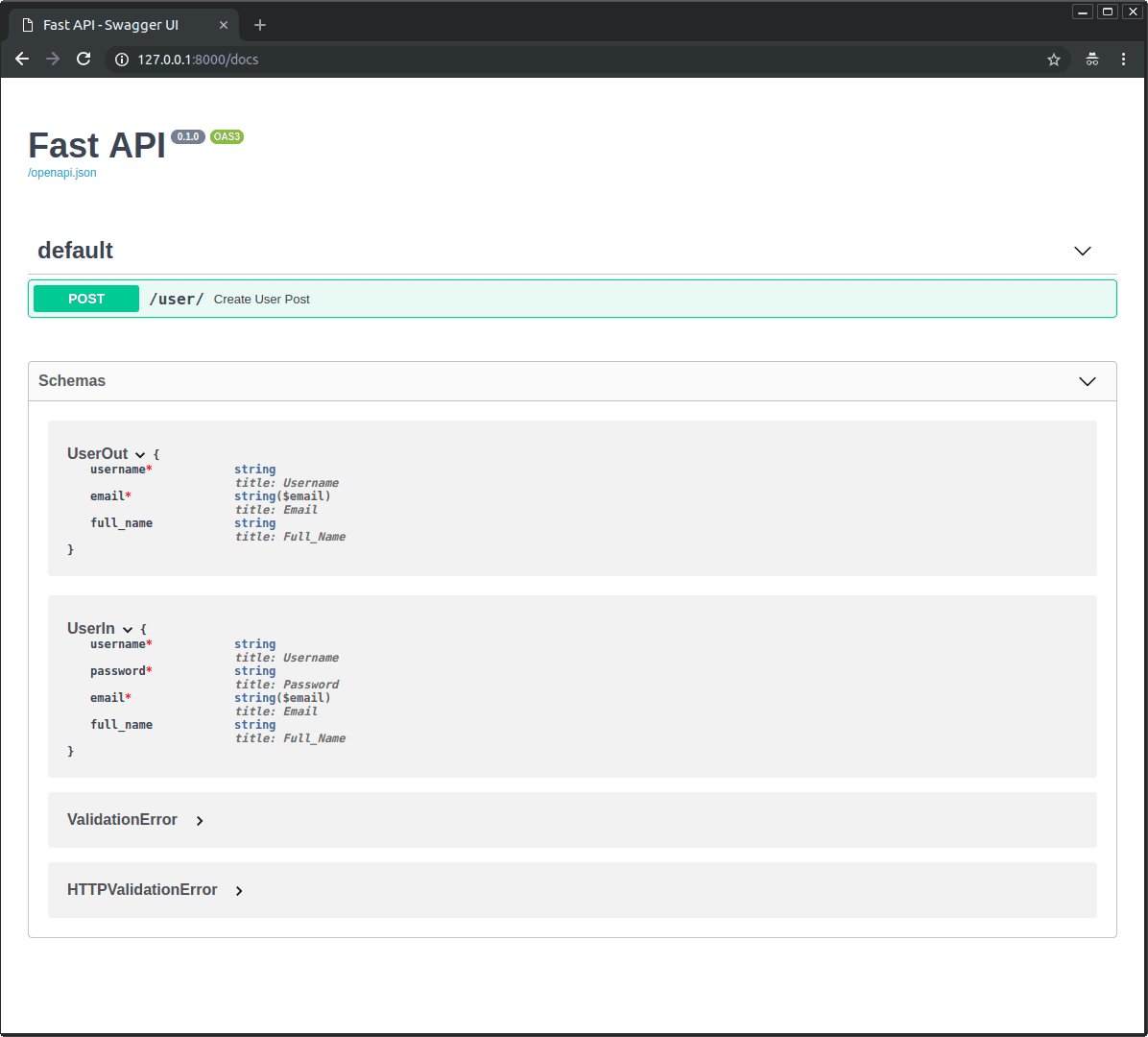
How do you prevent password_hash from appearing in a FastAPI response?
Tests FastAPI response filtering and the security practice of separating DB schemas from API contracts. A strong answer proposes a dedicated output model omitting the field, then cites response_model_exclude. Red flag: manual dict deletion or monkey-patching.
Model an Order with a nested Product list in Pydantic
It tests Pydantic nested model composition. Define Product as BaseModel, then Order with products: list[Product]; Pydantic recursively coerces each dict and raises ValidationError on failure. A red flag is insisting on manual iteration.
Implement a FastAPI file upload endpoint with form data
Tests FastAPI multipart literacy. A strong answer names python-multipart, uses Annotated[UploadFile, File()] for the image, and Annotated[str, Form()] for user_id.
How do you create a reusable current-user dependency in FastAPI?
Tests DRY auth with FastAPI Depends. Answer: create get_current_user that Depends on OAuth2PasswordBearer, verifies token, returns User model, inject into routes. Red flag: middleware or manual header parsing in each endpoint.
How do you set a custom header and cookie in FastAPI?
Tests FastAPI temporal Response injection and merge behavior. Strong answer: inject Response, set headers via response.headers, cookies via set_cookie, then return the payload normally.
How would you override a FastAPI dependency during testing?
Tests your grasp of FastAPI's dependency override mechanism. A strong answer mentions app.dependency_overrides, notes that sub-dependencies are bypassed, and stresses clearing overrides after each test.
How do you use a Python class as a FastAPI dependency?
It tests whether you understand FastAPI DI beyond functions and when stateful encapsulation wins. Explain that Depends takes callable classes, centralizing setup and shared state in __init__. Red flag: claiming classes are pure syntactic sugar.
How does FastAPI execute setup and teardown in nested yield dependencies?
It tests FastAPI's dependency injection lifecycle and stack-like teardown for nested yield dependencies. Setup runs top-down; teardown runs bottom-up after the response. A red flag is claiming teardown order is arbitrary or follows garbage collection.
How does FastAPI cache dependencies within a single request?
Tests if you know FastAPI caches a dependency after the first call in a request and reuses it across the tree. A strong answer covers default use_cache=True, request-scoped lifetime, and disabling it.
How to apply a dependency to only one FastAPI router?
Pass dependencies=[Depends(auth)] to APIRouter for /users, omit it for /items, include both.
Manage dev, staging, and prod configs in a large FastAPI app
This tests separating environment config from code with pydantic-settings and env vars. A strong answer covers .env files for local dev, per-environment validation, and secret injection for prod. Red flags are hardcoded values or scattered conditionals.
We are hiring for this. Every open role lists the topics its interview covers, so you can prepare for the real thing rather than guessing.
See open roles