Advanced everything in Vue, Angular & Svelte, page 2
Explain Svelte Action update and provide a reactive CSS example
Tests Svelte actions beyond initial mount. Strong answers explain update re-runs when parameters change, give a CSS custom properties example, and contrast with destroy. Red flag: suggesting the action re-runs from scratch or using reactive statements.
When would you provide an Angular service at the component level?
Tests Angular DI scoping beyond singletons. A strong answer picks stateful reusable widgets, explains providers create one instance per subtree, and notes cleanup on destroy. Red flag: claiming this is for performance without mentioning state isolation.
How would you design useCounter to support shared or independent state?
Tests your grasp of scope in Vue composables. Great answers contrast module-level refs for global singleton state against function-level refs for per-instance isolation, and explain tradeoffs.
How do you manage router scroll behavior and history position restoration?
Use scrollBehavior to return savedPosition on popstate and top: 0 on new navigations; handle hash anchors and async delays.
Contrast SvelteKit file-system routing with Vue/Angular router configs
Contrast SvelteKit directory routes with Vue/Angular config routers; filesystem routing removes boilerplate but couples URLs to folders and limits dynamic registration.

What is the purpose of an Angular Resolve guard vs ngOnInit?
Tests routing lifecycle timing and UX state management. Strong answers: Resolve blocks activation until data returns; ngOnInit renders first then fetches, causing flicker.
Build a reactive data-fetching utility with Svelte stores
Tests store composition for async data fetching with caching and auto re-fetch. Strong answer: readable for lifecycle, derived's set callback for race-safe fetches, writable for private inputs. Red flag: exposed internals or missing cleanup.

Differentiate client state from server state and their tools
This tests whether you recognize server state as async, remote, and cacheable versus local synchronous client state. A strong answer contrasts ownership and lifecycles, mapping Pinia to UI state and Vue Query to fetched data.
How would you architect a multi-step Svelte wizard with Stores?
Tests state isolation and validation orchestration across wizard steps. A solid answer uses a centralized store with step slices, derived validity stores, and pre-navigation guards. Red flag: unrelated per-step stores or validation only on final submit.
How do you structure components and state for a dynamic Vue form?
This tests your design of normalized reactive state for dynamic Vue forms. A great answer uses a flat item array with stable keys, row components or scoped slots, and schema-driven validation. Red flags include mutating by index or using array indices as keys.
Implement an async Angular validator with HTTP and PENDING feedback
Tests Angular async validator lifecycle and HTTP race conditions. A strong candidate returns an Observable from AsyncValidatorFn, lets Angular set PENDING automatically, debounces input, and binds control.pending in the template.
How do you bypass Svelte's scoped styles to target global elements?
Tests Svelte style encapsulation escape hatches. Strong answer: :global() syntax for elements and classes, plus risks like leaky side effects and specificity wars. Red flag: external stylesheets or inline styles as the primary solution.
How does Vue's v-bind() CSS function work in style blocks?
Tests Vue SFC CSS transforms and browser primitives. Strong answer: Vue compiles v-bind() to scoped CSS custom properties, letting reactive values work with pseudo-selectors and media queries.

Shadow DOM vs build-time scoping for third-party widgets
Shadow DOM gives true isolation but blocks global theming and complicates SSR; build-time scoping keeps theming and SSR simple but needs tooling.
Implement auto-cleanup reactive logic in Vue's Composition API and Svelte
Vue pairs onMounted with onUnmounted or watchEffect cleanup; Svelte uses $store auto-subscription or onDestroy.
How would you create a custom *appDelay structural directive?
This tests Angular rendering internals. A strong answer covers: TemplateRef as the embedded template, ViewContainerRef as insertion anchor, and a setter that creates the embedded view after a delay. Mention OnDestroy cleanup.
In Vue 3, what problem does Teleport solve?
This tests DOM hierarchy and CSS stacking context. A strong answer covers how Teleport moves markup to a target like body to escape ancestor transforms and z-index ceilings trapping fixed modals. Red flag: claiming it is only for cleaner HTML.
How does Angular OnPush change detection affect rendering?
This tests change detection tree knowledge. OnPush skips checks unless inputs change by reference, events fire, or async pipes mark for check. Mutated objects or manual subscriptions without markForCheck cause silent misses.
How do Vue and Angular detect nested object mutations?
Tests deep reactivity vs reference-based detection. Vue 3 Proxies catch nested mutations; Angular Default checks on zone ticks and OnPush misses same-reference changes. Fix via immutability, deep watchers, or ngDoCheck.
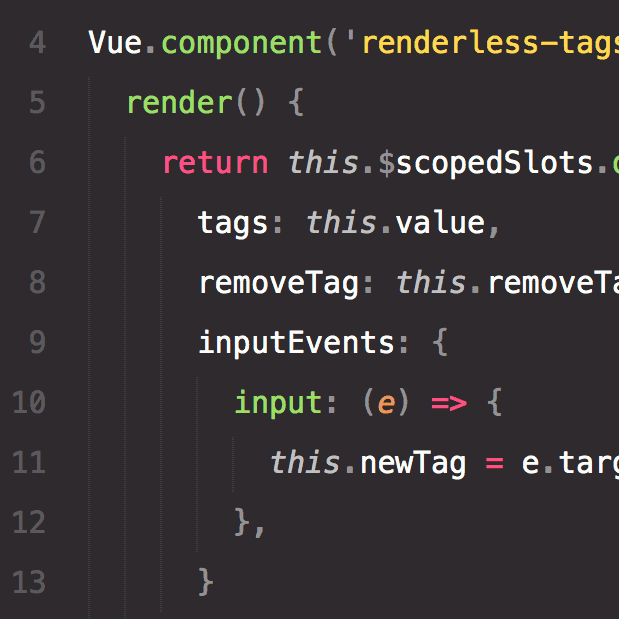
Architect a headless Toggle with scoped slots
This tests decoupling logic from markup via scoped slots. A strong answer exposes on and toggle through a single default scoped slot, renders no DOM, and cites UI flexibility. A red flag is using config props or CSS classes to control layout.
We are hiring for this. Every open role lists the topics its interview covers, so you can prepare for the real thing rather than guessing.
See open roles