All bites
The whole library, newest first. Filter by what you are here for, or pick a topic if you already know.
4247 bites
Page 108
Terraform: Manage Infrastructure as Code
Terraform lets you define cloud infrastructure—servers, databases, networks—in a text file, like a blueprint. It reads this file and builds everything for you, making setups on AWS, GCP, or Azure repeatable.
AWS CloudFormation: Your AWS Infrastructure as a Blueprint
AWS CloudFormation is your infrastructure's blueprint. Declare AWS resources in a YAML/JSON file, and AWS builds it. This is perfect for creating repeatable, version-controlled environments.
Vagrant: Your Dev Environment as Code
Vagrant is a scriptable remote for virtual machines, defining a dev environment in one text file. It ensures teams have identical, isolated setups, solving "it works on my machine" problems.
Terraform State: The Map to Your Infrastructure
Terraform state is the source of truth mapping your code to real cloud resources. It's used on every plan and apply to determine changes. The footgun: never store state in Git or edit the tfstate file directly; this risks corruption and secret leaks.
Packer: Build Identical Machine Images Everywhere
Packer is a universal recipe for baking machine images. It takes a single template and builds identical images for multiple platforms like AWS or Docker. Use it to create consistent "golden images" for your infrastructure.
Ansible: Automating Infrastructure with Playbooks
Ansible is like a recipe book for your servers. You write simple "playbooks" describing a desired state, and Ansible makes it happen over SSH without installing agents. It's ideal for configuration management, app deployment, and orchestrating workflows.
Infrastructure Drift: When Reality and Code Diverge
Infrastructure drift is when live systems no longer match their configuration code. This happens when someone manually changes a cloud resource instead of updating the Terraform file. The footgun: your next terraform apply may destroy your manual changes.

Ephemeral Environments: A Staging Server for Every PR
Ephemeral environments are disposable, production-like test servers created for every pull request. They let developers test changes in isolation without waiting for a shared staging server, catching integration bugs earlier.

Pulumi: Infrastructure as Code with Real Programming Languages
Pulumi is Infrastructure as Code using real languages like Python or TypeScript, not a special DSL. This lets you use loops, functions, and classes to define resources. The main footgun is writing overly complex, clever code that becomes unmaintainable.
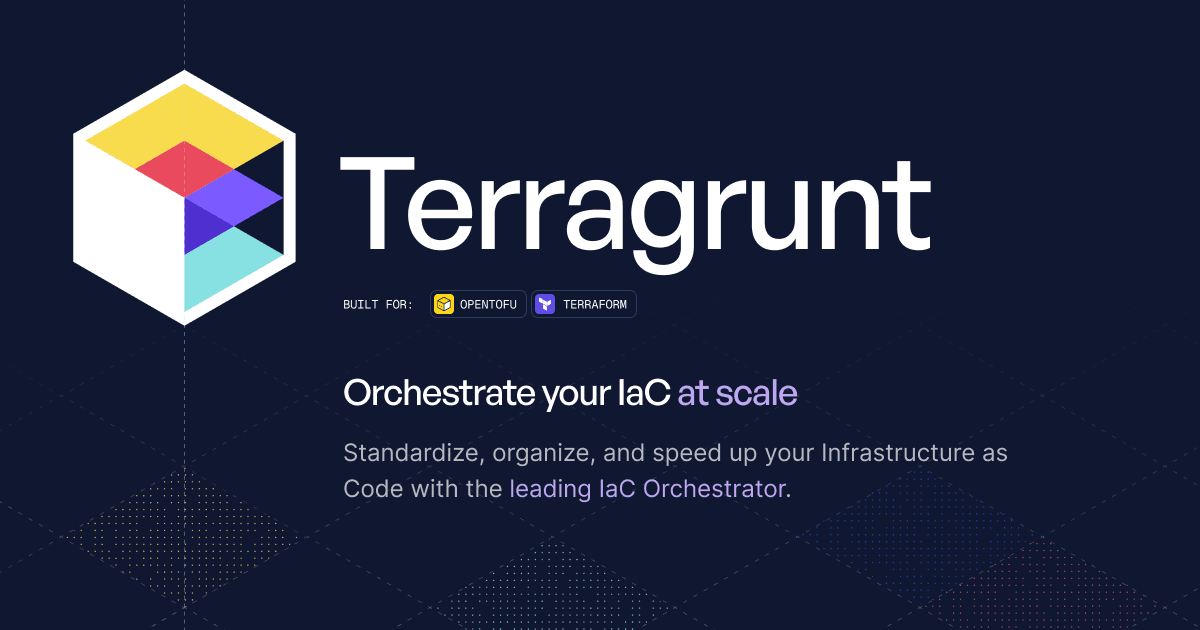
Terragrunt: A Thin Wrapper for DRY Terraform
Terragrunt is a thin wrapper for Terraform/OpenTofu that automates common tasks. Just add an empty terragrunt.hcl file to get features like automatic init.
Open Policy Agent (OPA): Centralized Policy as Code
OPA decouples policy decisions from your app's code. Instead of scattering if statements, you query a central engine: 'Is this allowed?' It enforces rules in Kubernetes, CI/CD, and API gateways. A common footgun is only using it for yes/no decisions.
Cloud-Init: Bootstrapping Cloud Instances
Cloud-init is the script that runs on a generic VM's first boot to turn it into *your* server. It's used by cloud providers to apply your user-data (like SSH keys and startup scripts) at launch. The biggest footgun: it only runs once on first boot.
Environment Variables: Configuration Outside Code
Environment variables are settings passed to your app from the outside world, letting you change behavior without touching code. Use them for API keys or database URLs. The biggest footgun is committing secrets to version control instead of using variables.
Configuration Files: Separating Code from Settings
A config file separates a program's behavior from its code, allowing you to change settings like database URLs without recompiling. They're used for API keys, feature flags, and environment-specific values. The footgun is committing secrets to version control.
The Twelve-Factor App: Store Config in the Environment
Your app's code is the blueprint; its config is the specific address and utility hookups. Store config—database URLs, API keys—in environment variables, not in the code. The footgun is hardcoding secrets, making your code base impossible to open-source safely.

Configuration as Code: Treat Your Settings Like Source Code
Configuration as Code (CasC) treats your settings like source code, storing them in version control. This ensures every environment is identical, with changes automatically tested and deployed via CI/CD.
GitLab Pipeline Configuration Hierarchy
GitLab pipeline settings stack like access-control layers. Project visibility, pipeline toggles, and role permissions interact to determine who sees logs, artifacts, or can cancel jobs.
Configuration Drift: When Servers Go Rogue
Configuration drift is when a server's live settings diverge from your version-controlled 'source of truth.' This happens from manual hotfixes or inconsistent deployments, creating snowflake servers that are hard to debug.
AWS Secrets Manager: Stop Hardcoding Credentials
AWS Secrets Manager is a digital vault for your app's credentials. Instead of hardcoding API keys or database passwords, your app fetches them at runtime. It's used for storing sensitive data securely, with built-in rotation and auditing.
Kubernetes Sealed Secrets: Git-Friendly Secret Management
Sealed Secrets let you safely commit encrypted Kubernetes secrets to a public Git repo. A one-way lockbox: anyone can add a secret, but only the target cluster can unlock it. Essential for GitOps, but remember: a Sealed Secret is tied to its cluster.