All bites
The whole library, newest first. Filter by what you are here for, or pick a topic if you already know.
4330 bites
Page 111
Build a pipeline to load a daily CSV into a database
This tests your ability to connect basic cloud services (storage, compute, database) into a simple, event-driven data pipeline. A good answer mentions an event trigger (S3), a serverless function (Lambda), and a database (RDS), plus error handling.
Build a pipeline to load CSVs into a database
Tests your grasp of event-driven architecture and basic ETL. A good answer outlines a trigger (storage event), a processing function (serverless), and a destination (database), mentioning error handling. A red flag is describing a manual or cron-based process.

Explain data warehouse purpose and how it differs from OLTP
This tests whether you know the OLTP versus analytics split. A great answer contrasts OLTP row-level writes and normalized schemas with warehouse denormalized schemas and BI reads. A red flag is calling a warehouse just a bigger OLTP database.
What is a data warehouse vs. a transactional database?
Tests your grasp of systems optimized for different access patterns (writes vs. reads). Define OLTP for transactions and OLAP for analytics. Contrast their schema (normalized vs. denormalized), data, and workload. A red flag is calling it a 'big database'.
What is a data warehouse vs. a transactional database?
Tests your grasp of read-optimized (OLAP) vs. write-optimized (OLTP) systems. A great answer defines warehouses for analysis, contrasts them with transactional DBs for operations, and explains the resulting differences in workload, schema, and data structure.
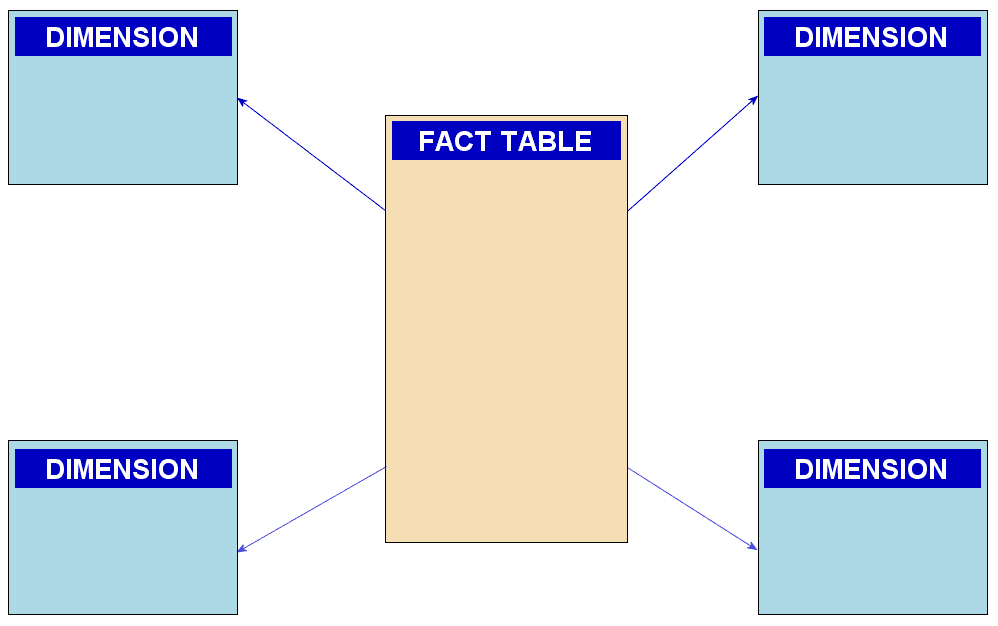
Describe star and snowflake schemas and their trade-offs
Star schemas flatten dimensions for fast joins; snowflake schemas normalize hierarchies to reduce redundancy but add joins.
Star vs. Snowflake Schemas: Trade-offs
Tests your grasp of data warehouse design trade-offs. Define star (denormalized, fast queries) and snowflake (normalized, storage efficient) schemas. Explain the core trade-off: star's query speed vs. snowflake's storage/integrity.
Describe star and snowflake schemas and their trade-offs.
Tests your grasp of data warehouse design trade-offs. Define star (denormalized dimensions) and snowflake (normalized dimensions) schemas. Contrast them: star is faster for queries but uses more space; snowflake is space-efficient but requires more joins.
How would you handle late-arriving data in a streaming analytics pipeline?
Tests understanding of event-time processing, watermarks, and windowing for correctness. A strong answer covers watermarks with allowed lateness, event-time triggers, and idempotent updates to sinks.
Handling Late-Arriving Data in a Streaming Pipeline
Tests your grasp of event time vs. processing time. A great answer defines watermarks to track completeness, uses event-time windowing to group data, and sets triggers with allowed lateness to correctly incorporate out-of-order events.
How do you handle late-arriving data in a streaming pipeline?
Tests understanding of event time vs. processing time and the mechanisms (watermarks, triggers, allowed lateness) to ensure correctness. Answer by distinguishing time types, using event-time windowing, defining watermarks, and configuring allowed lateness.
What is data partitioning in a cloud data warehouse?
Tests physical data layout and cost/performance tradeoffs. Strong answers define time-based or integer-range partitioning, explain partition pruning avoids full scans, and warn against high-cardinality keys.
What is data partitioning in a cloud data warehouse?
Tests your grasp of physical data layout optimization. A good answer defines partitioning as dividing a table by a column (e.g., date), then explains how this enables partition pruning to improve query speed and reduce cost by scanning less data.
What is data partitioning in a cloud data warehouse?
Tests your grasp of performance and cost trade-offs in data systems. A good answer defines partitioning, explains partition pruning for performance, and links it directly to reduced data scan costs.
Compare data warehouses and data lakes. How does a lakehouse merge benefits?
Tests schema tradeoffs. Warehouses enforce ACID for BI but cost more; lakes store raw cheaply but lack governance. Lakehouses add ACID metadata on object storage to unify ML and BI.
Data Warehouse vs. Data Lake vs. Lakehouse
Tests your grasp of modern data architectures. A great answer defines warehouses (structured, schema-on-write) and lakes (raw, schema-on-read), then explains how a lakehouse adds ACID transactions and governance on top of a lake.
Compare a data warehouse, data lake, and lakehouse
Tests your grasp of data architectures for BI vs. ML workloads. Contrast warehouses (structured) and lakes (raw), then explain how a lakehouse adds ACID/schema features to a lake's storage. A red flag is confusing schema-on-write vs. schema-on-read.
Diagnose out-of-memory errors in a growing Spark job
Inspect plans for skewed partitions and joins; tune shuffle partitions, batch sizes, and join strategies; leverage AQE and statistics.
Diagnosing Out-of-Memory Errors in a Spark Job
This tests your systematic debugging of distributed systems. A great answer first diagnoses the failure location via the Spark UI, then investigates data skew and code inefficiencies, and finally tunes memory configs.
How do you debug out-of-memory errors in a Spark job?
Tests your systematic debugging of distributed systems. A great answer diagnoses via the Spark UI, investigates data skew and inefficient code (e.g., shuffles), and only then tunes memory or partition configs. Red flag: immediately increasing executor memory.