Bundle Adjustment: Jointly Refining 3D Scenes and Cameras
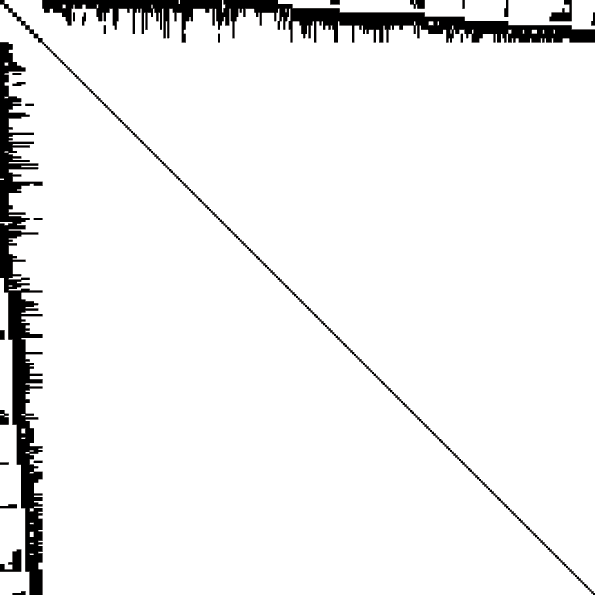
Bundle adjustment is a grand negotiation, simultaneously refining a 3D scene, camera poses, and lens properties to best explain the 2D images. It's the final polish in Structure from Motion (SfM) or SLAM.
Why it exists
Initial estimates of 3D structure and camera poses from multiple images are always noisy and inconsistent. If a 3D point is seen in several photos, projecting its estimated 3D position back into each camera view won't perfectly match where it was originally detected. Bundle adjustment was created to minimize this collective 'reprojection error' across the entire system.
The mental model
Bundle adjustment is a large-scale optimization that acts as a final polishing step. Imagine you have a rough 3D model, estimates of where your camera was for each photo, and a guess about your camera's lens. Bundle adjustment tweaks everything simultaneously—nudging the 3D points, shifting the camera positions, and refining the lens parameters—until the 3D model, when projected back into each camera view, aligns as closely as possible with the original photos.
How it works
The process minimizes a single cost function: the total reprojection error. This error is the sum of squared distances between observed feature locations in the images and the predicted locations from projecting the 3D points into the cameras. Because it adjusts the 3D points, camera motion parameters (rotation and translation), and camera intrinsic parameters (focal length, distortion) all at once, it is a non-linear least squares problem. Its name comes from adjusting the geometric 'bundles' of light rays that travel from each 3D point to each camera's optical center.
When to use it
Use bundle adjustment as the final, high-accuracy optimization stage in any multi-view 3D reconstruction pipeline. It is the gold standard for Structure from Motion (SfM), which generates 3D models from unordered image collections. It is also critical in visual SLAM (Simultaneous Localization and Mapping) systems for robots and augmented reality to maintain a consistent map and track the camera's location accurately.
When not to use it
Avoid bundle adjustment for real-time applications that cannot tolerate high computational latency, as it is very expensive. It is typically an offline or background process, not a fast initial estimation technique. For simple two-view reconstruction, basic triangulation is a sufficient starting point, though bundle adjustment can still be used to refine that result.
One canonical example
You take 100 photos of a statue from all angles. A Structure from Motion algorithm finds matching points and makes a rough guess of the 3D point cloud and camera poses. This initial result is sparse and distorted. Bundle adjustment then takes all 100 camera poses and all 3D points as input and jointly optimizes them, producing a geometrically correct and precise 3D model of the statue.
Interview question
What is the primary distinguishing characteristic of Bundle Adjustment in a 3D reconstruction pipeline?
- a.Its ability to rapidly generate initial estimates of camera poses and 3D points for real-time systems.
- b.It focuses exclusively on refining the intrinsic parameters of a single camera to correct lens distortions.
- c.It primarily triangulates 3D points from two-view correspondences, providing a robust initial 3D structure.
- d.It performs a simultaneous, global optimization of 3D point locations, camera poses, and intrinsic parameters to minimize reprojection error.Correct
Why? this is the answer
Bundle Adjustment's core function is to jointly optimize all elements—3D points, camera poses, and intrinsic parameters—to collectively minimize the reprojection error. It is explicitly stated as computationally expensive and not suitable for real-time initial estimation, making option A incorrect.
Just read this? Test yourself on what you have been reading.
Read the original → en.wikipedia.org
- #computer vision
- #3d reconstruction
- #slam
- #photogrammetry
You just looked this up. Could you explain it out loud?
That is the part interviews actually test. Tezvyn takes questions like this one and gives you what the interviewer is really checking, the answer that lands, and the mistake that ends the conversation, in the four minutes before your next meeting.
The iPhone app is on the way
We are building it. Until it lands, nothing here is held back from you: every interview card, your saved cards, streaks and the job board all work in Safari, plus hundreds of free practice quizzes of thirty questions each. Sign in and it all carries over to the app the day it arrives.
Want it as an icon? Tap Share at the bottom of Safari, then Add to Home Screen. It opens full screen and the cards you have read stay available offline.
We are hiring for this. Open roles that interview on computer vision — each one lists the topics its interview covers.
See open roles