Challenges of Transitioning to Cross-Functional Teams?
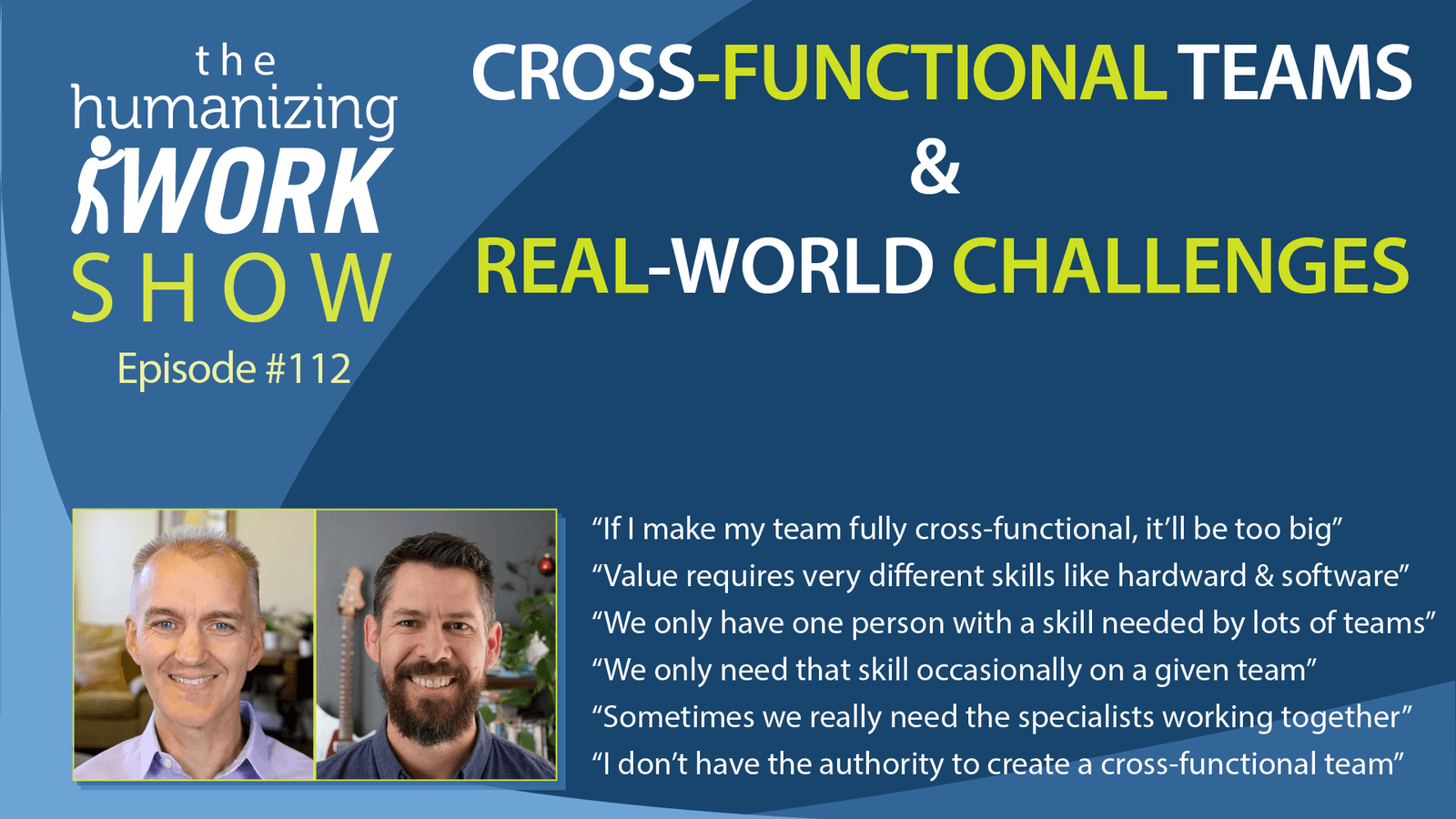
This tests your grasp of the friction in agile transitions. A good answer covers skill gaps requiring cross-training, new process demands like CI/CD ownership, and ambiguity over responsibilities like on-call.
WHAT THIS TESTS: This question tests your ability to translate abstract agile principles into concrete, on-the-ground engineering challenges. The interviewer wants to see if you can anticipate the technical and process friction that occurs when roles and responsibilities are intentionally blurred. It's a test of empathy for different roles (Dev, QA, Ops) and foresight into system-level problems, not just people problems.
A GOOD ANSWER COVERS: First, skill gaps and the need for T-shaped engineers. The immediate problem is that developers aren't testers, and testers aren't ops experts. The answer should outline the need for immediate cross-training, pair programming, and knowledge sharing, not to make everyone an expert, but to build collective competence.
Second, tooling and pipeline ownership. Siloed teams have siloed tools. The new team must unify on a single CI/CD pipeline. This creates technical challenges: Who owns this pipeline? How do you merge different testing frameworks? Who is responsible for infrastructure-as-code changes?
Third, a redefined Definition of Done. 'Done' expands from 'code merged' to 'value shipped and stable in production.' This means the team must establish new quality gates, like agreeing on code coverage targets (e.g., 80% line coverage), performance standards (e.g., p95 latency < 200ms), and security scan requirements.
Fourth, production support and on-call rotations. This is a huge point of friction. A good answer suggests creating a unified, rotating on-call schedule for the entire team, supported by robust runbooks and blameless post-mortems to distribute the operational load and knowledge.
COMMON WRONG ANSWERS: Focusing only on 'culture' or 'mindset.' These are important, but the question asks for TECHNICAL and PROCESS challenges. A vague answer about 'better communication' is a red flag.
Blaming specific roles, e.g., 'Developers don't want to write tests.' A senior answer frames these as systemic issues of incentives, skills, and processes, not individual failings.
Describing a perfect end-state without the messy transition. The question is about the FIRST THREE MONTHS. The key is to describe the immediate problems and the first steps to solve them, not a five-year DevOps utopia.
LIKELY FOLLOW-UPS: 'How would you, as a senior engineer, help facilitate this transition on your team?' (Tests leadership and mentoring)
'What metrics would you use to track if the transition is succeeding after 6 months?' (Tests data-driven thinking: cycle time, deployment frequency, change fail rate, MTTR).
ONE CONCRETE EXAMPLE: 'On a past team, we merged Dev and QA. The first hurdle was testing. Devs wrote unit tests in Jest; QA used a separate Cypress framework. For the first month, PRs needed two approvals and pipelines were slow. I proposed a plan to have devs write more integration tests within their workflow, and we trained QA specialists to focus on exploratory testing and building more complex end-to-end scenarios. This initially slowed our story point velocity by about 15% for a sprint, but it cut our total cycle time by a day within two months because the handoff-and-rework loop was gone.'
Read the original → humanizingwork.com
Get five bites like this every day.
Tezvyn delivers a daily feed of 60-second tech bites with quizzes to lock in what you learn.