Control vs. Variation: The Core of A/B Testing
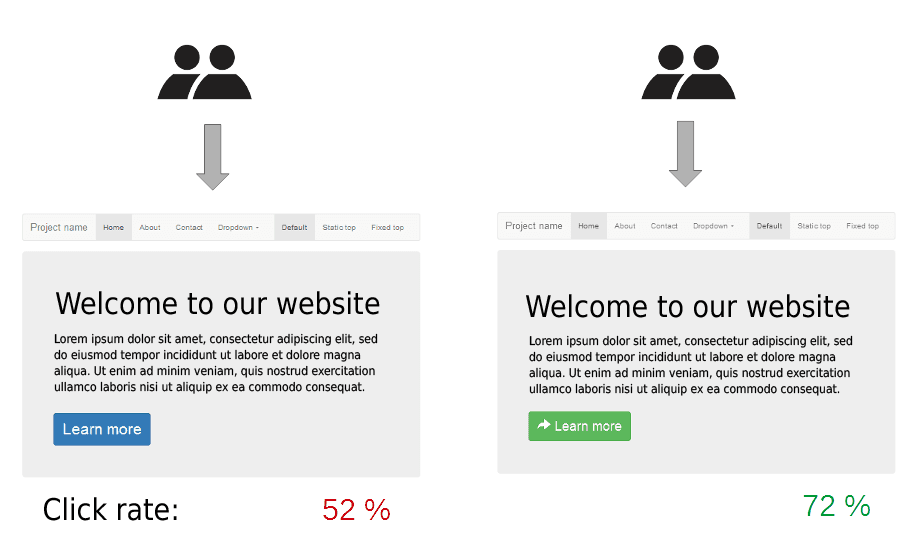
To know if a change works, compare it against the original. The original is your 'control,' and the new version is your 'variation.' This is the core of A/B testing, used to test new button colors or email subjects.
WHY IT EXISTS: Without a control, you're just guessing. If sales go up after you change your website, was it your change, a holiday, or a competitor's outage? A control group isolates the impact of your change from random noise, letting you prove cause and effect instead of just correlation.
THE MENTAL MODEL: Think of a classic science experiment. The 'control' is your baseline, the existing version you don't change. The 'variation' is the new idea you want to test. By randomly showing the control to one group of users and the variation to another similar group at the same time, you can confidently attribute any difference in behavior directly to your change.
HOW IT WORKS: A/B testing is the most common application. First, you define a hypothesis, like 'Changing the checkout button from blue to green will increase purchases.' Second, you create two versions: Version A (the control) with the blue button, and Version B (the variation) with the green button. Third, you randomly direct a portion of your users to each version. Finally, you use statistical analysis to determine if the difference in purchases is significant enough to declare a winner.
WHEN TO USE IT: Use this framework for any change where you want to measure its impact on a specific user behavior. This is ideal for optimizing a single, measurable goal (a 'key metric') like click-through rate, conversion rate, or sign-ups. Examples include testing website copy, button placement, email subject lines, and pricing models.
WHEN NOT TO USE IT: Avoid this for changes that can't be easily isolated or measured, like a complete brand redesign where everything changes at once. It's also ineffective for very low-traffic sites, as you won't have enough data to get a statistically significant result. The goal is to test one variable at a time; testing a new headline and a new image simultaneously makes it impossible to know which one drove the result.
ONE CANONICAL EXAMPLE: An e-commerce site wants to test if adding customer reviews to product pages increases sales. The control group sees the page without reviews. The variation group sees the same page with reviews included. The site then compares the conversion rate between the two groups. If the variation group's conversion rate is statistically higher, the change is implemented for all users.
Read the original → en.wikipedia.org
Get five bites like this every day.
Tezvyn delivers a daily feed of 60-second tech bites with quizzes to lock in what you learn.