Design a Scalable Data Governance Framework
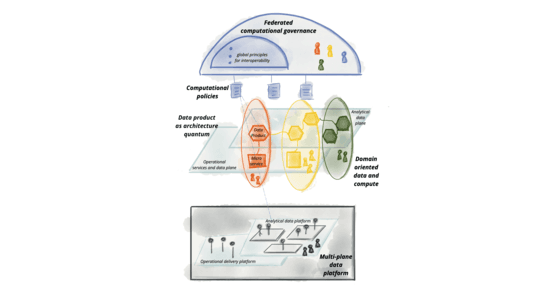
This tests your grasp of decentralized data architectures like Data Mesh. A great answer proposes a federated model with domain ownership, data as a product, and a self-serve platform.
What's really being asked
This question assesses your understanding of modern, large-scale data management paradigms, specifically the "Data Mesh" concept. The interviewer wants to see if you can move beyond traditional, centralized data warehousing and articulate a strategy for federated governance. It's a test of balancing autonomy for hundreds of teams with the need for coherent, secure, and discoverable data across the organization. They are looking for principles, not just specific tools.
The full answer
A strong answer is structured around the four principles of Data Mesh. First, establish DOMAIN OWNERSHIP, where data ownership is decentralized to the teams that produce it. Second, treat DATA AS A PRODUCT, meaning each domain's data product is discoverable, addressable, and trustworthy, with clear SLAs and documentation. Third, describe a SELF-SERVE DATA PLATFORM that provides the tools for domains to manage their data products easily, such as CI/CD for schemas and automated catalog registration. Fourth, detail the FEDERATED COMPUTATIONAL GOVERNANCE model. This is the core of the answer: a central guild or working group defines global standards (e.g., PII tagging, data classification levels), but enforcement is automated and embedded within the self-serve platform. For example, a schema change pipeline automatically validates against global rules before deployment.
The mistakes people make
The biggest red flag is proposing a purely centralized governance team that must manually approve every schema change, access request, or new dataset. This creates a massive bottleneck and is unworkable with hundreds of teams. Another weak answer is suggesting a complete free-for-all with no central standards, which leads to a data swamp. Mentioning tools like "Amundsen for catalog, Confluent Schema Registry for schemas, and Ranger for access control" without explaining the OPERATING MODEL around them is also a miss. The "how" is more important than the "what".
What usually comes next
"How would you form and operate the federated governance guild?" "Walk me through the lifecycle of a new data product from a producer team's perspective." "How do you handle breaking schema changes in this model?" "What are the first 3 roles you would hire to build this platform?"
A concrete example
A payments team wants to expose a new "successful_transactions" data product. Using the self-serve platform, they define their schema in a Git repo. The CI/CD pipeline automatically validates the schema against global rules (e.g., all schemas must have an owner field, timestamps must be ISO 8601). On merge, the pipeline registers the schema in the central Schema Registry, publishes documentation and lineage to the Data Catalog, and applies default access policies (e.g., only the payments domain has write access). A consumer team can then discover this dataset in the catalog and request read access via an automated workflow that notifies the data product owner.
Interview question
In a federated data governance framework, what is the most effective role for the central governance body?
- a.Manually approving all schema changes and access requests to ensure quality.
- b.Owning and directly managing the data pipelines and infrastructure for all domains.
- c.Publishing non-binding best practice guides for domain teams to optionally adopt.
- d.Defining global standards and embedding their enforcement into a self-serve platform.Correct
Why? this is the answer
The federated model enables domain autonomy by having a central body define global rules that are then automatically enforced by the platform. Manually approving everything creates a bottleneck that cannot scale.
Just read this? Test yourself on what you have been reading.
Read the original → martinfowler.com
- #data governance
- #data mesh
- #system design
- #data platform
You just looked this up. Could you explain it out loud?
That is the part interviews actually test. Tezvyn takes questions like this one and gives you what the interviewer is really checking, the answer that lands, and the mistake that ends the conversation, in the four minutes before your next meeting.
The iPhone app is on the way
We are building it. Until it lands, nothing here is held back from you: every interview card, your saved cards, streaks and the job board all work in Safari, plus hundreds of free practice quizzes of thirty questions each. Sign in and it all carries over to the app the day it arrives.
Want it as an icon? Tap Share at the bottom of Safari, then Add to Home Screen. It opens full screen and the cards you have read stay available offline.
We are hiring for this. Open roles that interview on data governance — each one lists the topics its interview covers.
See open roles