Design Systems: From UI Kits to Business Infrastructure
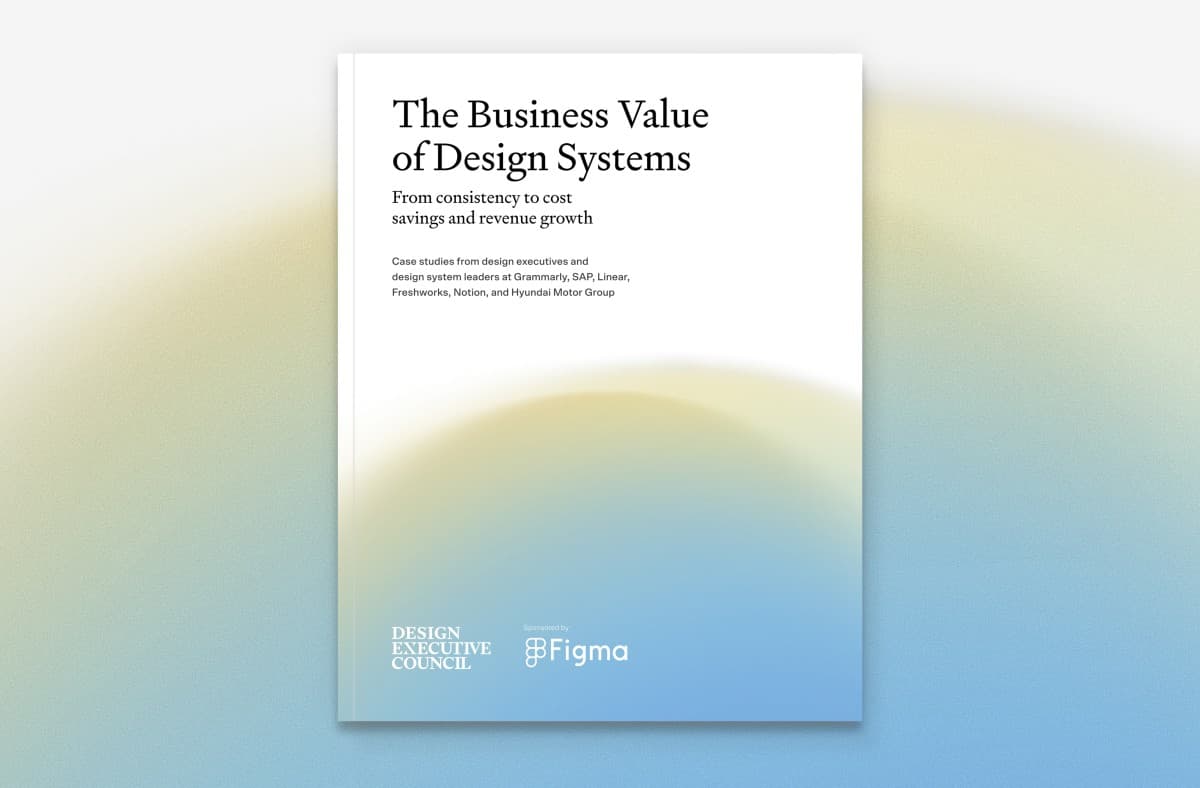
A design system is business infrastructure, not just a UI kit. It translates brand consistency into measurable ROI by reducing costs and accelerating delivery.
Why it exists
As organizations scale, inconsistency creeps into products. Different teams build similar components in slightly different ways, creating 'operational friction.' This wastes engineering time, dilutes the brand, and slows down product delivery. Design systems exist to solve this by providing a single source of truth for design and code.
The mental model
Think of a design system not as a static library of buttons and colors, but as strategic business infrastructure. It's like the standardized shipping container of product development. Before containers, loading cargo was a chaotic, bespoke process. Containers standardized everything, making global trade faster and cheaper. A design system does the same for building digital products, enabling speed, quality, and compliance at scale.
How it works
A mature design system provides more than just visual assets. It includes reusable code components, clear design principles, usage guidelines, and governance processes. By creating a shared language and toolkit for designers and developers, it eliminates redundant work. Instead of debating pixels on a button, teams can pull a pre-approved, pre-coded, and accessible component. This allows them to focus on solving higher-level user problems and translates directly into measurable efficiency and faster delivery.
When to use it
Use a design system when you need to scale product development across multiple teams or products. It's crucial for maintaining brand consistency, accelerating delivery, and reducing costs from redundant work. Companies like Notion and Hyundai use them to ensure a coherent user experience across their ecosystem. It also serves as the backbone for building new, intelligent experiences, especially in the AI era, by providing a stable and scalable foundation.
When not to use it
For a very small team working on a single, simple product, a full-blown design system can be overkill. The upfront investment in building and maintaining the system may not pay off if the scope of work is limited and team communication is already seamless. The primary value comes from reducing complexity and friction at scale.
One canonical example
Leading companies like SAP, Grammarly, and Linear leverage design systems to move beyond simple visual consistency. They treat their systems as core infrastructure that drives business performance. For them, the system isn't just about making things look the same; it's about reducing costs, increasing development velocity, and unlocking innovation by freeing up teams from repetitive, low-level tasks.
Interview question
What is the key differentiator of a mature design system compared to a simple UI kit?
- a.It includes reusable code components, clear principles, usage guidelines, and governance processes.Correct
- b.It focuses solely on providing a static library of visual components for designers.
- c.It ensures all products look identical across an organization.
- d.It is primarily beneficial for small teams working on a single, simple product to save initial setup time.
Why? this is the answer
A mature design system functions as strategic business infrastructure, providing not just visual assets but also reusable code, principles, guidelines, and governance. This comprehensive approach distinguishes it from a basic UI kit, which primarily offers static visual components.
Just read this? Test yourself on what you have been reading.
Read the original → designexecutivecouncil.com
- #design systems
- #product strategy
- #roi
- #engineering efficiency
You just looked this up. Could you explain it out loud?
That is the part interviews actually test. Tezvyn takes questions like this one and gives you what the interviewer is really checking, the answer that lands, and the mistake that ends the conversation, in the four minutes before your next meeting.
The iPhone app is on the way
We are building it. Until it lands, nothing here is held back from you: every interview card, your saved cards, streaks and the job board all work in Safari, plus hundreds of free practice quizzes of thirty questions each. Sign in and it all carries over to the app the day it arrives.
Want it as an icon? Tap Share at the bottom of Safari, then Add to Home Screen. It opens full screen and the cards you have read stay available offline.
We are hiring for this. Open roles that interview on design systems — each one lists the topics its interview covers.
See open roles