Edge AI: Running Models Where the Data Is
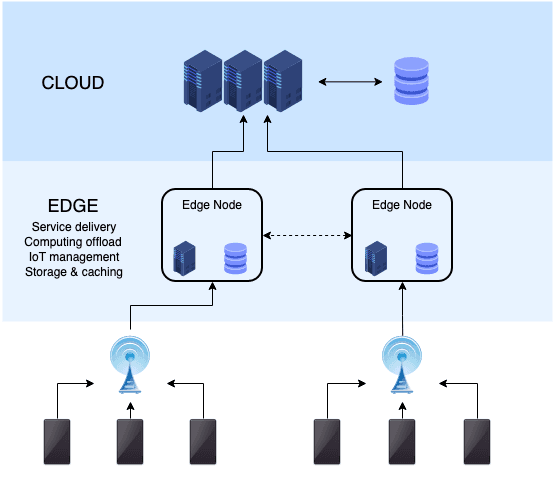
Edge AI runs machine learning models directly on devices, not in a distant cloud. This enables real-time, offline applications like smart cameras or voice assistants. The footgun is underestimating device hardware limits; models must be small and efficient.
WHY IT EXISTS Sending every piece of data from billions of devices to a central cloud for AI processing is slow, expensive, and often impossible due to bandwidth or privacy constraints. Edge AI was developed to solve the latency and connectivity problem by performing computation locally, right where the data is created.
THE MENTAL MODEL Think of Edge AI as putting a small, specialized brain directly inside a device. Instead of a security camera streaming video to a cloud server to detect a person, the camera itself runs a model to make the detection. The cloud is for training massive models; the edge is for running fast, efficient, specialized versions of them.
HOW IT WORKS A large AI model is first trained in the cloud. Then, it undergoes optimization, compression, and quantization to create a much smaller, faster version. This lightweight model is deployed to an edge device (like a smartphone or an industrial sensor). The device then uses its own sensors to gather data and runs inference locally, providing immediate results without a network round trip.
WHEN TO USE IT Use Edge AI when low latency is critical (self-driving cars needing instant decisions), when internet connectivity is unreliable or absent (a smart tractor in a field), when data privacy is paramount (processing health data on-device), or to reduce cloud bandwidth costs.
WHEN NOT TO USE IT Avoid Edge AI when you need the power of a massive model that can't be compressed without significant accuracy loss. It's also not suitable for training models or for applications that must aggregate data from many sources for a single decision, as those tasks still require the computational power of a central server.
ONE CANONICAL EXAMPLE A smart home security camera. Instead of constantly streaming video, an Edge AI camera processes the feed locally. It runs a lightweight object detection model to distinguish between a person, a car, and a stray cat. It only sends a notification and a short clip to the cloud when a significant event is detected, saving bandwidth and enhancing privacy.
Read the original → en.wikipedia.org
Get five bites like this every day.
Tezvyn delivers a daily feed of 60-second tech bites with quizzes to lock in what you learn.