How would you usability-test a feature-flagged staging component?
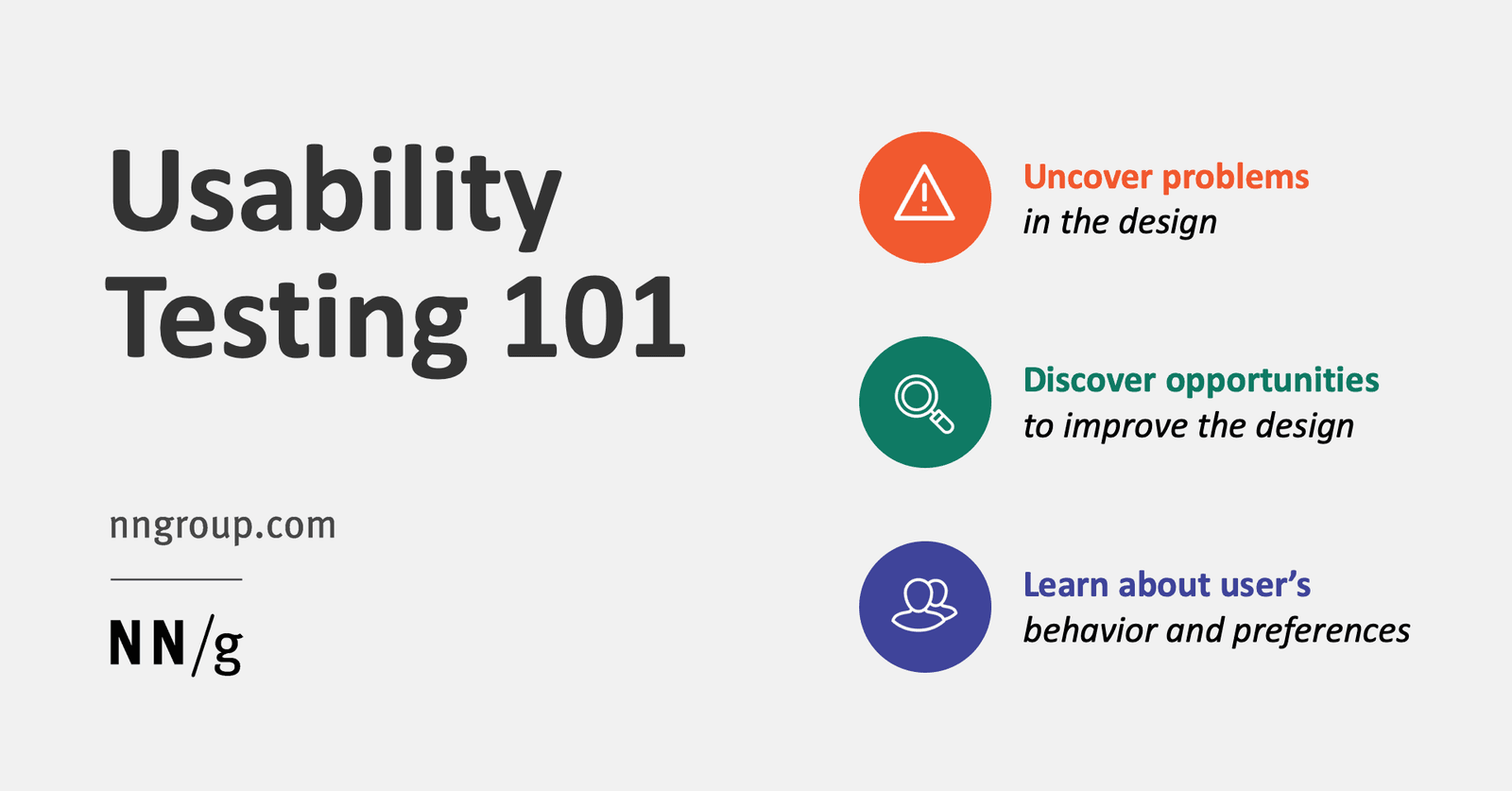
Tests if you know usability testing works early. Strong answer: realistic tasks with careful wording to avoid priming; facilitator observes behavior and asks followups without influencing participant; staging is just another interface.
What's really being asked
Whether you understand that usability testing is an observational methodology built around three core elements: a facilitator, realistic tasks, and a participant. The interviewer wants to see that you know testing should drive iterative design and that it does not require a finished product. They are checking if you can apply the fundamentals to an unfinished, feature-flagged component on a staging server without changing the core methodology.
The full answer
First, frame the purpose as identifying problems in the design, uncovering opportunities to improve, and learning about the target user's behavior and preferences. Even expert designers cannot create a perfect experience without iterative observation of real users. Second, describe recruiting a participant who matches the target user and assigning realistic tasks that exercise the flagged component. Task wording must be precise because small phrasing errors can prime the participant or cause misunderstanding. Third, explain that a facilitator guides the participant, observes their behavior, listens for feedback, and asks followup questions to elicit detail. The facilitator must ensure high-quality valid data while working hard not to accidentally influence the participant's behavior. Fourth, note that the staging environment is simply the user interface under test for this session. The feature flag does not change the process; it merely defines which interface the participant uses.
The mistakes people make
Insisting that usability testing must wait until the feature is production-ready or fully polished. This contradicts the core principle that design must be iterated based on observations of real users. Writing tasks that lead the participant toward a specific answer or feature, which introduces priming and corrupts the data. Treating the session like a QA bug hunt rather than an observation of user behavior and listening for feedback. Failing to mention the facilitator's critical duty to avoid influencing the participant.
What usually comes next
How would you adapt the facilitator's role if the test were remote and unmoderated? What would you do if the participant encountered a staging bug that blocked their task? How would your tasks change if you were testing a complete workflow versus a single component?
A concrete example
Suppose the feature-flagged component is a new printer error message. You recruit a participant who owns a printer and give them the realistic task: "Your printer is showing Error 5200. How can you get rid of the error message?" The facilitator watches whether the participant notices the new banner, where they click first, and listens for confusion. Afterward, the facilitator asks followup questions about what they expected to happen. The staging server hosts the interface, but the core test elements remain exactly the same.
Interview question
When usability-testing a feature-flagged component on a staging server, what is the correct approach?
- a.Design tasks that lead participants directly to the flagged component to guarantee exposure.
- b.View staging as the interface under test and apply the standard usability methodology.Correct
- c.Postpone testing until the feature is complete and released to production.
- d.Treat the session as a QA pass to catch staging bugs before launch.
Why? this is the answer
The card emphasizes that the staging environment is simply the interface under test and the feature flag does not change the core usability methodology. Option C is tempting because beginners often believe testing requires a finished product, but the card explicitly states iterative observation should happen early and does not require a polished release.
Just read this? Test yourself on what you have been reading.
Read the original → nngroup.com
- #usability testing
- #ux research
- #facilitation
- #task design
- #iterative design
You just looked this up. Could you explain it out loud?
That is the part interviews actually test. Tezvyn takes questions like this one and gives you what the interviewer is really checking, the answer that lands, and the mistake that ends the conversation, in the four minutes before your next meeting.
The iPhone app is on the way
We are building it. Until it lands, nothing here is held back from you: every interview card, your saved cards, streaks and the job board all work in Safari, plus hundreds of free practice quizzes of thirty questions each. Sign in and it all carries over to the app the day it arrives.
Want it as an icon? Tap Share at the bottom of Safari, then Add to Home Screen. It opens full screen and the cards you have read stay available offline.
We are hiring for this. Every open role lists the topics its interview covers, so you can prepare for the real thing rather than guessing.
See open roles