IA: How to Organize Docs So People Use Your Design System
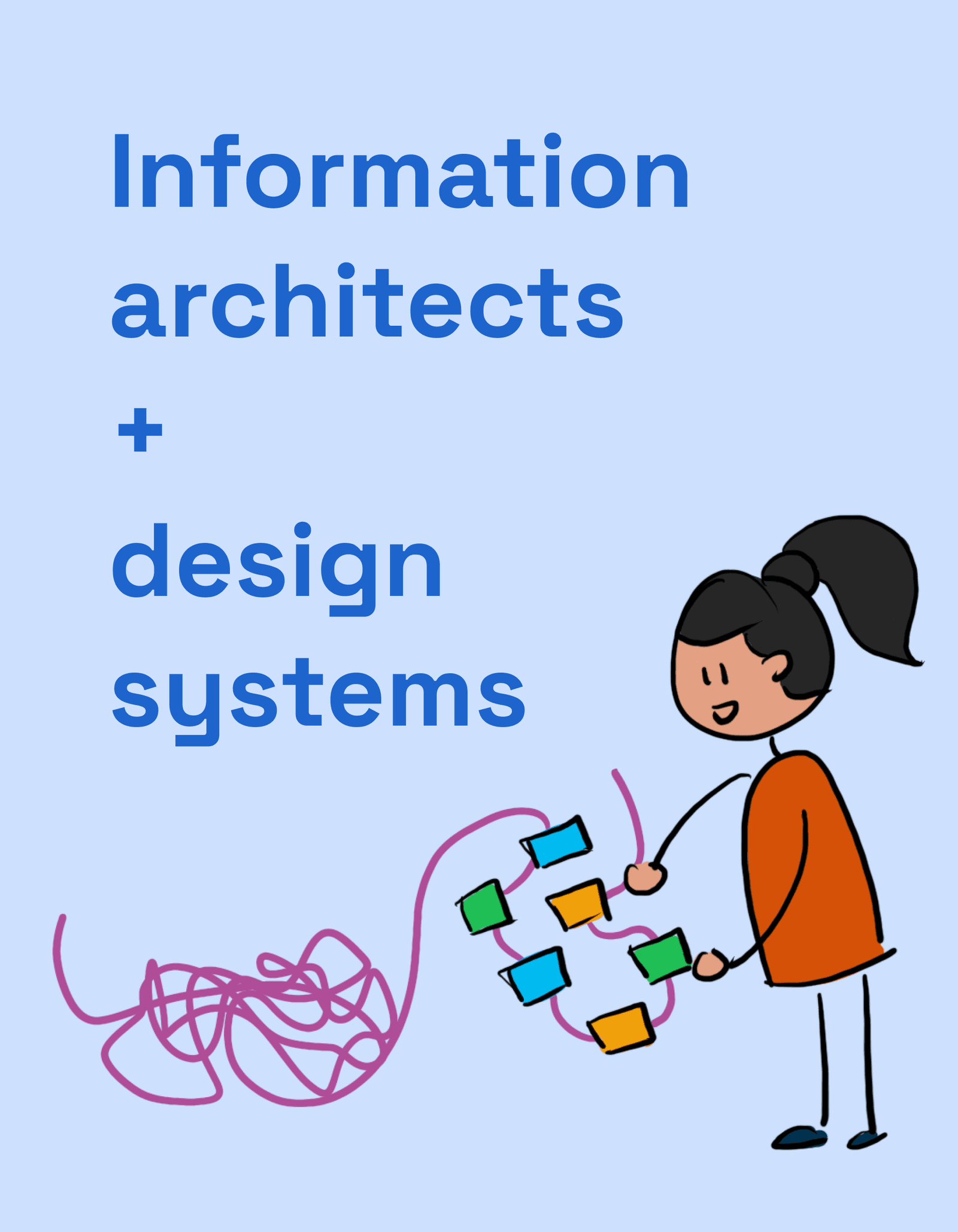
Think of your design system docs like a library. Information Architecture (IA) is the shelving and catalog system that lets users find the right component or guideline. It's crucial for any system where discoverability impacts adoption.
WHY IT EXISTS: A design system's value isn't in its existence, but its usage. If engineers and designers can't find what they need quickly, they'll build their own one-off solutions, defeating the system's purpose. Information Architecture (IA) exists to make documentation discoverable and intuitive, which directly drives adoption.
THE MENTAL MODEL: Treat your design system documentation like a physical library. IA is the practice of deciding how to categorize the books (components, patterns), label the shelves (navigation), and create a card catalog (search). Without a clear system, you just have a pile of books, and finding anything is a matter of luck.
HOW IT WORKS: IA involves creating a logical structure based on user needs, not internal team structures. This typically means grouping content into intuitive categories. Common top-level categories are: Foundations (or Tokens) for core styles like color and typography; Components for individual UI elements like buttons and inputs; and Patterns for multi-component solutions to common problems like a login form. Each page should also cross-link to related items; for example, a "Card" component page should link to the "Image" and "Button" components it might contain.
WHEN TO USE IT: Apply IA principles from the very beginning of documenting a design system. It's especially critical as a system scales beyond 10-15 components or serves multiple product teams. The goal is to create a predictable, consistent structure that users can rely on as the system grows.
WHEN NOT TO USE IT: There's no scenario where you shouldn't consider IA. However, for a tiny, single-team project with only a few components, a simple, flat list might suffice temporarily. The real footgun is ignoring IA until the documentation is already a sprawling, confusing mess that requires a painful reorganization.
ONE CANONICAL EXAMPLE: A robust IA might structure documentation as follows: First, a "Getting Started" section for onboarding. Second, "Foundations" covering design tokens for color, typography, and spacing. Third, "Components," the largest section, often broken into sub-categories like "Forms," "Navigation," and "Overlays." Fourth, "Patterns" showing how to combine components into solutions like "Search Results" or "Data Tables." Finally, "Guidelines" for broader topics like accessibility and content strategy.
Read the original → zeroheight.com
Get five bites like this every day.
Tezvyn delivers a daily feed of 60-second tech bites with quizzes to lock in what you learn.