Kanban Replenishment: Pulling Work, Not Pushing It
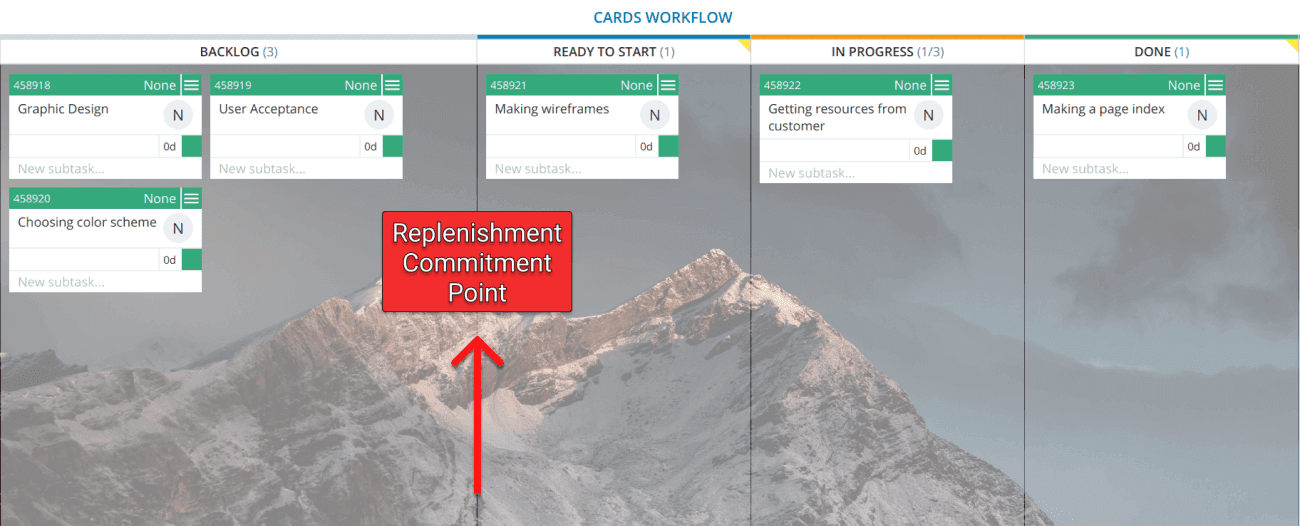
Instead of a manager pushing tasks, a replenishment meeting is where the team pulls work into their active backlog. This cadence refills the 'Ready to Start' column, ensuring a steady flow of well-understood tasks.
The mental model
Replenishment is the moment a Kanban team formally commits to a piece of work. Unlike traditional project management where a manager pushes tasks onto a team, replenishment is a pull-based activity. The team collaboratively decides to pull new items into their workflow only when they have the capacity to handle them, signaling a shared commitment to delivery.
How it works
A replenishment meeting is a recurring event where the team reviews potential work items from an upstream backlog or idea pool. For an item to be selected, all its details must be clear and agreed upon. When the team has capacity in the initial stage of their workflow (e.g., the 'Ready for Development' column), they pull a prepared item across a designated 'commitment point' on their board. This action officially adds the item to the team's pipeline and starts the clock on its delivery lead time.
When to use it
Use replenishment in any Kanban system to create a smooth, predictable workflow. It's crucial for preventing team overburdening and shifting the focus from starting work to finishing work. This process provides clarity on priorities and improves the information flow between the team and its stakeholders, increasing the likelihood of successful delivery.
When not to use it
This pull-based cadence is less effective in rigid push systems where a manager dictates all tasks and timelines without team input. While Scrum has a similar event in sprint planning, the continuous nature of Kanban replenishment differs from the fixed, time-boxed commitment of a sprint backlog.
One canonical example
A hardware engineering team holds a replenishment meeting every Wednesday. Their Kanban board has a WIP limit of 3 on their 'Ready for Design' column. The column currently holds one item. This means they have capacity to pull two new items. They review the 'Options' backlog with the product manager, discuss three potential schematics, and agree that two are fully specified and ready. They pull those two items into the 'Ready for Design' column. The third schematic is left in 'Options' pending further research.
Interview question
What is the fundamental principle guiding a team's decision to pull new work items during a Kanban replenishment meeting?
- a.The continuous effort to keep all team members busy by assigning them new tasks immediately.
- b.The team's current capacity to handle additional work without exceeding their Work-In-Progress (WIP) limits.Correct
- c.The need to meet a strict, manager-imposed deadline for the next set of features.
- d.The product owner's priority ranking of all available items in the upstream backlog.
Why? this is the answer
Kanban replenishment is a pull-based system where the team commits to new work only when they have the capacity to handle it, preventing overburdening. While priorities are important for selecting *which* item to pull, the decision to pull *any* item is based on available capacity.
Just read this? Test yourself on what you have been reading.
Read the original → businessmap.io
- #kanban
- #agile
- #workflow
- #project management
You just looked this up. Could you explain it out loud?
That is the part interviews actually test. Tezvyn takes questions like this one and gives you what the interviewer is really checking, the answer that lands, and the mistake that ends the conversation, in the four minutes before your next meeting.
The iPhone app is on the way
We are building it. Until it lands, nothing here is held back from you: every interview card, your saved cards, streaks and the job board all work in Safari, plus hundreds of free practice quizzes of thirty questions each. Sign in and it all carries over to the app the day it arrives.
Want it as an icon? Tap Share at the bottom of Safari, then Add to Home Screen. It opens full screen and the cards you have read stay available offline.
We are hiring for this. Open roles that interview on kanban — each one lists the topics its interview covers.
See open roles