Management 3.0: Manage the System, Not the People
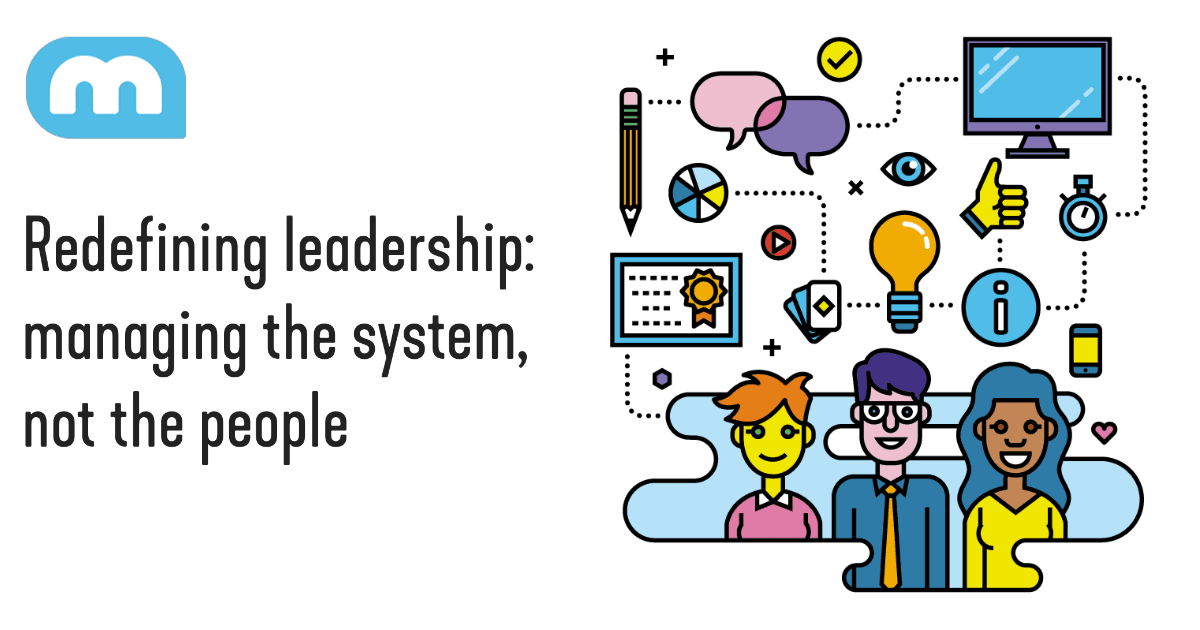
Management 3.0 treats leadership like tending a garden, not commanding an army. You manage the system—the environment and constraints—to let empowered teams flourish. It's used in agile contexts to boost engagement with hands-on tools and games.
The mental model
Management 3.0 is a leadership philosophy that focuses on managing the system, not the people. Instead of top-down directives, leaders act as facilitators who design and nurture a work environment where motivated, self-organizing teams can thrive. The goal is to create happier people and more successful organizations by treating the company as a complex, adaptive system.
How it works
Management 3.0 is not a rigid framework but an ever-changing collection of concrete games, tools, and practices. These tools are designed to make abstract concepts like motivation, delegation, and feedback tangible and actionable for any worker, not just managers. The approach is hands-on, encouraging experimentation and shared responsibility for improving the organization.
When to use it
Use Management 3.0 when you want to move from a traditional command-and-control structure to a more agile, trust-based model. It is ideal for organizations looking to increase employee engagement, happiness, and autonomy. It is particularly effective for teams dealing with complex problems that require creative, decentralized solutions.
When not to use it
This approach is less effective in environments where a rigid, top-down hierarchy is non-negotiable or where there is no real buy-in for genuine empowerment. If leadership only pays lip service to agile principles, the tools will be seen as just another management fad and will fail to produce lasting change.
One canonical example
A team wants to clarify decision-making boundaries with their manager. Instead of an abstract discussion, they use a Management 3.0 practice like Delegation Poker. This 'game' provides a structured way for the group to discuss and agree on seven distinct levels of delegation for different tasks, making the abstract concept of empowerment concrete, visible, and mutually agreed upon.
Interview question
Which statement best describes the core leadership philosophy of Management 3.0?
- a.Leaders provide top-down directives to ensure efficient task completion by individuals.
- b.Leaders facilitate an environment where self-organizing teams can thrive by managing the system.Correct
- c.Leaders establish a fixed set of rules and procedures to standardize all organizational processes.
- d.Leaders focus on optimizing individual performance through clear objectives and regular evaluations.
Why? this is the answer
Management 3.0's core philosophy is that leaders manage the system and environment to empower self-organizing teams. Option A describes a traditional command-and-control approach, which Management 3.0 aims to replace.
Just read this? Test yourself on what you have been reading.
Read the original → management30.com
You just looked this up. Could you explain it out loud?
That is the part interviews actually test. Tezvyn takes questions like this one and gives you what the interviewer is really checking, the answer that lands, and the mistake that ends the conversation, in the four minutes before your next meeting.
The iPhone app is on the way
We are building it. Until it lands, nothing here is held back from you: every interview card, your saved cards, streaks and the job board all work in Safari, plus hundreds of free practice quizzes of thirty questions each. Sign in and it all carries over to the app the day it arrives.
Want it as an icon? Tap Share at the bottom of Safari, then Add to Home Screen. It opens full screen and the cards you have read stay available offline.
We are hiring for this. Open roles that interview on agile — each one lists the topics its interview covers.
See open roles