Model output distribution shifts. What are root causes and next steps?
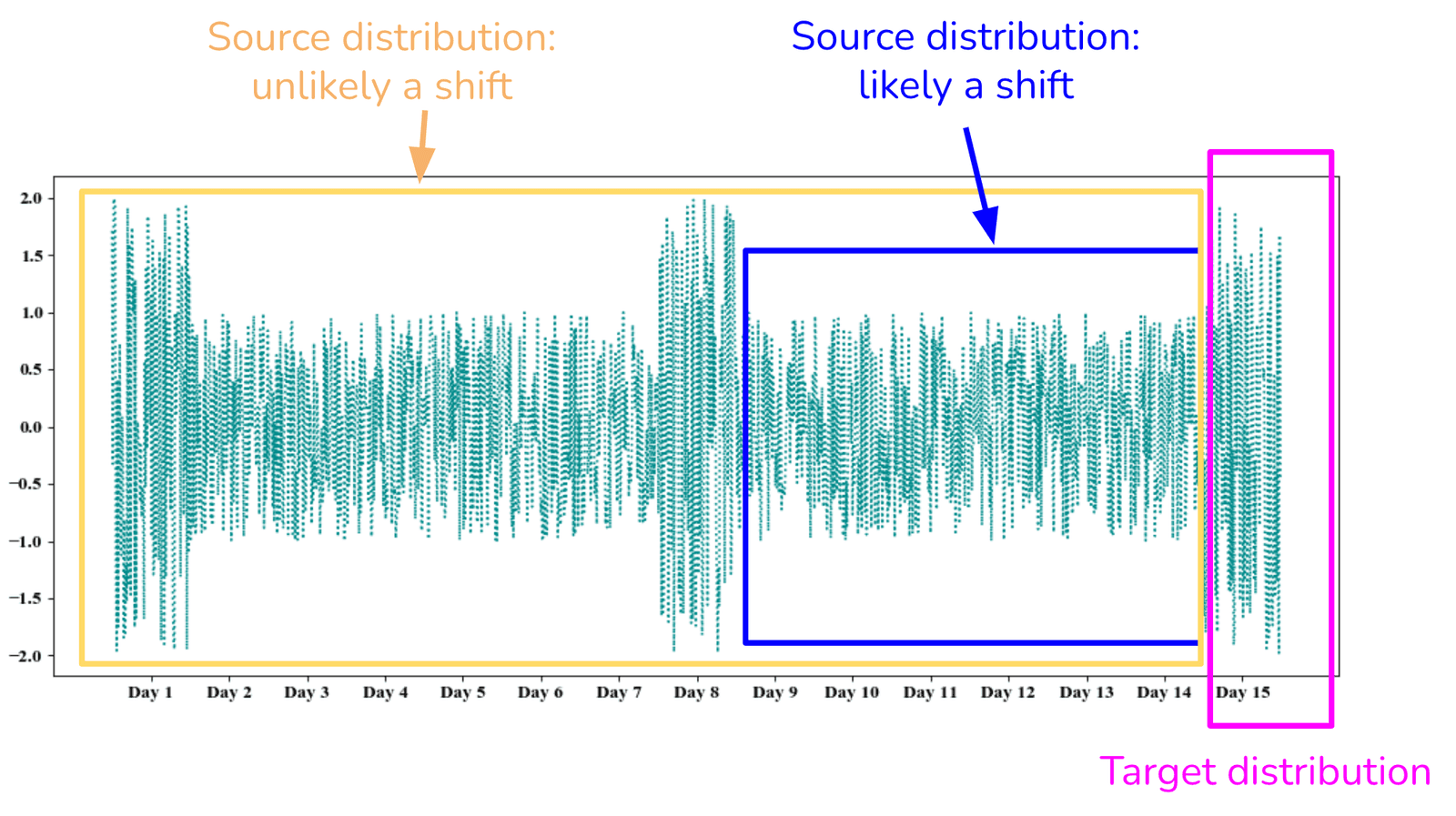
This tests covariate vs label shift vs concept drift when outputs shift. A strong answer checks features before labels, then feedback loops or staleness. A red flag is generic drift without separating P(X), P(Y), and P(Y|X).
What's really being asked
This question tests whether you understand that a shift in model output scores is a symptom, not a diagnosis. Interviewers want to see if you can map that symptom to the three fundamental distribution shifts: covariate shift where the input distribution P(X) changes, label shift where the label prior P(Y) changes, and concept drift where the conditional relationship P(Y|X) changes. They also want to know if you understand operational causes like pipeline bugs, feature store skew, or degenerate feedback loops.
The full answer
A strong response starts by saying you would check input feature distributions first to detect covariate shift, because output scores cannot change unless inputs or the model change. Second, you would examine whether label priors have shifted, which would change the distribution of predicted probabilities even if the model is still calibrated. Third, you would investigate concept drift, where the world changed so the same inputs now map to different outputs. Fourth, you would check for system-level issues like a broken upstream pipeline, a feature store serving stale values, or a degenerate feedback loop where the model's own predictions are contaminating future training data. Finally, you would mention slicing the data by segment or time window to localize the shift.
The mistakes people make
A red flag is treating data drift as a monolithic problem and immediately proposing to retrain without identifying the root cause. Another red flag is ignoring the possibility that the model itself is stale or that a software bug is causing the shift. Saying you would only look at aggregate accuracy metrics is also weak, because output distributions can shift while accuracy remains flat if the shift is symmetric.
What usually comes next
An interviewer might ask how you would detect each shift in practice, such as using KL divergence or PSI for feature drift, or using a two-sample classifier to detect covariate shift. They might ask how you would handle a task with a long feedback loop where ground truth labels arrive slowly, or how you would distinguish label shift from concept drift when you only have predictions and no immediate labels. They might also ask what you would monitor if you cannot monitor labels directly.
A concrete example
Imagine a grocery demand classifier that predicts whether an item will sell out. If the output probability distribution suddenly skews higher, you would first check weather and holiday features for covariate shift. If inputs look stable but the store recently started a nationwide promotion, that is label shift because the base rate of sellouts increased. If inputs and label priors are stable but the model was trained pre-pandemic and consumer behavior changed, that is concept drift. If the inventory team has been overriding predictions and those overrides are leaking back into training data, that is a degenerate feedback loop.
Interview question
When a model's output score distribution shifts in production, what is the recommended first step in diagnosing the root cause?
- a.Immediately retrain the model on the most recent data available
- b.Check whether the input feature distribution P(X) has changedCorrect
- c.Check whether the conditional relationship P(Y|X) has changed
- d.Check whether a degenerate feedback loop is contaminating training data
Why? this is the answer
You should check input features first for covariate shift, since output scores cannot change unless inputs or the model change. Immediately retraining without identifying the root cause is a common anti-pattern that treats drift as a monolithic problem.
Just read this? Test yourself on what you have been reading.
Read the original → huyenchip.com
- #mlops
- #data-drift
- #monitoring
- #concept-drift
- #covariate-shift
You just looked this up. Could you explain it out loud?
That is the part interviews actually test. Tezvyn takes questions like this one and gives you what the interviewer is really checking, the answer that lands, and the mistake that ends the conversation, in the four minutes before your next meeting.
The iPhone app is on the way
We are building it. Until it lands, nothing here is held back from you: every interview card, your saved cards, streaks and the job board all work in Safari, plus hundreds of free practice quizzes of thirty questions each. Sign in and it all carries over to the app the day it arrives.
Want it as an icon? Tap Share at the bottom of Safari, then Add to Home Screen. It opens full screen and the cards you have read stay available offline.
We are hiring for this. Open roles that interview on mlops — each one lists the topics its interview covers.
See open roles