Most LLM Apps Need Workflows Not Agent Frameworks
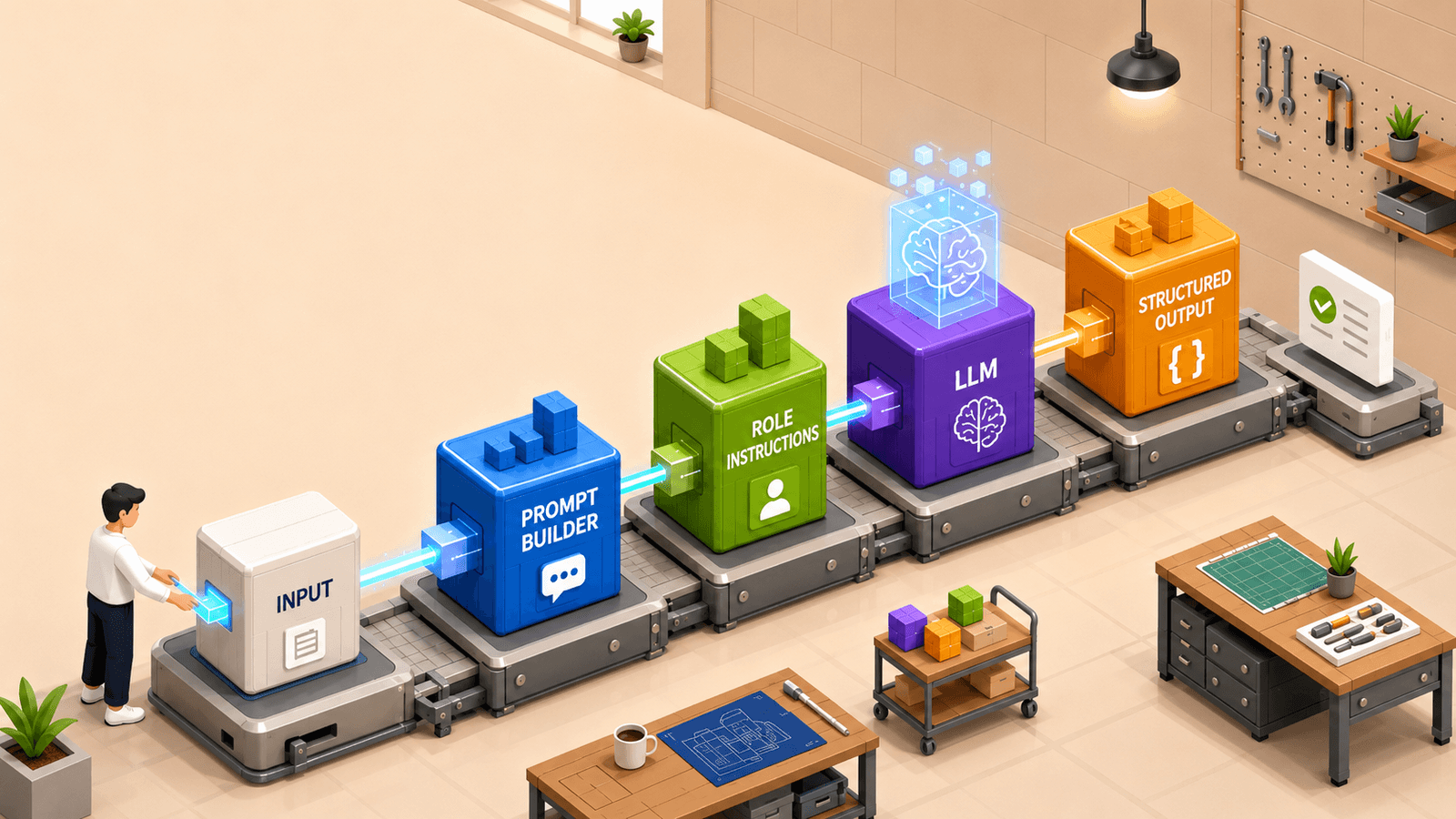
Most LLM apps ship faster and more reliably as deterministic workflows than autonomous agents. Plain Python with structured outputs and local functions beats CrewAI and LangGraph for debugging. Map control flow in code before importing any agent framework.
Why it matters
Engineering teams are burning cycles evaluating CrewAI, LangGraph, and Microsoft Agent Framework before writing a single line of production code. The article argues that most real-world LLM applications do not need autonomous agents that dynamically plan and iterate. Instead, they need deterministic workflows where developers explicitly define control flow. This distinction matters because autonomous agents introduce opacity and non-determinism that make debugging, testing, and reliability guarantees difficult in production systems. When the LLM owns the execution graph, you inherit its hallucinations and reasoning variance at the architectural level.
What changed
The author, drawing on two years of building LLM applications across domains, proposes a workflow-first approach using plain Python, local functions, structured outputs, and standard LLM APIs like the OpenAI Responses API. In this model, the application is a graph where nodes represent steps and edges represent information flow. Nodes can be deterministic code or LLM-powered reasoning steps, but crucially, code owns the graph. The four key ingredients are control flow, role instructions via system prompts, prompt builders, and structured output parsing. Edges can be static or conditional, but the branching logic is written by engineers, not inferred by the model. This keeps the LLM bounded to specific decision nodes rather than allowing it to roam freely across the system.
What to watch
If you are starting a new LLM project this week, map the problem as a control flow graph before importing any framework. Ask whether the execution path is truly open-ended or whether you already know the steps required to solve it. If the path is known, build it in plain Python first and add a framework only when the complexity of orchestration genuinely demands it. The article suggests frameworks are useful for specific scenarios, but they should be an upgrade, not the starting point.
Interview question
When should you import an agent framework like CrewAI or LangGraph instead of building a plain Python workflow?
- a.When you need to eliminate hallucinations by letting the LLM dynamically manage node transitions
- b.Only when the orchestration complexity genuinely demands dynamic planning beyond explicit control flowCorrect
- c.When the execution path is known and can be mapped as a control flow graph
- d.As the first step before writing any production code to ensure scalability
Why? this is the answer
The card argues that agent frameworks should be an upgrade, not a starting point, and adopted only when orchestration complexity truly requires dynamic planning. Option C describes when to use plain Python, while D inverts the card's warning that letting the LLM own the execution graph inherits hallucinations rather than eliminating them.
Just read this? Test yourself on what you have been reading.
Read the original → towardsdatascience.com
You just looked this up. Could you explain it out loud?
That is the part interviews actually test. Tezvyn takes questions like this one and gives you what the interviewer is really checking, the answer that lands, and the mistake that ends the conversation, in the four minutes before your next meeting.
The iPhone app is on the way
We are building it. Until it lands, nothing here is held back from you: every interview card, your saved cards, streaks and the job board all work in Safari, plus hundreds of free practice quizzes of thirty questions each. Sign in and it all carries over to the app the day it arrives.
Want it as an icon? Tap Share at the bottom of Safari, then Add to Home Screen. It opens full screen and the cards you have read stay available offline.
We are hiring for this. Open roles that interview on llm — each one lists the topics its interview covers.
See open roles