Multi-Agent Systems: A Team of AIs, Not a Monolith
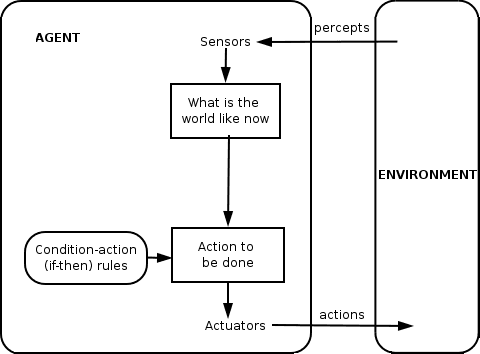
Instead of one giant AI, a Multi-Agent System is a team of specialized AIs that collaborate on a complex problem. This appears in LLM-powered coding assistants and complex simulations.
Why it exists
Some problems are too big, distributed, or complex for a single, centralized system. A monolithic AI might lack the diverse skills or perspective needed, or the problem itself might be naturally decentralized, like managing a fleet of drones. Multi-Agent Systems (MAS) offer a way to tackle these problems through distributed intelligence.
The mental model
A Multi-Agent System is like a specialized project team. Instead of one generalist trying to do everything, you have a planner, a researcher, a writer, and a reviewer. Each agent has its own simple rules and goals, but their interactions produce complex, intelligent behavior for the whole system, which is often called a "self-organized system."
How it works
A MAS consists of three core components. First, the agents: individual computational entities with their own state and behaviors, which can range from simple algorithms to reinforcement learning models. Second, the environment: the shared space, digital or physical, where agents exist and interact. Third, the communication protocol: the set of rules and messages agents use to coordinate, negotiate, and share information. The system's overall behavior emerges from the local interactions between these agents.
When to use it
Use MAS for problems that are naturally distributed, require multiple specialized skills, or are too complex for a single controller. Examples include supply chain optimization, robotic swarm coordination, and network traffic routing. With LLMs, this now includes complex software generation where agents play different roles like product manager, developer, and QA tester to autonomously complete a task.
When not to use it
Avoid MAS for simple, centralized problems where a single algorithm or monolithic system is more efficient. The overhead of designing agent communication and coordination is unnecessary if a straightforward, top-down solution exists. If the problem doesn't require emergent behavior or decentralized control, MAS adds needless complexity.
One canonical example
A classic example is simulating traffic flow. Each vehicle is an agent with simple goals: get to its destination quickly without crashing. Agents react only to their immediate environment, like other cars and traffic lights. From these simple local interactions, complex global patterns like traffic jams and phantom slowdowns emerge, which would be difficult to model with a single, top-down equation.
Interview question
What is the primary mechanism by which a Multi-Agent System achieves complex, intelligent behavior?
- a.The aggregation of simple, local interactions among specialized, autonomous agents.Correct
- b.Continuous learning and adaptation by a single, overarching generalist AI.
- c.The pre-programmed knowledge of all possible system-wide outcomes within each agent.
- d.A sophisticated central algorithm that dictates all agent actions.
Why? this is the answer
The card states that complex behavior in a MAS emerges from simple, local interactions between individual agents, not from a central controller or exhaustive pre-programming. Option D describes a centralized system, which MAS aims to avoid.
Just read this? Test yourself on what you have been reading.
Read the original → en.wikipedia.org
- #multi-agent systems
- #ai
- #llm
- #systems design
Put your scrolling time to good use
Learn one idea, try a quiz and save useful cards for revision. Tezvyn makes it easy to learn and stay current in your tech field, a few minutes at a time.
The iPhone app is on the way
We are building it. Until it lands, nothing here is held back from you: every interview card, your saved cards, streaks and the job board all work in Safari, plus hundreds of free practice quizzes of thirty questions each. Sign in and it all carries over to the app the day it arrives.
Want it as an icon? Tap Share at the bottom of Safari, then Add to Home Screen. It opens full screen and the cards you have read stay available offline.
We are hiring for this. Every open role lists the topics its interview covers, so you can prepare for the real thing rather than guessing.
See open roles